Get Full Government Meeting Transcripts, Videos, & Alerts Forever!
Get email alerts on the Elderly Tax Exemption topic
No spam. Unsubscribe anytime.
Residents urge larger elderly property-tax exemptions; council agrees to study, no vote taken
Summary
Two residents urged the Merrimack Town Council to raise assessed-value exemptions for elderly homeowners, citing fixed incomes and rising housing costs. Councilors and staff discussed options, potential tax impacts and timing; no ordinance change or warrant article was adopted at the meeting.
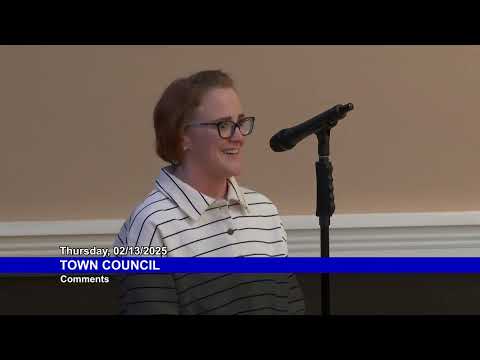
Two Merrimack residents urged the Town Council on Feb. 13 to raise the town's elderly property-tax exemption amounts, saying current assessed-value caps and income limits leave some older homeowners at risk of being priced out.
At issue was the assessed-value exemption the town applies to eligible seniors'and whether the exemption levels should be increased to match neighboring communities. Resident Barbara McCormick told the council she and her husband are on fixed incomes and described the current $85,000 assessed-value exemption (for the 65'74 age band, as referenced in public remarks) as too low given rising housing costs and increasing Medicare and other fixed expenses.
Resident Caitlin Bernier, who identified herself as a member of the school budget committee, said she had heard from multiple residents on fixed incomes who are struggling with rising costs. Bernier provided a local comparison of income eligibility and exemption amounts in nearby towns, noting Merrimack's single-income eligibility limit of $45,000 (and $60,000 for married filers) and the town's asset limit of $200,000.
Town Manager Paul and staff provided data during the council's discussion. Paul said a three-part structure governs Merrimack's elderly exemption: an income limit, an asset limit and the exemption amount (the amount of assessed value removed from the tax roll for qualified households). Paul reported that compared with a peer group of nearby communities Merrimack's income thresholds fall near the middle while the town's $200,000 asset limit is higher than most peers. He said Merrimack ranks among the lower-tier towns for the exemption amount itself and that the assessor recommended considering any change in tandem with the next property revaluation, scheduled for 2026.
Councilors discussed options, timing and likely tax impacts. Paul said staff estimates that raising exemption amounts to the peer average would increase the tax burden for non-exempt taxpayers by roughly one to two cents per $1,000 of assessed value (staff estimates varied with the proposed increase). Paul also said the town had 211 elderly exemptions in February 2024 and that those exemptions represented roughly $26.3 million in exempted assessed value in that year's roll.
No formal action or ordinance change was taken at the Feb. 13 meeting. Councilors expressed support for further study rather than an immediate change:
- Several councilors said they were unwilling to expand income limits or asset caps because those limits already sit at or above peer-community levels; several indicated they were open to increasing the assessed-value exemption amount itself. - Councilors and staff discussed timing: one option is to wait until the 2026 revaluation (when many towns reassess) and adopt any change then; staff said it might also be feasible to bring a prioritised, drafted change to the council and to include it in MS-1 materials if timing allows (the assessor and town manager to advise on deadlines).
Why it matters: Increasing exemptions would lower property tax bills for qualifying older homeowners but would shift the exempted tax burden to other taxpayers unless offset by revenue or reserves. The council noted the trade-offs and asked staff to follow up with more precise cost estimates, draft warrant-language options and a timeline for any ordinance or warrant article.
Ending: The council asked staff to return with options and clarified deadlines for filing exemption changes; no ordinance amendments or warrant articles were adopted at the Feb. 13 meeting.