Get Full Government Meeting Transcripts, Videos, & Alerts Forever!
Get email alerts on the Strategic Planning topic
No spam. Unsubscribe anytime.
Mount Lebanon superintendent presents strategic-plan focus‑group findings, highlights cell‑phone concerns and support needs
Summary
Superintendent presented results from 518 focus‑group participants and surveys, highlighting strengths (community, academics), priorities (classroom instruction, student well‑being), staffing needs, and strong parental support for restrictive middle‑school cell‑phone rules.
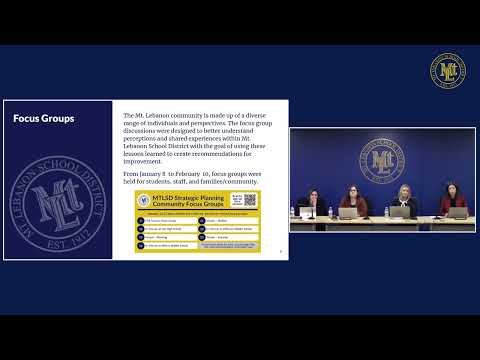
The Mount Lebanon School District superintendent presented findings from a series of strategic‑planning focus groups and related surveys at the board’s Feb. 17 meeting, saying the district will use the feedback to draft a seven‑year strategic plan and return a draft to the board in May.
The superintendent said 518 people participated in focus groups and noted the composition: "52 staff, 332 students, and 134 parents and guardians." The presentation summarized recurring themes across students, staff and families, including a strong sense of community, perceived academic quality, broad extracurricular offerings and “exceptional teachers and staff commitment.”
District leaders told the board the focus groups were held in multiple formats—school‑level work sessions, in‑person middle‑school grade groups, high‑school lunch‑period sessions, PTA council, and translated sessions for English‑learner families—and that notes were transcribed without personally identifying details. The superintendent said the analysis combined responses to identify common themes for the strategic plan.
The report listed four consistent priorities: classroom instruction, student physical/emotional/social well‑being, communications and family engagement, and financial stewardship. Specific program and staffing needs cited included more counselors and social workers; expanded supports for special education, gifted and “middle‑tier” students; revisions to curriculum and materials; and additional career‑exploration opportunities such as internships and job shadowing.
On student digital wellness, the superintendent noted survey results and focus‑group discussion, saying 65% of respondents rated implementing a cell‑phone ban as "slightly, very or extremely important." The presentation summarized suggested approaches discussed by participants: grade‑banded rules (for example, more restrictive rules through eighth grade), consistent enforcement across schools, locked storage pouches or keeping phones in backpacks during the school day, and enhanced digital‑literacy instruction.
The superintendent also reported that 84% of survey respondents expressed overall satisfaction with the district’s quality and that parents and students raised concerns about improving communication between teachers, administration and families, and about ensuring equitable resource allocation for arts, clubs and athletics.
Next steps described to the board included planning‑group work sessions with staff, students, administrators, PTA and community members, followed by drafting goals and timelines and presenting a draft strategic plan to the board in May.
Board members did not pose questions during the superintendent’s report; the administration said it would proceed to planning work sessions and return with a draft for public review and board consideration.