Get Full Government Meeting Transcripts, Videos, & Alerts Forever!
Get email alerts on the Public Records Open Meetings topic
No spam. Unsubscribe anytime.
City law director trains senior commission on public-records, open-meetings and conflicts rules
Summary
Drew Riley, Stow’s law director, briefed the senior commission on Ohio’s public-records and open-meeting requirements and on conflicts-of-interest rules, emphasizing practical steps for members to forward requests and to avoid serial deliberations.
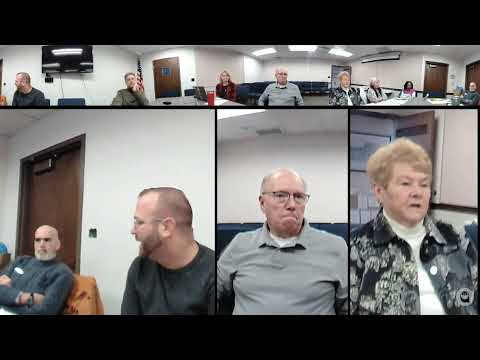
Drew Riley, Stow’s law director, gave the senior commission a training session covering public records, open meetings and conflicts of interest, city officials said.
Riley told members that Ohio’s open-meetings and public-records rules (commonly called the Sunshine Laws) require records to be a created or received document, item or device that documents the public body's functions. He said minutes and recorded meeting audio are public records and that recordings may be retained only until the minutes they support are approved.
Riley emphasized practical steps: public-records requests should be forwarded to the designated records custodian (commission secretary Deanna Davis), heavy redaction is permitted where exemptions apply, and the city must produce existing records in a reasonable time even if redaction is required. He warned against “serial” or “round‑robin” communications (including reply‑all email threads and social‑media comment chains) that could amount to a deliberation by a majority when no public meeting notice was given.
On conflicts of interest, Riley said members should abstain from voting, discussing, recommending or investigating any matter that directly benefits themselves, a family member, or a close business associate. He described gifts rules as both a value and source test and noted that small, one‑off items (a cup of coffee or a plate of cookies) are not ordinarily treated as substantial gifts, while repeated or high‑value benefits can create issues.
Riley also explained that FOIA applies to federal agencies but Ohio uses state sunshine laws, and he discussed the continuing law enforcement investigatory exception (CLEARS) as an example of case law that changes how exemptions are applied. He encouraged members to ask questions and to call the law department when in doubt.
"If it feels like you shouldn't be doing it, you probably shouldn't be doing it," Riley said, advising members to forward records requests to the secretary rather than responding individually.
The presentation included Q&A about meeting notice, executive sessions and record retention; members were given contact information and printed reference materials for future questions.