Get Full Government Meeting Transcripts, Videos, & Alerts Forever!
Get email alerts on the Police Staffing Overtime topic
No spam. Unsubscribe anytime.
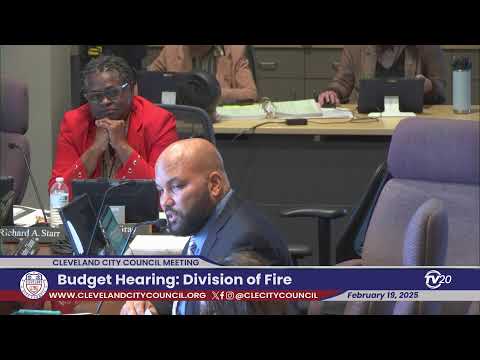
Council hearing: Police aim to cut overtime to $14M by hiring 180 recruits, but members question realism
Summary
At Cleveland City Council budget hearings, police leaders said a plan to hire 180 recruits and use 12‑hour shifts is intended to reduce overtime to $14 million, but council members pressed for evidence after years of higher overtime and continuing vacancies.
The City Council budget committee on a public-safety hearing heard police and city finance leaders say the Division of Police plans to reduce uniform overtime to $14,000,000 in 2025 by staffing up and keeping 12‑hour shifts, while budgeted headcount remains 1,350.
The goal matters because the department has repeatedly exceeded overtime estimates and council members said transfers to cover overtime have grown in recent years. Police Chief Dorothy Todd and Director of Public Safety Dorna A. Drummond described staffing and pay steps intended to slow overtime growth.
“ We budget the 14,000,000. That is our goal for the year,” Police Chief Dorothy Todd told the committee, adding department efforts include expedited hiring events and changing shift schedules to mitigate overtime. Director Dorna A. Drummond said the administration also has raised pay through the mayor’s RISE initiative and is trying to fill vacancies that drive overtime: “Our plan ... is to have a minimum of 50, at a minimum, of 50 recruit per class.”
Council members pressed leaders for numbers and for written backup. Committee members noted that actual overtime has repeatedly exceeded prior budget targets: “There’s no way you’re going to obtain a goal of $14,000,000 for police overtime,” one councilmember said, pointing to transfer ordinances in prior years that supplemented overtime budgets.
Key budget and staffing details discussed: - Budgeted police headcount for 2025: 1,350 (budget book). - Reported current staffing (December 2024): about 1,208 total, which the department said includes 78 recruits; excluding cadets the department stated the active sworn count would be roughly 1,130–1,131. - Hiring targets: budgeted for 180 recruits in 2025; department said it hopes to run three academy classes with a minimum of 50 recruits each. - Overtime: department goal of $14,000,000 for uniform overtime; council noted past actuals were much higher and asked whether the target underestimates likely costs. - Axon/body‑ and dash‑camera payments: finance staff said 2024 included one‑time payments to Axon and dash‑camera implementation, which increased maintenance/contract lines; the department estimated about $3.4 million for body‑camera maintenance and roughly $1 million for related IT costs. - Revenue offsets: police reported roughly $9 million from airport detail reimbursements and additional revenues from traffic escort fees and some ARPA grant reimbursements; council asked for a full breakdown of the $14+ million listed under miscellaneous revenue.
Council members repeatedly asked for written details the committee requested during the hearing: a unit‑by‑unit overtime breakdown, dispatch overtime and vacancy details (dispatch overtime was specifically flagged as about $1.7 million), the makeup of the 1,350 headcount across job classes, and documentation supporting the projected reduction in overtime tied to the 180‑recruit hiring plan. Finance staff said they would provide those breakdowns.
Leaders defended the 12‑hour shift change. “From my conversations with various officers, the 12‑hour shifts is something that they like because it gives them more time off with their families,” Drummond said, arguing the schedule reduced mandated overtime in some cases. Other council members said anecdotal complaints from officers suggest the change is not universally popular and asked the department to monitor effects on retention and morale.
Council members also pressed the department on recruitment and retention trends. The committee heard that the city hired 134 sworn officers in 2024 but also lost about 117 sworn officers that year, and that across several recent years departures have outpaced hires. The department said pay increases and expedited hiring events have improved applicant flow but acknowledged competition and nationwide recruiting challenges.
The council asked for multiple follow-ups, including written schedules of planned cadet and recruiting classes; the department’s projected timeline for translating recruits into active patrol officers (the department said academy training is roughly seven to eight months); documentation of last year’s Axon payments; and a breakdown of non‑uniform (“civilian”) overtime costs and staffing trends.
Council members said they would continue to scrutinize overtime projections and headcount assumptions as they review the overall budget.
Next steps: Finance and police leaders agreed to provide the requested written backup and a unit‑level overtime ledger before subsequent budget votes; council members signaled they would revisit the overtime target if the requested evidence did not support the $14 million figure.