Get Full Government Meeting Transcripts, Videos, & Alerts Forever!
Get email alerts on the Doj Monitoring topic
No spam. Unsubscribe anytime.
Council questions $2.6M DOJ monitor line, requests spending and billing records
Summary
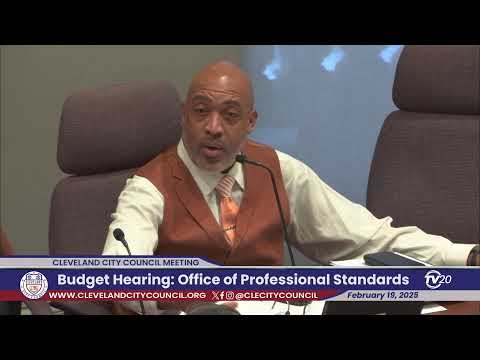
Council members probed a large jump in the Department of Justice/consent‑decree budgetary lines — roughly $2.6 million for the federal monitor plus separate analytics contracts — and asked for a historical accounting of monitor payments and whether courts could force escrow of monitor fees.
Council members pressed city staff for details after administration budget documents showed a large increase in Department of Justice (DOJ)‑related contractual expenses, principally payments to the federal monitor and new analytics and advertising costs tied to the consent decree.
On page totals presented at the hearing, the administration identified roughly $2,636,000 for monitor-related contractual costs and another $887,000 for maintenance contracts used to provide analysis and data reporting (contractors named included Intergraph, Tyler Technologies and Benchmark). The administration also budgeted about $160,000 for advertising tied to police hiring efforts; staff said the advertising funds are part of compliance work tied to the consent decree and monitor expectations.
Why it matters: Several council members voiced concern about the steady increase of DOJ-related costs since the consent decree was implemented. Council members asked whether the federal judge overseeing the consent decree, identified in discussion as Judge Oliver, had reviewed or approved the monitor budget, and whether the city could be forced to deposit monitor funds into an escrow vehicle subject to federal court control. Administration staff said the law director was handling questions about whether escrow or other court orders could be required and that the budget request will be confirmed with the court.
Council members also asked for transparency: one requested a full list of every person or firm paid as a monitor since 2015 and their billed hours and amounts. Staff said they had asked for historic totals and would provide the information to the committee; the city reported in the hearing the total spent to date on DOJ‑related matters was $25,996,636.58.
Other details: Council members asked for an explanation of why an additional $887,000 appeared in maintenance contracts on top of the monitor line; staff said the analytics tools (software and analytics contracts) are separate purchases that support data reporting and the monitor’s work and therefore appear as additional line items.
Requests and follow-up: The council requested: (1) a historical accounting of monitor payments and invoices since 2015 including hours billed and hourly/daily rates; (2) clarification whether any judge has ordered funds to be escrowed for monitor payment and how that process would operate; and (3) a written explanation of the scope covered by the monitor line versus the analytics/maintenance contracts.
Ending: The administration agreed to check whether the court has approved or will require escrow for monitor payments and to supply the requested historical billing and contracts data for council review.