Get Full Government Meeting Transcripts, Videos, & Alerts Forever!
Get email alerts on the Education Budget topic
No spam. Unsubscribe anytime.
Education department asks JFAC for staff, assessment and program funding to address rising special‑education workload and other needs
Summary
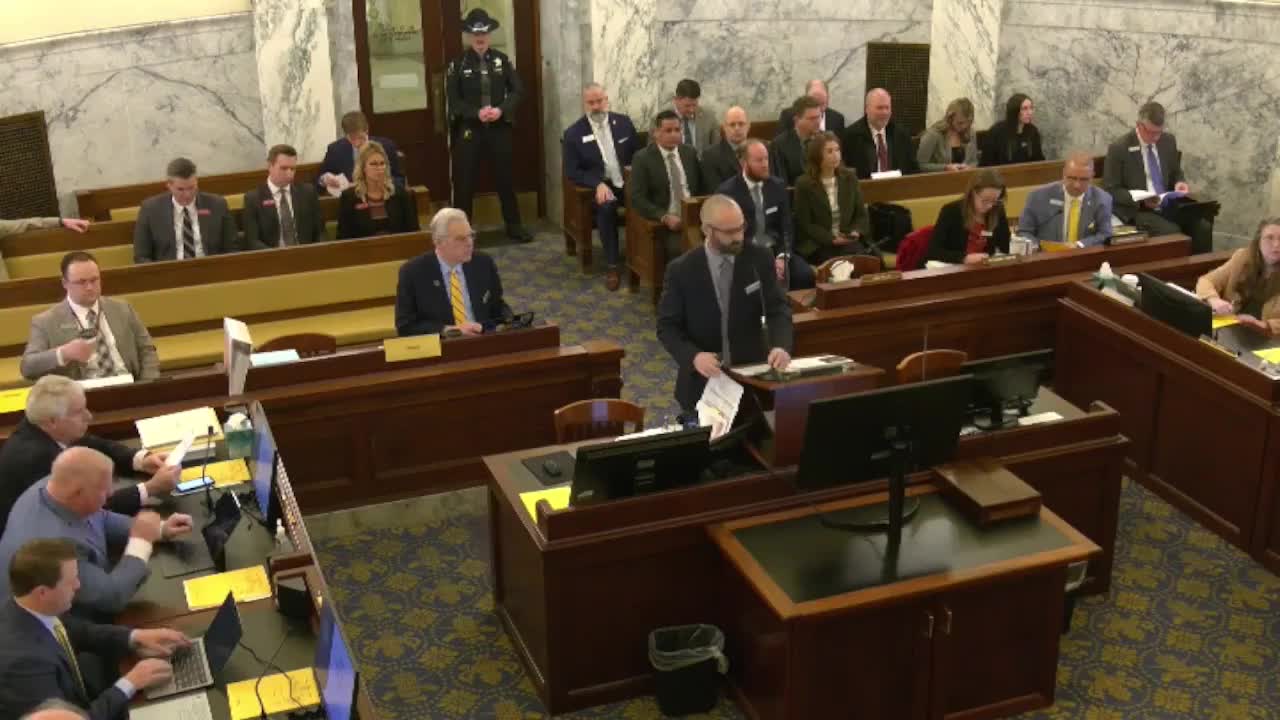
The State Department of Education told the Joint Finance-Appropriations Committee during a budget hearing that it needs additional staff and spending authority to respond to growing special‑education workload, upgrade statewide assessments and expand several programs.
The State Department of Education told the Joint Finance-Appropriations Committee during a budget hearing that it needs additional staff and spending authority to respond to growing special-education workload, upgrade statewide assessments and expand several programs.
Deputy Division Manager Jared Tetro of the Legislative Services Office, presenting department budget material, said the department is organized into two program areas and currently has authorization for 126.5 full‑time equivalent positions, with 9.5 vacancies at the time of the budget submission. He described the department’s role as an executive agency tied to the State Board of Education “as established in 30‑3‑125 Idaho Code,” and noted personnel and grant shifts that have affected recent spending patterns, including the transfer of broadband and IT positions to the State Board of Education.
The department and its superintendent, Debbie Critchfield, outlined seven ongoing enhancement requests for fiscal 2026. The proposals include one full‑time dispute resolution specialist (requested at about $84,400) to support special‑education communications and case management; a charter‑school special‑education specialist to meet federal monitoring and technical‑assistance requirements under the Individuals with Disabilities Education Act and Section 504 of the Rehabilitation Act; and a second Indian education coordinator (requested at about $114,000) to assist tribal relations, travel and student‑achievement efforts. Critchfield said the state has seen “an increase in parents that are asking for their students to be tested” and reported a rise in dispute activity: “We have a 65% increase in requests for mediation, 77% increase in general complaints and a 1,200% increase in hearings,” reflecting more matters escalating to the department level.
The department described a one‑time request of $2.7 million for student assessment development as the state moves off its existing contract with the Smarter Balanced Consortium and pilots a new assessment platform for the ISAT (Idaho Standards Achievement Test). Gideon Tolman, the department’s chief financial officer, told the committee the request is intended to fund the transition and that base funding is expected to cover ongoing costs; he said he would provide further detail on whether the amount would fully pay for a new vendor and platform.
Other items in the department’s request include a four‑year Child Nutrition Technology Grant ($746,300 total) to support MyIdahoCNP software costs; a $350,000 youth well‑being assessment under consideration by the Millennium Fund Committee; and a Farm to School grant ($264,100 ARPA). The governor also recommended $300,000 annually from the public charter school authorizer’s fund to support underperforming charter schools; the department cited Idaho Code provisions that create and govern charter authorizer funds when discussing that proposal.
The department highlighted the Career Ready Students (CTE) grant program in response to member questions: over the last two budget cycles roughly $65 million was appropriated, the department received $138 million in grant requests across 152 applications, and 72 grants have been awarded representing roughly $62.7 million in obligated funds; the department said $16 million has been reimbursed to date and that many awards are capital projects that require districts to request reimbursements as projects complete.
Committee members asked about dedicated fund balances. Tetro noted the driver training fund had roughly $3.8 million free fund balance in 2022 and is currently estimated at about $7.4 million in 2026; the department is proposing to raise the per‑student driver education reimbursement from $150 to $300, which would require legislation and additional spending authority. On the school‑bus camera fund, the department said the fund balance was about $35,000 and explained that appropriation authority can exceed current cash; any unspent appropriation simply would go unspent or revert if cash is insufficient.
Members also pressed the department on audit and oversight issues. Superintendent Critchfield said the department has filled a new auditor position to verify student counts and related payments and that unused personnel appropriation is reverted rather than repurposed internally. On ESSER and ARPA funds committee members requested lists of how federal pandemic and ESSER dollars have been used and the status of obligations, and department staff agreed to provide itemized reports on private‑school COVID support and CTE obligations.
The department emphasized it is responding to increased demand for special‑education assessments and dispute resolution while also working through transitions of programs and funding sources. Critchfield concluded by saying the department is organizing to “carry out the policies, procedures and duties authorized by law or established by the State Board of Education for all elementary and secondary school matters.”
The hearing produced no formal votes or committee actions; committee members asked staff to supply follow‑up detail on ARPA/ESSER uses, private‑school reimbursements, charter‑school awards and how the assessment transition funding would be applied.