Get Full Government Meeting Transcripts, Videos, & Alerts Forever!
Get email alerts on the Disaster Recovery Budget topic
No spam. Unsubscribe anytime.
Carter County updates FEMA recovery, votes emergency loan and budget items as debris and billing concerns surface
Summary
Carter County commissioners approved emergency budget measures including a $3 million TEMA loan and accepted opioid settlement funds as staff updated the board on FEMA and NRCS recovery projects and residents raised concerns about contractor billing and debris eligibility.
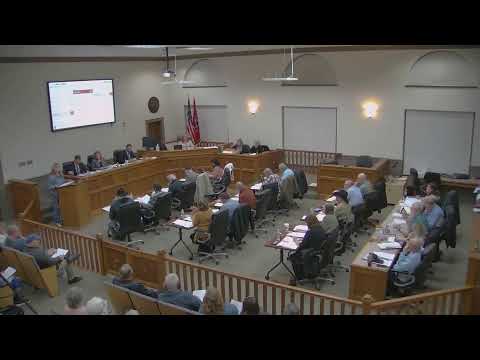
County staff gave an extensive update on federal and state disaster recovery work linked to Hurricane Elaine, and the Board of County Commissioners approved several emergency budget items to keep recovery work moving while residents and commissioners pressed for more transparency on debris removal and contractor billing.
Sonia Jonas of Charles, LLC (presenting a FEMA update) told the board there are 51 FEMA projects in the grants pipeline representing about 44 separate projects, that debris removal in the county’s rights-of-way was nearly complete and that waterways debris removal (lakes, rivers, streams) is being handled under a state contract. Jonas said 16 FEMA road-and-bridge projects are active or scheduled (75–80 roads referenced) and that building-and-equipment damage remains under insurance review. The presentation also noted 52 NRCS (Natural Resources Conservation Service) projects for waterway and bank stabilization are pending and that hazard-mitigation applications were in process.
Commissioner Angie Hogan and others asked about timelines and the status of a pre-application that had been submitted by the Jan. 31 deadline; presenters clarified a pre-application had been filed and county staff and state contacts had indicated the counties have months to complete full applications. A county staff member explained the difference between the pre-application and the full application and said the pre-app required department-level assessments of needs (for example, volunteer fire departments needing generators).
Budget committee vice chair Julie Gwyn presented a package of emergency budget motions related to the disaster response. The board approved a motion to schedule a standing monthly commission meeting on the first Thursday of each month to consider emergency spending related to the declared state of emergency; the meetings will be canceled if there is no emergency spending to consider. The board approved a one-time correction payment of $6,426.42 to elected officials to fix a transfer miscalculation, with funds taken from the unassigned fund balance. The board also authorized the county mayor to sign required paperwork to accept opioid settlement funds received by the county.
The board voted to authorize the county to borrow an additional $3,000,000 from the Tennessee Emergency Management Agency (a "TEMA lien emergency assistance loan") to cover additional pre-removal debris expenses and to get through final cleanup. The motion was seconded by Commissioner Todd Smith and recorded with the same terms as prior loans.
During public comment several residents raised concerns about contractor billing and expense detail. James Berg, a resident, cited invoices he said showed a contractor charging $560 per hour combined for senior FEMA project managers and asked whether resumes or qualifications were on file for personnel billed at that rate; he urged more detailed, 15-minute billing breakdowns before approving additional invoices. Others raised complaints that some debris left at the roadside was not FEMA-eligible and therefore county staff had told affected homeowners the county could not pick it up under FEMA rules. County staff and FEMA/TEMA representatives explained that certain roadside debris and items placed at the road after private property cleanup are not eligible for FEMA reimbursement and that if the county picks up noneligible debris it may not be reimbursed.
Long-term-recovery volunteers and an unmet-needs committee member said a contractor’s individual-assistance contract had ended and 12 households still needed debris assistance; staff said those cases were being tracked and that nonprofits and churches were being asked to help with unmet needs when debris did not qualify for FEMA assistance. Staff cautioned that picking up non-FEMA-eligible debris using county funds could result in costs the county would not recover through federal reimbursement programs.
Ending: Commissioners approved the emergency spending measures at the meeting and asked staff to provide more detailed billing and eligibility information for upcoming budget approvals; residents asked the board for greater transparency and more detailed invoices from contractors paid on disaster work.