Get Full Government Meeting Transcripts, Videos, & Alerts Forever!
Get email alerts on the Open Meetings Public Comment topic
No spam. Unsubscribe anytime.
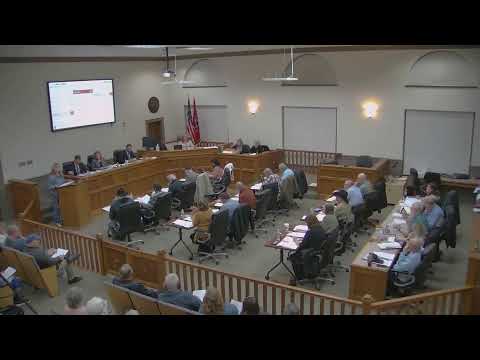
Carter County commission narrows public comment to matters germane to the agenda
Summary
The Carter County Board of Commissioners voted to approve an amendment restricting public comment to subjects directly related to agenda items after a legal briefing on the Open Meetings Act and brief debate over notice requirements.
The Carter County Board of Commissioners voted to approve an amendment limiting the public comment period to remarks germane to items on the meeting agenda.
A county attorney opened discussion by reading portions of the Open Meetings Act, saying, "Bodies as defined in the Open Meetings Act are required to preserve a period of time for public comment, provide the public with the opportunity to comment on matters that are germane to the items on the agenda for the meeting. Governing bodies are authorized to remove reasonable restrictions on the period for public comment, such as the length of period, the number of speakers, and the length of time that each speaker will be allowed to provide comment." The attorney noted the law also allows a governing body to require advance notice of a desire to speak and to take steps to ensure opposing viewpoints are represented.
Commissioners debated whether the restriction had been included in the public notice for the meeting. The county attorney said the county’s standard advertisement mentions a reserved public-comment period but that the level of restriction (for example, whether comments may be limited to agenda items) must be stated in the public notice if the body intends to apply it. A friendly amendment to limit comment to matters germane to the agenda was introduced during the motion process.
After discussion the board voted to approve the agenda with the amendment restricting public comments to those germane to the agenda. The motion passed; the clerk recorded one abstention. The approved change means future meetings will limit public remarks to topics that are directly related to agenda items unless the board adopts a different rule or announces otherwise in its public notice.
Commissioners and members of the public raised procedural questions during debate, including whether the notice had to include the restriction in advance and how strictly the board would enforce ‘‘germane’’ remarks. Those procedural clarifications will now guide how the clerk frames future meeting notices and how chair rulings are applied at subsequent meetings.
The action occurred during the opening portion of the meeting while the commission considered and approved the agenda.
Ending: The board did not set a further policy text at that meeting beyond approving the amendment; the county attorney’s reading of the Open Meetings Act will serve as the legal basis for how the restriction will be noticed and enforced going forward.