Get Full Government Meeting Transcripts, Videos, & Alerts Forever!
House Health Care & Wellness Committee advances prior-authorization reforms, ambulance billing limits, co-responder and birthing-center measures
Summary
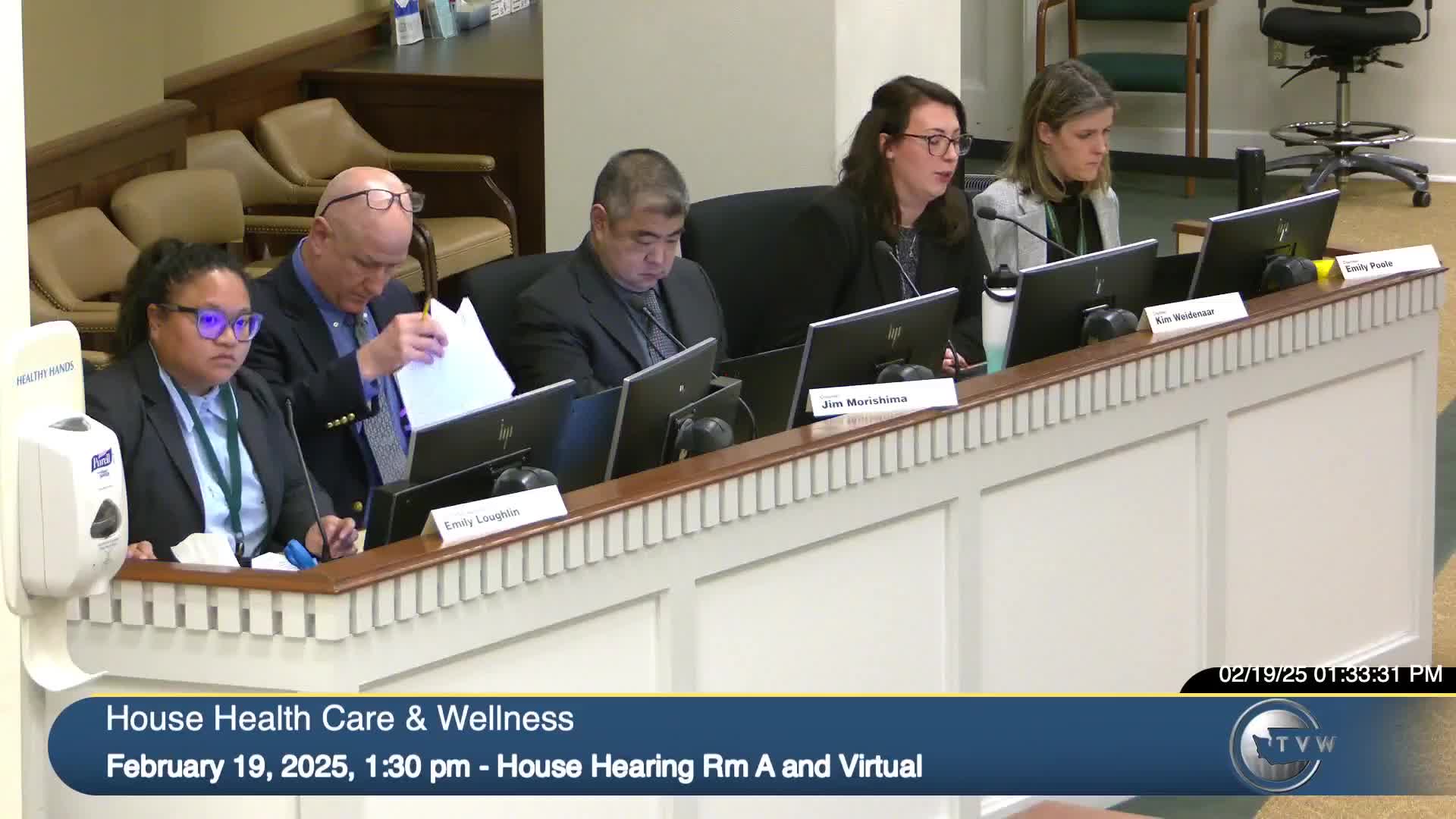
In an executive session Feb. 19, the House Health Care & Wellness Committee voted to report several health-care bills out of committee with due-pass recommendations, including measures on prior authorization, ambulance billing after motor vehicle collisions, co-responder definition and birthing-center inspections.
The House Health Care & Wellness Committee on Feb. 19 voted to report multiple health bills out of committee with due-pass recommendations, advancing measures addressing prior authorization processes, ambulance billing after motor-vehicle collisions, co-responder definitions and birthing-center inspection rules.
The committee voted to advance a package of prior-authorization reforms (House Bill 15 66, proposed substitute H1472.2) that changes notice, reporting and AI-use requirements for health plans and clarifies which third-party administrators the rules cover. Representative Ruhl, speaking for supporters, called H1472.2 “a big bill with a lot of parts” and said work remains on a few carrier concerns ahead of the floor. Representative Marshall, speaking as a provider, said some members would remain mixed but that the substitute “is better” than the underlying language.
The committee also advanced related prior-authorization technology and timing bills: House Bill 17 06 (proposed substitute H1474.1), which sets the state enforcement date for prior-authorization APIs to Jan. 1, 2027 regardless of future federal CMS rule timing; and provisions in the H1472.2 substitute that change reporting timelines, the scope of information carriers must provide with determinations, and definitions for artificial intelligence and generative AI used in prior-authorization systems.
On ambulance billing, the committee advanced substitute language for House Bill 11 87 (proposed substitute 1462.1) that removes a requirement that ambulance providers attempt to collect insurance information during transport or within 60 days after motor-vehicle-accident transports.…
Already have an account? Log in
Subscribe to keep reading
Unlock the rest of this article — and every article on Citizen Portal.
- Unlimited articles
- AI-powered breakdowns of topics, speakers, decisions, and budgets
- Instant alerts when your location has a new meeting
- Follow topics and more locations
- 1,000 AI Insights / month, plus AI Chat