Get Full Government Meeting Transcripts, Videos, & Alerts Forever!
Get email alerts on the Juvenile Capacity And Transfers topic
No spam. Unsubscribe anytime.
Committee moves substitute allowing DCYF temporary transfers when juvenile facilities exceed safe capacity
Summary
The committee reported a proposed substitute for House Bill 19‑17 out of committee with a due‑pass recommendation; members expressed serious reservations about using adult facilities if juvenile institutions exceed safe capacity.
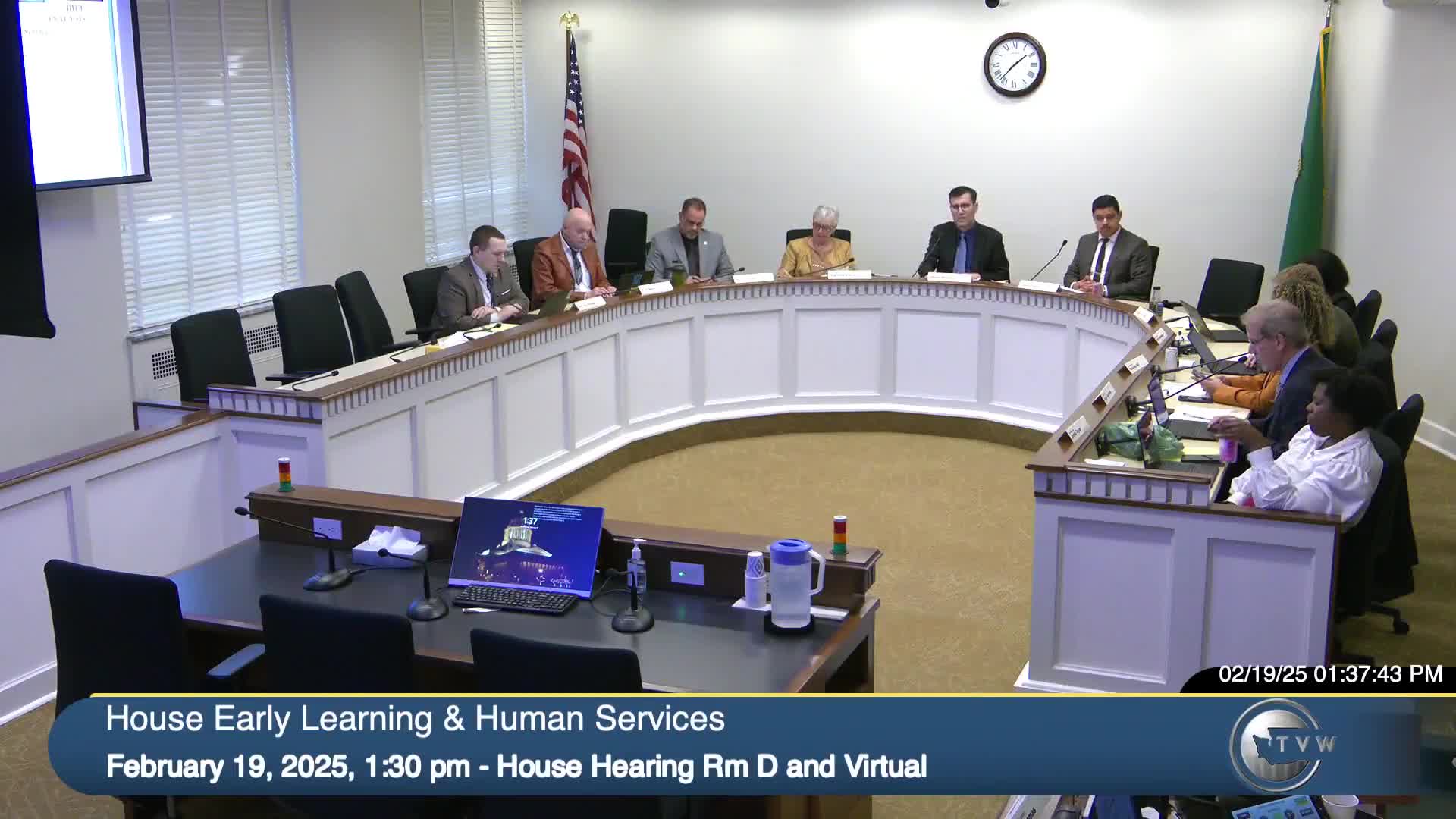
The House Early Learning and Human Services Committee reported a proposed substitute to House Bill 19‑17 out of committee with a due‑pass recommendation after extended discussion and mixed votes.
Committee counsel Luke Wickham summarized the substitute: "House Bill 19 17 is the bill that, requires the Department of Children, Youth and Families to develop, rules for the safe operational capacity of juvenile institutions, and allows, DCYF to transfer people out of juvenile institutions into DOC facilities once that number gets above 105%." The substitute was later clarified to allow transfers first to other DCYF juvenile institutions where capacity is under 105% and to require DCYF to notify county courts when an institution reaches 90% and again at 105%.
Under the substitute, transfers of individuals convicted in adult court for offenses committed before age 18 to a Department of Corrections (DOC) facility because a juvenile institution exceeds 105% would occur only after exhausting other transfer options and with steps to avoid disrupting ongoing rehabilitative, educational, or treatment progress. The substitute lets individuals placed in DOC under the capacity rule request a move back to DCYF when the receiving juvenile institution falls below 95% of safe operational capacity. It also requires access to counsel before voluntary transfers to DOC and allows a request for review board consideration of voluntary transfer decisions. The substitute requires DCYF to provide an annual report to the governor and legislature with counts and reasons for transfers to DOC, ages of those transferred, which DOC facilities received them, and outcome information from transfer hearings.
Representative Goodman said she supported the bill "with great hesitation," citing overcrowding at Green Hill School and concern about moving young people into adult solitary or intensive management units: "Having visited, the adult prison, where some where it's proposed that some of these young people will be moved, I was frankly horrified, at the prospect of moving these promising young men to a solitary confinement unit... which I just do not believe is appropriate and would be dehumanizing and and traumatic for these young people."
Representative Hill also said she would vote no, citing worries about the chosen facility (described during testimony as a former solitary confinement unit), the arbitrary‑seeming capacity percentages, lack of procedural notice to youths for requesting return, and the risk of creating a long‑term use of a facility intended as a temporary option.
Representative Cortez and other members said they would vote yes but voiced concerns and a desire to continue work with stakeholders and young people on rehabilitative needs. The roll call resulted in nine ayes and two nays without recommendation; the committee reported the substitute out with a due‑pass recommendation.
Ending: The substitute advances the bill while leaving several implementation matters — facility suitability, notice procedures for youths, and the choice of capacity thresholds — subject to further work by committee members and stakeholders.