Get Full Government Meeting Transcripts, Videos, & Alerts Forever!
Get email alerts on the Juvenile Justice topic
No spam. Unsubscribe anytime.
Committee advances substitute to require written finding before committing juveniles to state institutions
Summary
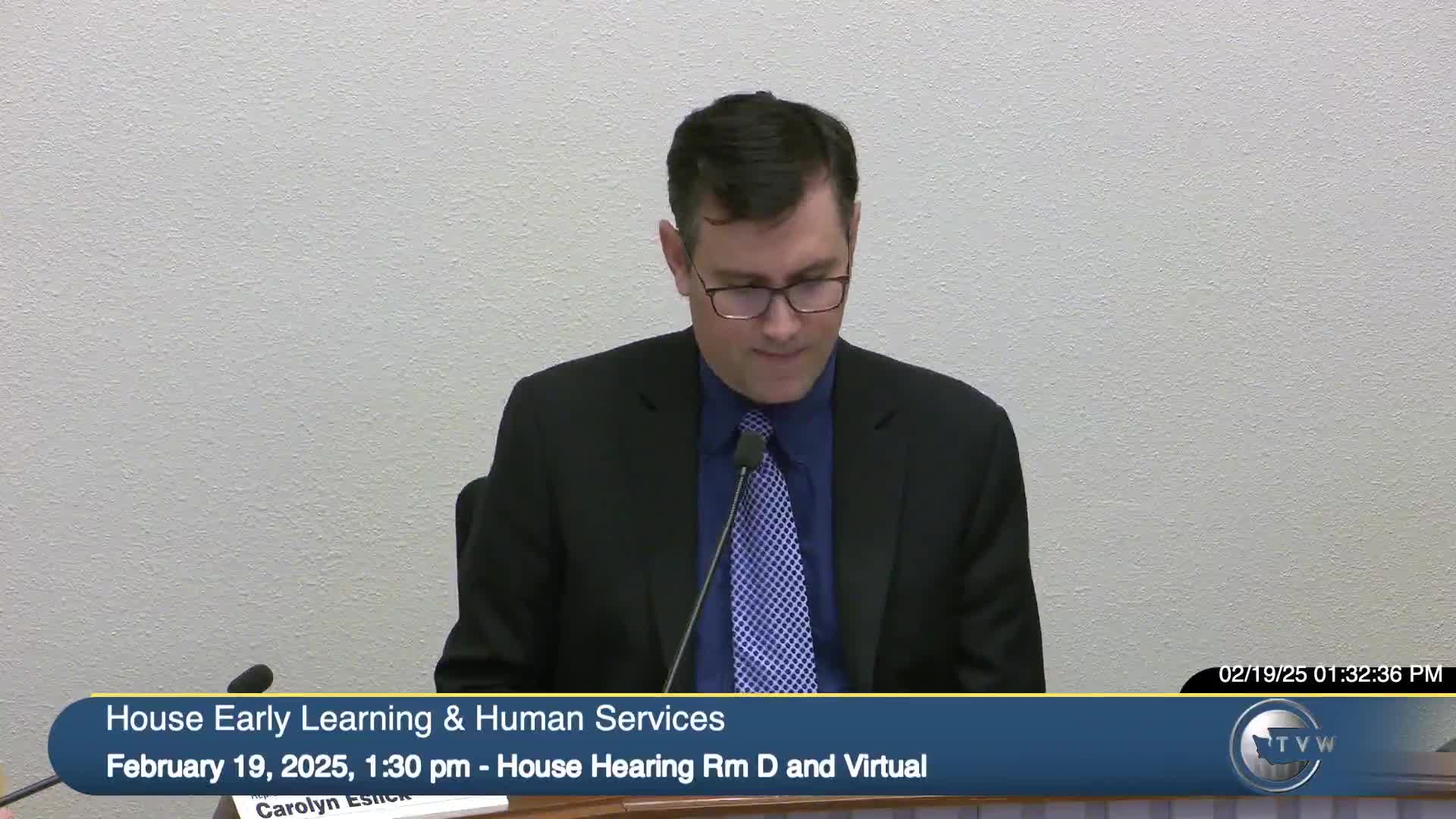
The House Early Learning and Human Services Committee on an executive‑session vote moved a proposed substitute for House Bill 13‑22 out of committee with a due‑pass recommendation.
The House Early Learning and Human Services Committee on an executive‑session vote moved a proposed substitute for House Bill 13‑22 out of committee with a due‑pass recommendation.
The substitute would require courts to make a written finding, supported by clear and convincing evidence, that placement in a juvenile rehabilitation institution is necessary because community‑based placement would not adequately protect the public before committing a juvenile for certain offenses. Luke Wickham, committee counsel, described the proposal and changes made in the substitute during the committee briefing: "house bill 13 22 is the bill that requires the court, make an independent finding supported by clear and convincing evidence that commitment to juvenile rehabilitation is needed because community based placement would not adequately protect the community before committing a juvenile to, a juvenile real rehabilitation institution for certain offenses."
The substitute narrows the requirement in specified cases: the exclusion applies when the person is 16 or 17 and the underlying offense is a serious violent offense, a violent offense with certain criminal history, or first‑degree child sexual assault. The substitute also expands eligibility for two disposition alternatives — the so‑called "option B" disposition and a substance‑use disorder/behavioral health disposition — while mirroring the substitute's excluding offenses for those alternatives and adding further exclusions for option B.
Other changes in the substitute include limiting the court's concurrent jurisdiction (if the independent finding has been made) to review hearings only; allowing the court to impose sanctions for violations of electronic monitoring and to order confinement up to the remainder of the previously imposed sentence; expanding which dispositions may be appealed to include revocations of suspended dispositions; and requiring the Department of Children, Youth and Families (DCYF) to hold contracts with at least four juvenile court administrators to keep short‑term custodial placements (less than 90 days) at county juvenile detention facilities rather than state institutions.
The substitute replaces a requirement for review hearings every six months with a single review at the midpoint of the minimum sentence range after at least four months of confinement. It allows mandatory parole in lieu of community supervision in certain release circumstances and requires remote participation in those review hearings unless the court orders otherwise.
Representative TBA Goodman, the sponsor, said the bill is intended to give sentencing courts discretion and reduce trauma for youths who are not a community threat: "The intention of House Bill 13 22 is to provide, discretion to, sentencing courts.... The court would need if the, confinement time for the offense would result in a commitment to a state institution or juvenile rehabilitation facility, that the court must, make a written finding by clear and convincing evidence that, placement at that state facility is necessary, because otherwise, the juvenile could not reasonably be, be kept, in the community, and it would not be safe for the community."
Representative Burnett stated opposition ahead of the roll call and said his caucus planned to vote no while remaining willing to continue negotiations: "we agree that, some of these things need to be addressed... But you're gonna see some no's over here."
After roll call the clerk announced the result as seven ayes and four nays; the committee reported the proposed substitute out of committee with a due‑pass recommendation.
Ending: The substitute moves the bill to the next committee or floor stage with a due‑pass recommendation; the committee discussion and votes recorded in the transcript are limited to the changes described above and the roll call outcome.