Get Full Government Meeting Transcripts, Videos, & Alerts Forever!
Get email alerts on the Hfcs Refrigerants topic
No spam. Unsubscribe anytime.
Bill would phase limits on high‑GWP refrigerants; industry urges careful task‑force design to protect supplies
Summary
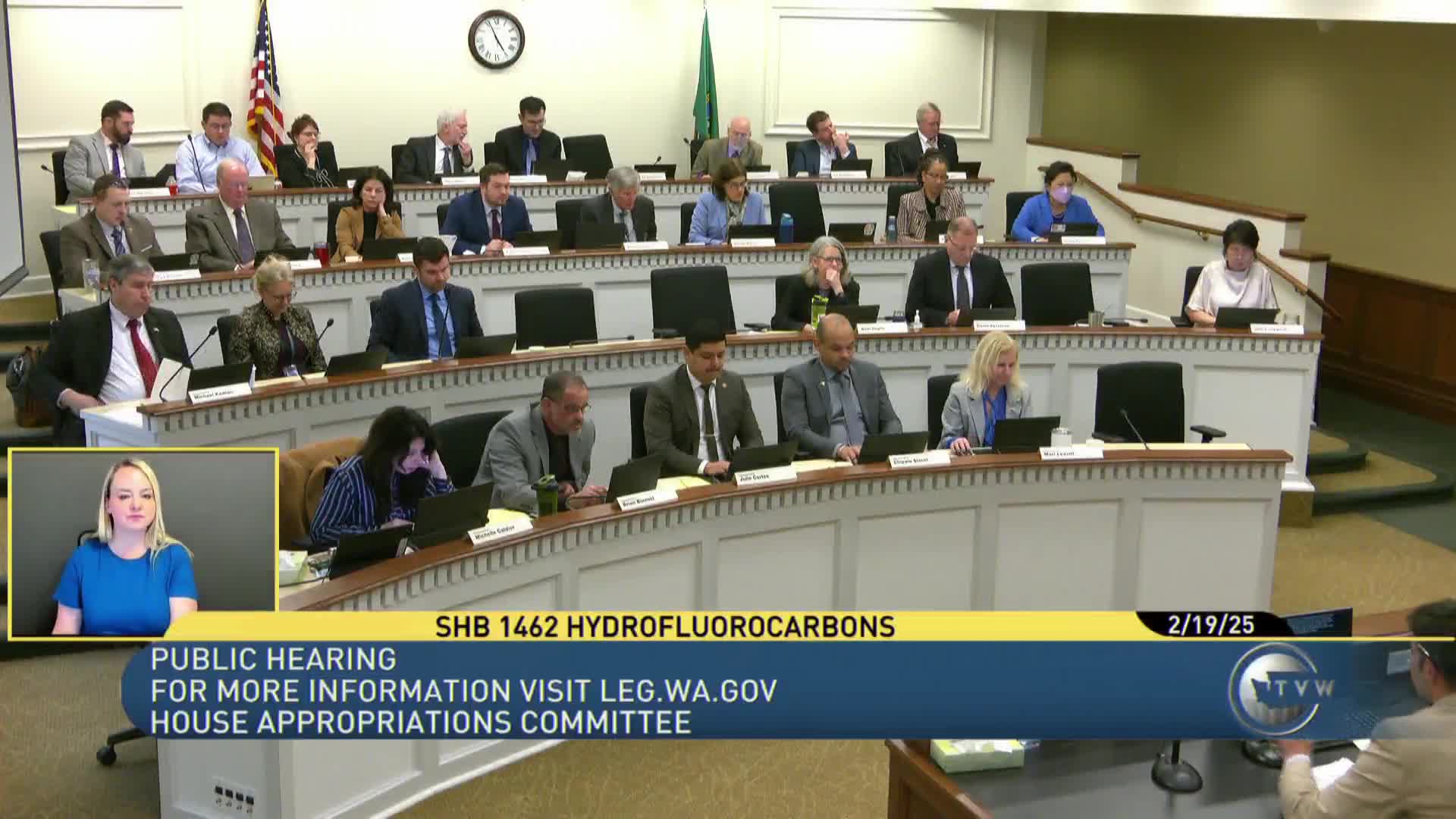
Substitute HB 1462 would limit the use of high‑GWP HFC refrigerants in state equipment and set phased GWP limits in commerce while creating a task force to study the transition to low‑GWP alternatives.
Substitute House Bill 1462 would prohibit servicing state‑owned stationary equipment with virgin hydrofluorocarbons (HFCs) that have a global warming potential (GWP) greater than 750 beginning July 1, 2026, and would set GWP limits for HFCs in general commerce with Ecology authorized to adopt rules to tighten limits and move deadlines if sufficient reclaimed refrigerant supply exists. The bill also requires Ecology to create a refrigerant transition task force to study a transition to low‑ and ultra‑low‑GWP refrigerants and authorizes penalties under Washington’s Clean Air Act framework for violations.
Nut graf: Supporters said the bill advances the state’s climate goals and helps prepare markets for the federal and global HFC phase‑down; contractors, grocery operators and trade groups urged that the task force include industry expertise and that the bill preserve the ability to service long‑lived equipment using reclaimed refrigerant to avoid burdensome capital replacement costs.
Public testimony: Students and environmental groups urged the committee to pass the bill. Carolyn Logue, representing the Air Conditioning Contractors Association and grocery stores, said contractors are concerned about the availability and cost of reclaimed refrigerants and that the task force should ensure a supply of reclaimed refrigerant that is affordable. PCC Markets and environmental groups such as the Environmental Investigation Agency testified in support, highlighting the need to grow a market for recycled refrigerants and transition to alternatives such as CO2 systems. Kate White Tudor (NRDC) said the bill does not require equipment replacement before useful life ends and urged passage.
Fiscal briefing: Dan Jones summarized potential costs across agencies (rulemaking, task force support and exemption review), many of them indeterminate; Ecology estimated task‑force management and implementation costs and rulemaking expenses, while other agencies such as DES expect costs tied to exemption reviews. Several state agencies that operate large HVAC fleets said they could face higher costs for reclaimed refrigerants or equipment adaptations.
Discussion and outcome: Committee members heard mixed testimony; staff and supporters emphasized the role of the task force to smooth the transition. The transcript records no committee vote.