Get Full Government Meeting Transcripts, Videos, & Alerts Forever!
Get email alerts on the Young Driver Education topic
No spam. Unsubscribe anytime.
Committee hears bill to expand driver education to ages 18–24; DOL projects about $8 million annually
Summary
The Transportation Committee took public testimony on House Bill 1878, which would phase in driver training requirements for people ages 18–24 beginning Jan. 1, 2027, add a voucher program for low-income novice drivers, raise several licensing fees and require annual implementation reporting by the Department of Licensing.
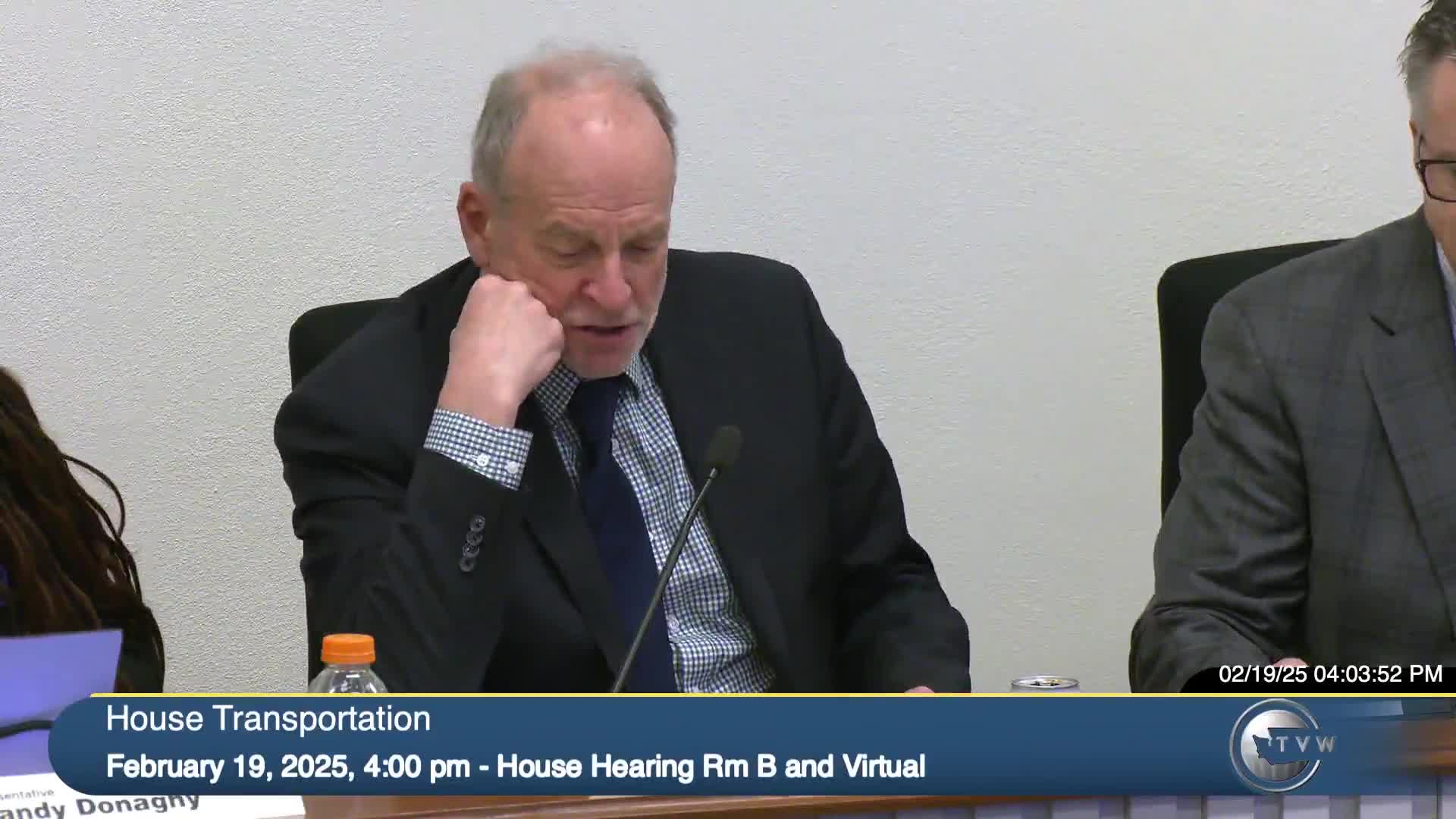
House Transportation Committee members heard public testimony and a staff briefing Wednesday on House Bill 1878, a measure to extend driver training requirements to novice drivers between 18 and 24.
For the record, Jennifer Harris, staff to the committee, summarized the bill’s central change: "House Bill 1878 concerns young driver education." Under the bill, the state would phase in driver training requirements beginning Jan. 1, 2027, with the requirements applying to those turning 18 first and expanding each year until the requirement covers all people 18 through 24 by 2033.
Why it matters: Supporters and neutral agencies told the committee that drivers who bypass the driver-education pipeline appear to have higher crash rates after licensure, and proponents said the bill would reduce traffic deaths and serious injuries among older novice drivers. Opponents and some instructors warned the committee about implementation challenges, program quality for online offerings, and the cost and logistics of a voucher program.
The bill’s main provisions outlined to the committee include: - A phased implementation schedule beginning Jan. 1, 2027, moving year-by-year until the requirement applies to people ages 18 through 24 (committee staff described the end year as 2033). - That eligible training may be completed through a DOL-licensed private driver training school, an OSPI-authorized school district program, or an online self‑paced course approved by the Department of Licensing (DOL). Students who choose the online option would also have minimum behind‑the‑wheel hour requirements: 6 hours for ages 18–21 and 4 hours for ages 22–24, with an alternate condensed course available for 22–24 year olds. - Motorcycle endorsement applicants aged 18–24 must complete a DOL‑standard motorcycle safety course. - DOL may waive the requirement on narrow grounds (for example, reciprocal licensing from another jurisdiction or documented inability to complete a course) and may by rule pause phased implementation for the oldest cohort if instructor capacity or course availability is insufficient. - Subject to transportation‑budget appropriations, DOL must create a certification and instructor training program and may offer grants or incentives to expand instructor capacity and diversity. - A voucher program (subject to available funds) to cover average course costs for novice drivers from low‑income households; DOL must consult the Washington Traffic Safety Commission on eligibility and procedures and must make clear the voucher program is not an entitlement. - A tribal partnership program to provide driver education in tribal communities, with an implementation plan due to the transportation committees by Jan. 1, 2026. - Fee increases intended to fund the program: the permit fee would increase by $10 to $35, the driver exam fee would increase by $15 to $50, and the license service fee collected at vehicle registration would rise by $0.25 to $0.75. The bill directs those revenues and certain other sources (including any surplus speed‑camera revenue and a portion of a specified special license plate fee) into a new driver education safety improvement account dedicated to expanding and improving driver education.
Data and fiscal notes: Mark McKechnie, external relations director at the Washington Traffic Safety Commission, told the committee the commission is officially neutral but emphasized the safety evidence in its Target Zero plan. McKechnie summarized Department of Licensing analysis presented to the commission: "Looking at 18 year olds who are licensed at the age of 18 ... they had a 92% higher experience of crashes in their first year of driving compared to 16 year olds who are licensed at the age of 16."
Committee staff said a partial fiscal note is available. Department of Licensing staff estimated the fee changes would generate "a little over $8,000,000 annually" and flagged additional DOL costs tied to voucher administration, application processing, customer service and IT updates.
Public testimony: Representative Brandy Donaghy (prime sponsor) urged the committee to act on safety grounds, saying in part, "When our young people are getting onto the road, they're dying." Supporters included AAA Washington, the Washington Traffic Safety Education Association, driver training instructors, and victim‑advocacy groups. Testimony raised several implementation questions: several speakers urged stronger, uniform standards that align OSPI and DOL curricula; instructors pressed for clear rules on online course standards and how behind‑the‑wheel instruction would be scheduled in rural areas; and some speakers warned a voucher program may not reach all who need help.
Areas of concern and committee focus: Committee members and witnesses pressed for clarity on several operational points that would affect implementation and cost. These included how OSPI and DOL would coordinate curriculum and quality standards for public‑school versus private‑school programs, how online course standards will be defined and audited, what mechanisms DOL will use to expand instructor capacity, and whether voucher eligibility criteria could exclude some young adults who cannot otherwise afford instruction.
Next steps: The hearing record closed without a committee vote. Staff noted the Superintendent of Public Instruction’s fiscal review remained outstanding; committee members asked to see more detailed cost and implementation estimates from DOL and OSPI as the bill moves through the process.
Ending: With public testimony concluded, the committee closed the HB 1878 hearing and moved to the next bill on the agenda.