Get Full Government Meeting Transcripts, Videos, & Alerts Forever!
Get email alerts on the Law Enforcement Standards topic
No spam. Unsubscribe anytime.
Substitute bill would standardize eligibility and background checks for chiefs, marshals and sheriffs; limits on volunteers clarified
Summary
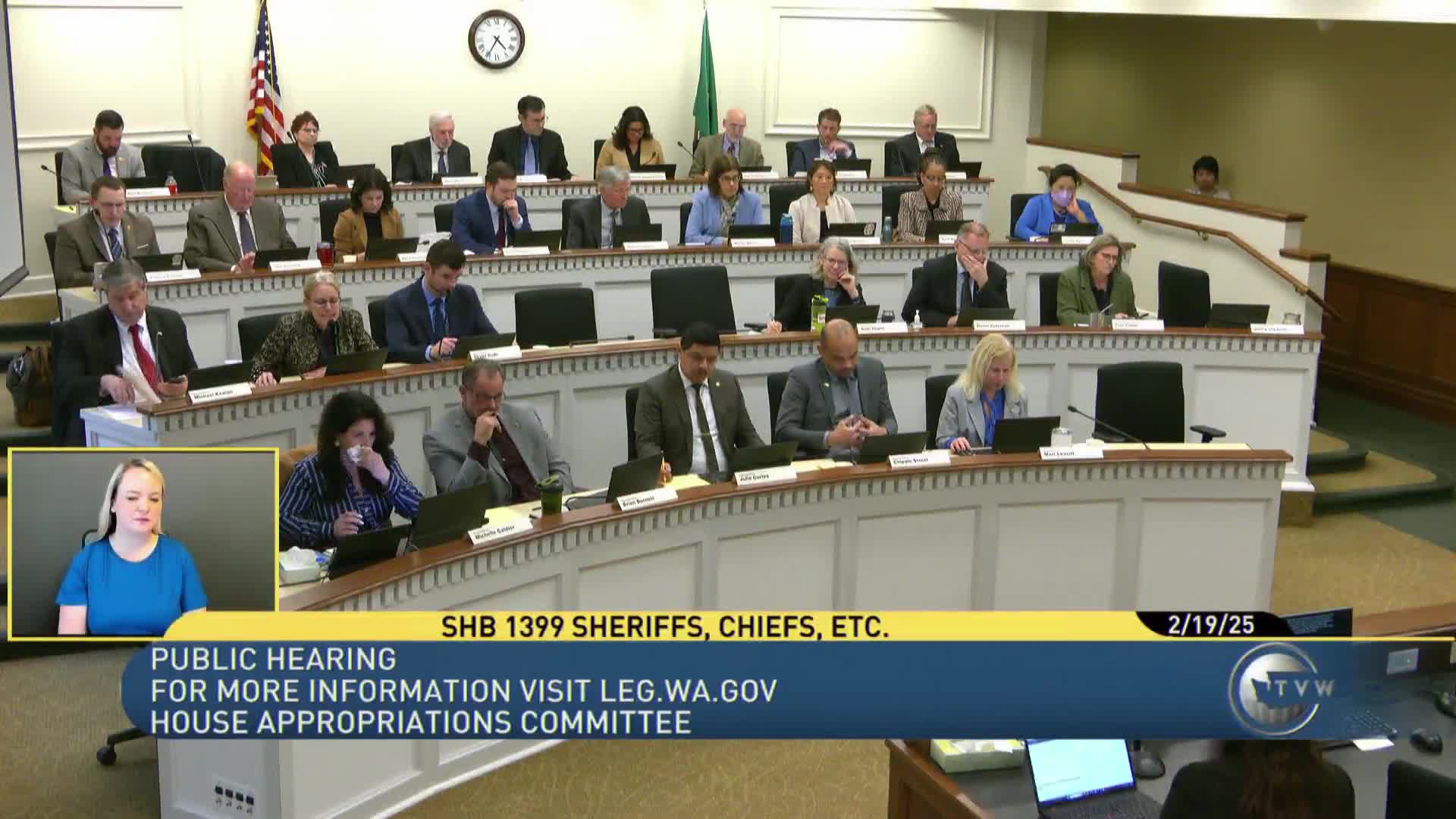
Substitute HB 1399 would set uniform eligibility and background requirements for police chiefs, marshals and sheriff candidates, require CJTC verification and timelines, restrict uncertified volunteers’ law‑enforcement duties and repeal statutes on police matrons.
Substitute House Bill 1399 would revise eligibility and background‑investigation requirements for police chiefs, marshals and sheriff candidates across Washington, require certification timelines tied to the Criminal Justice Training Commission (CJTC), and restrict duties for volunteers or specially commissioned officers who are not certified.
Nut graf: Supporters said the bill strengthens consistency and professionalism across jurisdictions by aligning minimum qualifications and background checks; opponents, including the Association of Sheriffs and Police Chiefs, warned some provisions risk constitutional conflict or unintended operational impacts and asked for more negotiation with stakeholders.
Key provisions and staff summary: Lena Langer (Community Safety Committee staff) summarized five major changes: uniform eligibility criteria for police chiefs and marshals (age 25+, no foreign‑equivalent felony, no gross misdemeanor involving moral turpitude, minimum two years of full‑time governmental law enforcement service or timely CJTC certification), the same background and certification rules for sheriff candidates (including a requirement that the Washington State Patrol submit completed background investigations to CJTC at least 45 days before the filing deadline), restrictions on uncertified volunteers and specially commissioned officers barring the use of law‑enforcement authority, firearms or other weapons, and CJTC duties to prioritize training and provide guidance by June 30, 2026. The chapter relating to “police matrons” would be repealed.
Fiscal briefing: Sydney Jeffries summarized fiscal impacts across agencies: total estimated costs of $598,000 in 2025–27, $277,000 in 2027–29, and $571,000 in 2029–31 all NGFO; the Washington State Patrol and CJTC estimated candidate‑investigation and personnel costs tied to verification and training; local government costs for background‑check fees and recordkeeping were indeterminate.
Public testimony: The Association of Sheriffs and Police Chiefs, represented by James McMahon, testified in opposition, saying the association supports minimum standards but objected to elements they consider constitutionally problematic and sought negotiations with the sponsor. The League of Women Voters of Washington and the Northwest Immigrant Rights Project supported the bill; advocates said the bill would help build trust with immigrant communities and ensure professional standards for leaders. A range of citizen and advocacy witnesses also testified for and against specific provisions, notably section 15 repealing statutes related to police matrons.
Discussion and outcome: Committee members asked clarifying questions in the hearing record; multiple stakeholders requested more negotiation; no committee vote is recorded in the transcript.