Get Full Government Meeting Transcripts, Videos, & Alerts Forever!
Get email alerts on the Executive Office Budget topic
No spam. Unsubscribe anytime.
Governor's office seeks to restore emergency fund, explores constituent‑service platform and Task Force 2250 funding
Summary
The Executive Office of the Governor asked the Joint Finance‑Appropriations Committee on Feb. 18 to transfer $1,350,000 in general‑fund cash into the governor's emergency fund to restore its cash balance to the $2 million appropriation and discussed plans for a constituent‑services platform and other IT and one‑time requests.
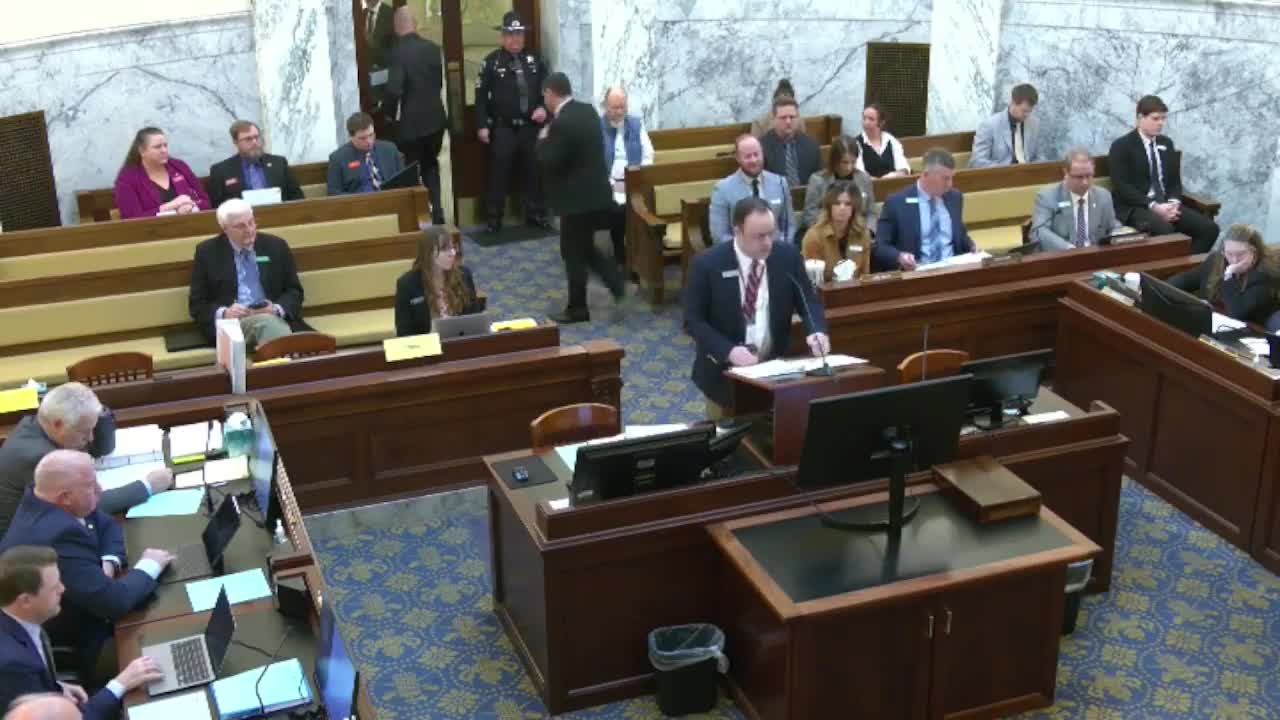
The Executive Office of the Governor presented its FY26 budget requests to the Joint Finance‑Appropriations Committee on Feb. 18, including a recommendation to transfer $1,350,000 in general‑fund cash to restore the governor's emergency fund cash balance to its authorized $2 million appropriation.
Christopher Lahoset, legislative budget analyst, explained the governor's emergency fund has a base appropriation of $2 million and a current cash balance of roughly $650,000. "This cash transfer would bring that fund balance up to the amount that's currently appropriated," Lahoset said, noting the fund has been used for items including reimbursements to Idaho State Police for the Moscow murder investigations and the Esto Perpetua (fight fentanyl) program.
The governor's office is also seeking $45,000 one‑time for IT replacement items and $250,000 one‑time to implement objectives from the federal White House Task Force on America 250 (noted in the governor's materials as Task Force 2250), which the analyst said stems from a presidential executive order. Lahoset said the Task Force objectives include honoring Idahoans' achievements, participating in a national exhibition and encouraging local events.
Constituent‑services platform discussion: the FY25 budget included funding to procure a constituent‑services management platform; the legislative materials referenced Salesforce, but Division of Financial Management Director Lori Wolf told committee members that Salesforce proved cost‑prohibitive in initial searches. Wolf said the governor's office has not yet spent the FY25 appropriation and is working with ITS and DFM to identify a more cost‑effective platform and to phase requirements.
Why it matters: Senator Hart and other members asked about recurring costs and whether the constituent‑services solution would represent ongoing subscription expense. Lahoset and Wolf said implementation choices remain under review and that the governor's office is exploring options that could lower long‑term costs and leverage existing state technology.
Other details: Lahoset summarized the executive office’s concentration of federal CARES/CARES‑Act and emergency fund monies in the Governor's Emergency Program and noted an ongoing authorization for an account book used for certain transfers. Wolf described routine interagency personnel reimbursements and the longstanding 10‑P process used to share staff costs across agencies; she said the state’s new LUMA accounting system supports those transactions and pledged to provide transaction details to the committee on request.
Follow up: Committee members requested itemized expenditure reports for charter and in‑state charter flight costs, a line‑item spreadsheet for the $1.35 million drawn from the emergency fund, and an itemized list of the $45,000 ITS hardware request. The governor's office and DFM agreed to provide the requested spreadsheets and transaction details to the full committee.
No formal appropriation votes were taken at the hearing; analysts will supply follow‑up documents requested by legislators.