Get Full Government Meeting Transcripts, Videos, & Alerts Forever!
Get email alerts on the Capital Projects Permanent Building Fund topic
No spam. Unsubscribe anytime.
Committee reviews permanent building fund and public-works projects; $1.9 billion active project portfolio noted
Summary
Analysts and the Division of Public Works briefed the Joint Finance committee on the permanent building fund, the state's multi-year capital project accounting, and a slate of FY2026 project requests including life-science and veteran support facilities.
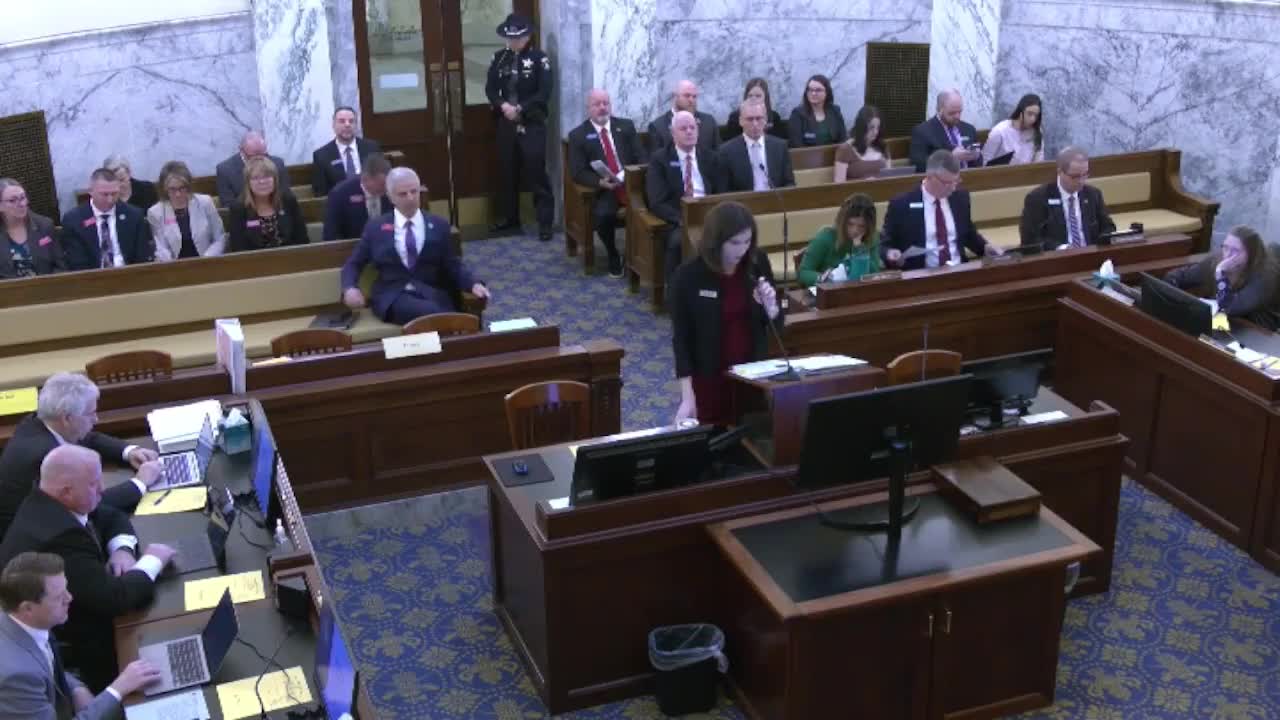
Legislative staff and the Division of Public Works presented the Permanent Building Fund (PBF) budget and project portfolio to the Joint Finance-Appropriations Committee on Feb. 17, 2025, explaining the fund's revenue streams, the accounting treatment for multi-year projects, and several capital project requests for FY2026.
Analyst Frances Lippett told the committee the PBF is structured to accommodate multi-year capital projects and that unexpended appropriations become continuously appropriated under Idaho Code §57-1105. She listed the seven statutory revenue sources that feed the fund, including a $10 fee on each income tax filing, partial shares of several excise taxes and the lottery, interest, and past direct investments of general-fund monies toward capital work.
Lippett said the total value of active public-works projects is approximately $1.9 billion, with about $1.4 billion classified as capital projects and roughly 42% of capital funding committed. The division typically expends 50–70% of an appropriation in the first year; in FY2024 the division expended about $11 million of an original appropriation because of multi-year phasing and differences in the accounting system since LUMA implementation.
Administrator Dale Reynolds of the Division of Public Works summarized major FY2026 requested projects recommended by the PBF advisory council. Highlights presented to the committee included:
- $14 million toward a life-science complex at Idaho State University, part of an overall estimated project cost of $127.77 million that PBF staff said would also use $35.77 million in agency funds and $78 million in bonding.
- $6.5 million to expand the Department of Lands’ Ponderosa office for workspace, restroom/shower facilities, and improved security at public entry.
- $5.56 million for utilities to support a future Idaho National Guard readiness center in Bonneville County (the readiness center is expected to support up to 350 military personnel at peak occupancy).
- $5.525 million for Idaho State Police District 2 (Lewiston) after earlier attempts to purchase and retrofit an existing building failed and the agency returned to request funds for land purchase and new construction.
- $2.5 million for additional research labs at Boise State's Micron Center for Materials Research.
- $8 million for a joint military-science and veterans assistance center at the University of Idaho.
Lippett described a $12.5 million restoration line that would return appropriation repurposed in FY2025 (used for a minimum-security dorm at Orofino Prison and ISU facility work). The request also included about $68.2 million in alteration, repair, accessibility and facility-maintenance projects across multiple agencies and the Capitol Mall/Chinden Campus.
Committee members asked for more granular reporting and timelines. Representative Miller and others requested lists of projects that had not advanced within timeframes and asked for an account of projects sitting idle; Lippett agreed to provide the list of projects failing to meet reporting or execution milestones tied to language the Legislature added last year (if a project lacked a shovel in the ground within four years, funds may be available for reappropriation).
Reynolds described variability in project timelines (design-to-complete can be multi-year and depends on delivery method), said some projects under design may take roughly two to three years once construction begins (he cited a women's prison example slated to complete in about 2.5 years once construction starts), and noted workforce and materials pressures in the construction market that complicate cost estimating and scheduling. He said the division is actively hiring project managers to move the portfolio forward.
No formal appropriation votes occurred during the hearing; the presentation informed committee deliberations and produced requests for additional status reporting.