Get Full Government Meeting Transcripts, Videos, & Alerts Forever!
Get email alerts on the Juvenile Corrections Budget topic
No spam. Unsubscribe anytime.
Idaho juvenile corrections director flags rising mental‑health and treatment costs; requests cover radios, SUD program
Summary
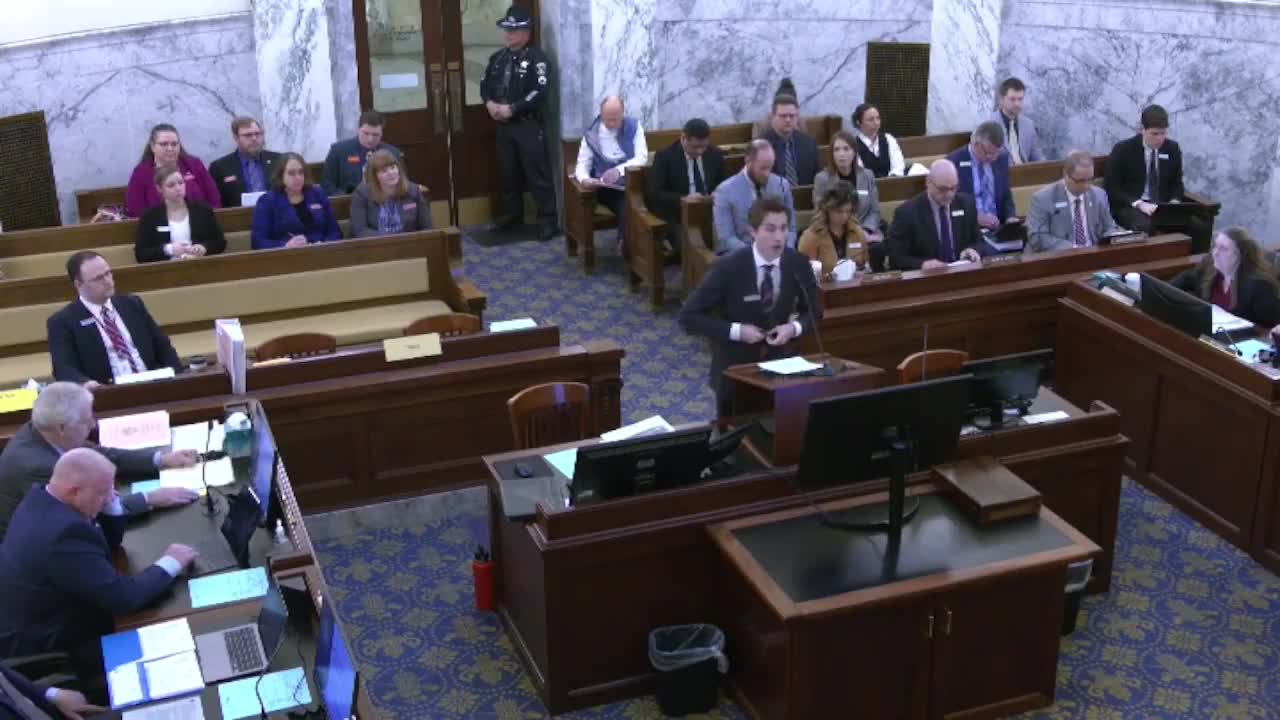
The Idaho Department of Juvenile Corrections told the Joint Finance‑Appropriations Committee on Feb. 18 that it is seeing increased mental‑health needs among youth and requested budget items including a $300,000 ongoing SUD treatment appropriation and a $380,000 one‑time radio upgrade.
The Idaho Department of Juvenile Corrections told the Joint Finance‑Appropriations Committee on Feb. 18 that the agency is seeing increased mental‑health needs among youth in custody and is requesting several budget items to respond, including a $300,000 ongoing request for residential substance‑use disorder (SUD) treatment and a $380,000 one‑time radio upgrade.
The budget analyst, Noah Peterson, told committee members the SUD residential treatment daily cost rose from about $198 per day in 2021 to $399 per day in August 2021, and that the average length of stay increased from 31 days to 67 days over the same period. "This $300,000 request is to make up the difference from what was previously covered by health and welfare," Peterson said, explaining that the Department of Health and Welfare used ARPA funds to offset part of those increases but is no longer able to do so.
Director Ashley Dowell told the committee she is "concerned about just the level of mental health we're seeing in the youth with our facilities" and highlighted increases in suicidal ideation and self‑harm. Dowell said the department is working with county partners and with the Idaho Behavioral Health Council on diversion strategies and minimum‑age policy discussions.
Why it matters: committee members pressed for data showing whether the juvenile census changes and crisis‑center use justify the funding requests. Peterson and Dowell committed to providing population and diversion data to the committee. Representative Tanner asked for figures on how many juveniles are in custody over time; Dowell said the department's census hit an all‑time low of 137 in May 2024 and stood at 176 on the day of the hearing, a roughly 19% increase from the low.
Budget requests and program details: Peterson outlined enhancement requests that the governor recommended: a $380,000 one‑time radio system upgrade and replacement (funded from the Juvenile Corrections Endowment Income Fund) to provide a man‑down/location alert functionality across the three juvenile correction centers (Lewiston, Nampa and St. Anthony); a $300,000 ongoing general‑fund request to cover higher SUD treatment costs no longer covered by Health and Welfare ARPA funding; $145,100 from dedicated funds for replacement items; a net‑zero program shift of $350,000 for youth assessment center costs between administrative and community programs; $232,500 for IT replacement items; and a net‑zero personnel reclassification reducing 7 FTP while shifting costs to operating for IT consolidation with the Office of Information Technology Services.
On diversion and crisis centers: Dowell said youth crisis centers have helped divert children from detention in some cases, and she described anecdotal examples of children under age 10 who avoided custody because of crisis‑center intervention. The director said she did not have detailed diversion statistics in the hearing but agreed to provide the committee with data on crisis‑center referrals and impacts.
Questions and follow up: Committee members pressed for detail on why residential treatment stays and per‑day costs doubled. Dowell and Peterson said treatment length and placement decisions are driven by community providers and use ASAM (American Society of Addiction Medicine) placement criteria; the department does not directly control those decisions. The department agreed to provide usage and placement data and to work with the fiscal impact team to review the cost drivers.
Looking ahead: Dowell said the department is considering minimum‑age policy changes for detention and is working with a diversion subcommittee of the Idaho Behavioral Health Council; she pledged to return to the legislature with recommended approaches. The department also noted an ongoing need to strengthen mental‑health services in both community and facility settings.
The committee did not take a formal vote on any item during the presentation; analysts and agency staff agreed to provide follow‑up data requested by members.