Get Full Government Meeting Transcripts, Videos, & Alerts Forever!
Get email alerts on the Education Budget topic
No spam. Unsubscribe anytime.
Idaho education budget hearing spotlights career-ready grants, special-education staffing and assessment transition
Summary
The Joint Finance‑Appropriations Committee reviewed the State Department of Education budget, focusing on the Career Ready Students program, several proposed staff additions for special education and tribal services, and a $2.7 million request to transition the statewide student assessment platform.
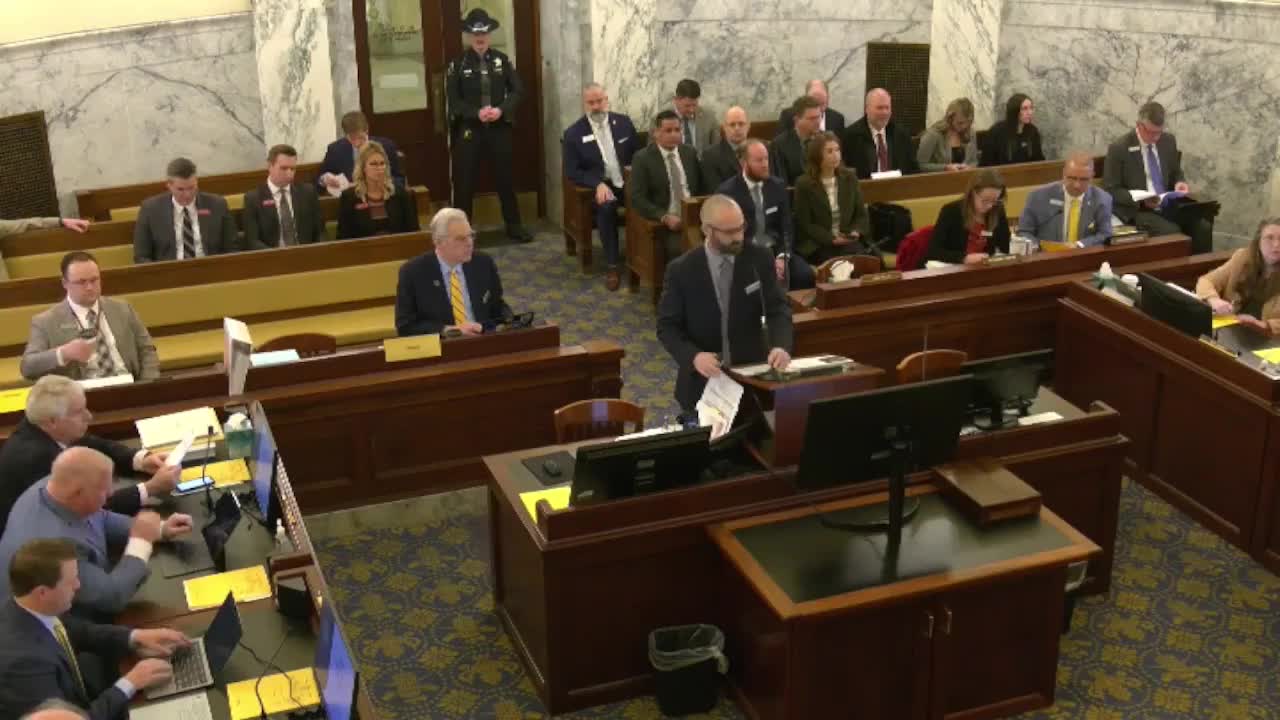
The Joint Finance‑Appropriations Committee heard a detailed presentation on the State Department of Education budget that highlighted large career‑training grants, rising special‑education caseloads and a request to pay for a transition to a new statewide student assessment platform.
Jared Tetro, Deputy Division Manager, Budget and Policy Analysis Division, Legislative Services Office, told the committee that large one‑time federal and ARPA appropriations — including money for the Career Ready Students program — have created accounting and timing differences between appropriations and cash outflows. “Most of the dollars … show up in the top box … but as far as a free fund balance they don't show up and that's because the dollars are obligated through either a contract or re appropriation,” Tetro said.
The committee was told the Career Ready Students program has roughly $20,000,000 in unobligated funds in the current cycle and that about 72 grants have been awarded, obligating about $62.7 million; reimbursements have been sent as districts submit receipts. Tetro and Superintendent Debbie Critchfield said the program was designed to expand vocational and industry‑linked offerings statewide and that some projects are capital in nature and therefore take longer to draw down funds.
Why it matters: Members pressed for clarity because federal one‑time funds like ARPA and ESSER can create obligations that local districts may expect to continue. Committee members asked for itemized reports showing how federal and Career Ready funds were spent or obligated.
Special education and tribal services
Superintendent Debbie Critchfield described a large rise in parent requests and due‑process activity that the department says is driving the request for additional staff. “We have an increase in parents ... asking for their students to be tested,” Critchfield said. She reported a 65% increase in mediation requests, a 77% increase in complaints and a large percentage increase in hearings, and argued the department needs more capacity to manage disputes and federally required processes.
The department requested ongoing enhancements that include: - A dispute resolution specialist (1.0 FTE; requested $84,400) to support special‑education customer service and help resolve parent‑school disputes. - A charter‑school special education specialist (1.0 FTE) to provide monitoring, reporting and technical assistance to charter schools under IDEA and Section 504. - A second Indian Education Coordinator (1.0 FTE; requested approximately $114,000) to support tribal relations, travel and improvement of student outcomes.
Assessment, testing and data
The department requested $2.7 million in one‑time federal spending authority to transition to a new statewide assessment platform for the ISAT (the statewide assessment for grades 3–8 and one high‑school administration). Gideon Tolman, Chief Financial Officer, said the funds are intended to pay for the platform transition and piloting associated with an expiring contract with the Smarter Balanced Consortium. Tolman said the department believes base funding would cover ongoing administration but agreed to provide follow‑up detail to the committee about whether $2.7 million would fully pay for a new assessment or only for transition and piloting costs.
Other budget items discussed
- Drivers education reimbursement: The department proposed legislation to increase driver‑education reimbursements from $150 to $300 per student. Tetro noted the driver‑training fund cash balance has grown (from about $3.8 million to $7.4 million in the projection shown) and Tolman said the request is for spending authority to reduce the accumulated balance and pass more money to districts. - School bus camera fund (HB 610): Tetro briefed members on a supplemental request tied to HB 610; the fund currently shows about $35,000. The committee was told that if both the supplemental and an ongoing enhancement were approved, spending would be capped by available cash and unspent appropriations would revert. - Private school COVID support and ARPA/ESSER: Members asked for a list of private schools that received funds and amounts; Tetro and the department agreed to provide those reports. Tetro and several legislators also requested a breakdown of CAREER Ready obligations tied to the $38 million variance shown on a slide. - Child Nutrition Technology Grant: A four‑year grant for $746,300 was previewed to cover MyIdahoCNP software costs (September 2024–September 2028). - Governor recommendation for underperforming charter schools: The governor recommended $300,000 from the public charter school authorizer fund to support underperforming charters; Tetro cited Idaho Code creating the public charter school authorizer fund and said authorizer fees are the source of revenue.
Audit, vacancies and implementation risks
Members pressed about longstanding audit findings tied to verifying district payments. Critchfield said the department filled an auditor position and is working to address the audit recommendations. Committee members also asked about vacancies and personnel fill rates; Critchfield said six positions were open at the time of the hearing and were being actively filled.
Requests for follow‑up
Several committee members asked for specific follow‑up reports, including: (1) a list of private schools and amounts that received private‑school COVID support; (2) a breakdown of Career Ready Students obligations and status of each project; (3) details on reimbursements paid from the public charter school authorizer fund; and (4) clarification about whether the $2.7 million assessment request covers full acquisition or only transition/pilot costs.
The hearing continued to additional agency presentations after the superintendent concluded.