Get Full Government Meeting Transcripts, Videos, & Alerts Forever!
Get email alerts on the State Budget Administration topic
No spam. Unsubscribe anytime.
Joint Finance reviews Department of Administration budget; committee presses on governor's housing fund and risk management staffing
Summary
Legislative analysts and the Department of Administration presented the agency's FY2026 requests, highlighting a near-empty governor's housing fund, requests for personnel to manage property values and insurance, and technical adjustments to capital and operating appropriations.
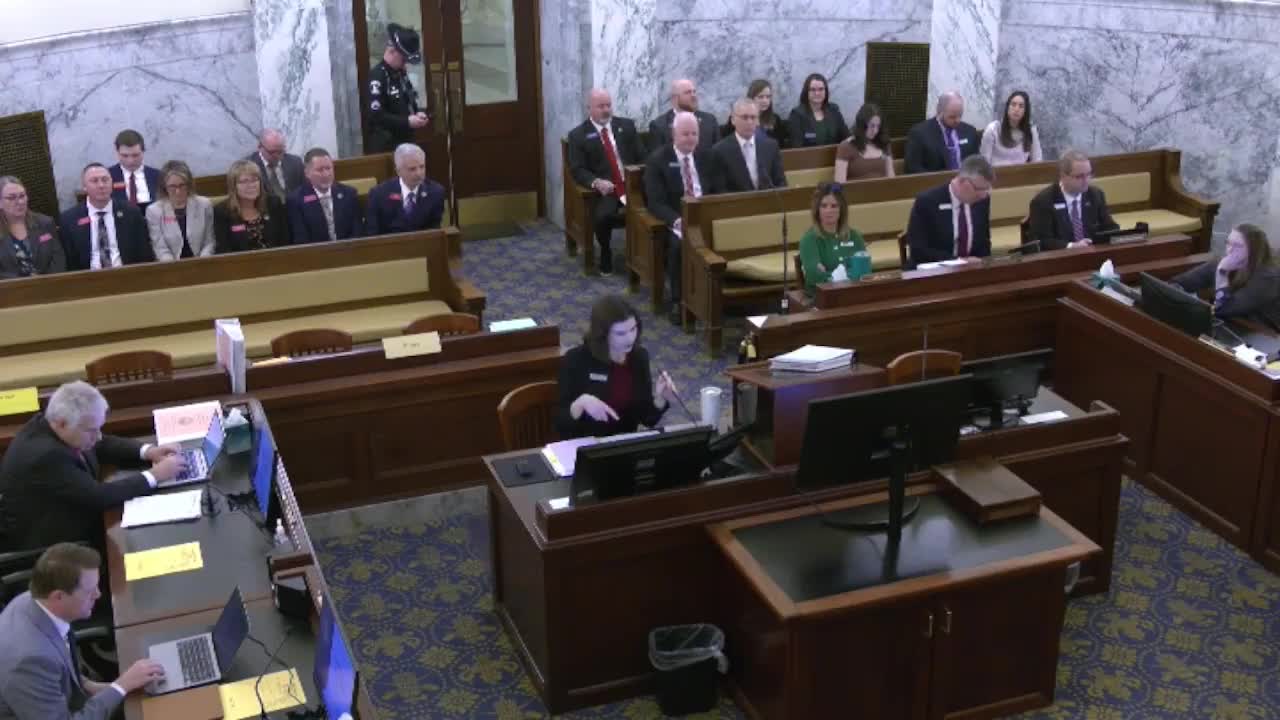
The Joint Finance-Appropriations Committee reviewed the Department of Administration's FY2026 budget on Feb. 17, 2025, where analysts outlined funding sources, staffing, and several specific requests including an ongoing general-fund appropriation for the governor's housing stipend and new risk-management staff.
Frances Lippett, budget and policy analyst with Legislative Services, told the committee the Department of Administration houses five budgeted programs and that roughly 10% of the department's appropriation comes from the general fund. She said the governor's housing committee and the governor's residence fund are established in Idaho Code and that the fund currently provides a monthly housing stipend "currently set at 4,551." Lippett said the department requested a general-fund appropriation to restore the fund balance after a prior $30,000 request was not funded; she reported two different FY2026 request figures during the presentation (both $60,600 and later $660,600 were stated in the transcript).
The discrepancy in the transcript aside, Lippett warned the committee that without further appropriation the governor's residence fund would be depleted in mid-2026. Director Steve Bailey of the Department of Administration explained the governor's housing committee meets annually and that past intent had favored a governor's mansion but no project has advanced to construction; he said property dedicated for a mansion remains in a revocable easement with the City of Boise.
Committee members pressed for more detail. Representative Petzke (Rep. Petzke) asked whether the stipend might more appropriately be funded through the governor's office; Bailey said the item historically has been in the administration budget because the department supported the governor's housing committee and previously managed a residence. The committee asked staff to provide the statutory history and the governor's housing committee report for review.
On risk and insurance, Faith Knowlton, administrator for the Division of Insurance within the Department of Administration, described a large property portfolio managed by a single analyst and cited instances where agencies had retained demolished buildings in their insurance rolls or entered incorrect replacement values. She told the committee the division has begun a four-year appraisal process and requested an additional property value analyst to audit and correct state property valuations so insurance coverage matches actual replacement value; the request aims to reduce overpayment on insurance premiums and to capture refunds for current-year overpayments when discovered.
Representative Tanner asked for a full accounting of continuously appropriated funds and ongoing appropriations tied to those funds. Lippett agreed to provide the committee with a breakdown of continuous appropriation accounts and ongoing appropriations for the retained-risk account and other continuously appropriated funds.
Lippett and Director Bailey also reviewed program-level details: the division of public works represents roughly three-quarters of the department's expenditures; personnel costs and operating costs account for significant shares of the budget; the department requested several ongoing and one-time enhancements (positions for group insurance support, risk/property valuation, project managers and purchasing officers; IT hardware; vehicles/trailers repurposed where possible). Bailey defended requests as responses to expanded workloads from health-plan participation growth and capital projects activity. He estimated Chinden Campus investments to date and projected additional maintenance needs (discussed more fully in the Permanent Building Fund article).
The presentation drew committee follow-ups rather than immediate actions. Staff were assigned to provide: (1) a history/report on governor's housing and the relevant statute; (2) a detailed list of continuous appropriation funds and the components that feed retained-risk and group-insurance fund balances; and (3) clarification of the differing FY2026 governor's housing appropriation figures in the presentation.
The Committee did not take a formal vote during this segment; no bill was adopted or defeated on the record during the Department of Administration discussion.