Get Full Government Meeting Transcripts, Videos, & Alerts Forever!
Get email alerts on the Beginning Farmer Tax Incentive topic
No spam. Unsubscribe anytime.
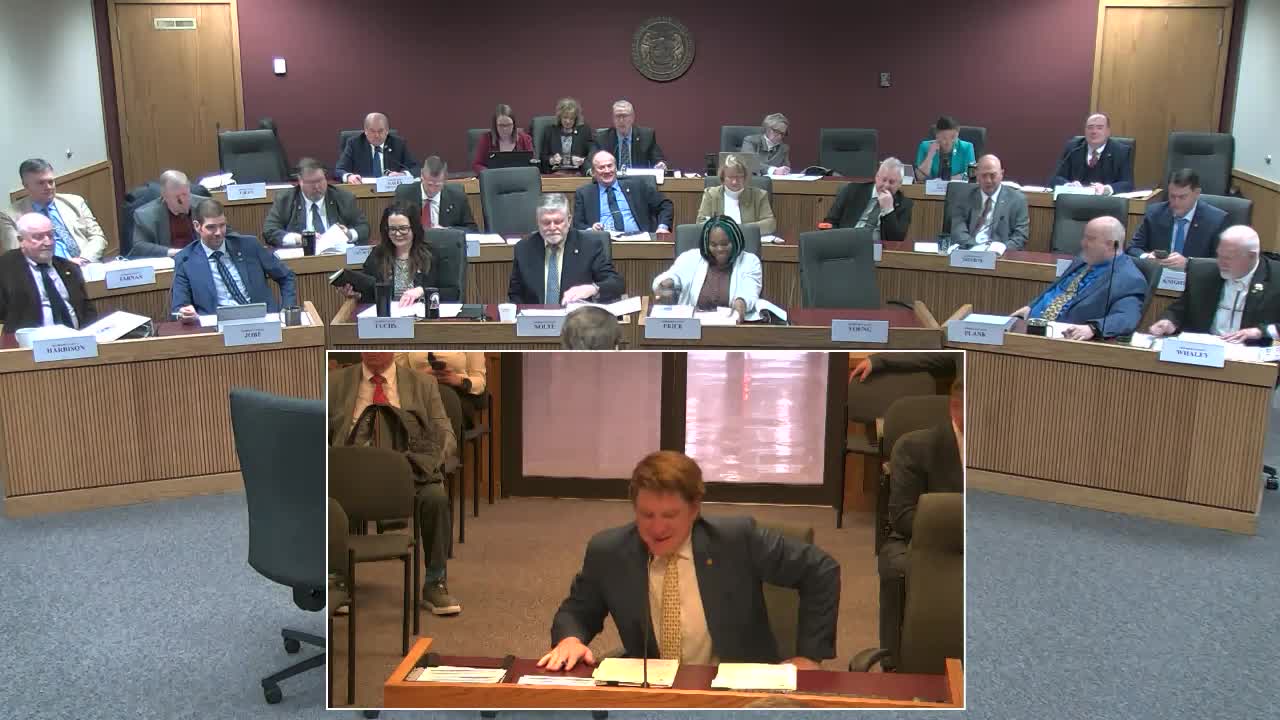
Committee hears bill to extend beginning-farmer capital gains exemption to sales to LLCs, corporations
Summary
Representative Dane Deel returned to the committee to introduce House Bill 1042, described as a cleanup and expansion of a beginning‑farmer capital‑gains incentive previously enacted.
Representative Dane Deel returned to the committee to introduce House Bill 1042, described as a cleanup and expansion of a beginning-farmer capital-gains incentive passed previously.
Deel said the original program, enacted two years earlier, allows a capital-gains deduction for sellers who sell qualifying farmland to a beginning farmer. Under the program, a beginning farmer is defined in the bill as someone within 10 years of filing a first Schedule F tax form; the deduction is bracketed and can apply up to $2,000,000 in proceeds, and sellers can qualify for a reduced or 0% state capital-gains rate when the sale meets the statute’s conditions.
HB 1042 would allow sellers to use the tax incentive when the buyer is an LLC, partnership or corporation that meets the bill’s strict definitions for a beginning producer, addressing concerns raised during rulemaking that many family farms are titled in non‑personal entities and thus could be excluded.
Ben Travis of the Missouri Soybean Association and Brent Hemphill of the Missouri Pork Association testified in support, saying most farmland today is held in LLCs, LPs or trusts and that the draft needs to accommodate common farm ownership structures so transfers to younger farmers remain feasible. Hemphill urged consideration of trusts in drafting, noting some family land is held in trust and may not currently qualify under the program’s language.
Jacob Knable of the Missouri Corn Growers Association said younger farmers had been contacting his organization about whether their operations would qualify; he and other witnesses said Department of Agriculture rulemaking had not treated LLCs as qualifying entities, prompting the cleanup bill.
Representative Harbison asked whether broadening the definition could undercut opportunities for beginning farmers. Deel replied the expansion applies to the seller’s ability to claim the deduction when selling to a beginning farmer and does not change eligibility for the buyer beyond the bill’s stated qualification rules.
Several witnesses and members urged the sponsor to consider trusts and to work with tax and trust experts on language. Representative Clemens and others said they support the policy goal but want the statutory language tightened so the program is available in practice to family operations that commonly use LLCs and similar entities.
No committee vote was recorded at the hearing. Multiple agriculture associations expressed support and the committee closed testimony on the bill before adjourning.