Get Full Government Meeting Transcripts, Videos, & Alerts Forever!
Get email alerts on the Agriculture Fire Safety Sprinklers topic
No spam. Unsubscribe anytime.
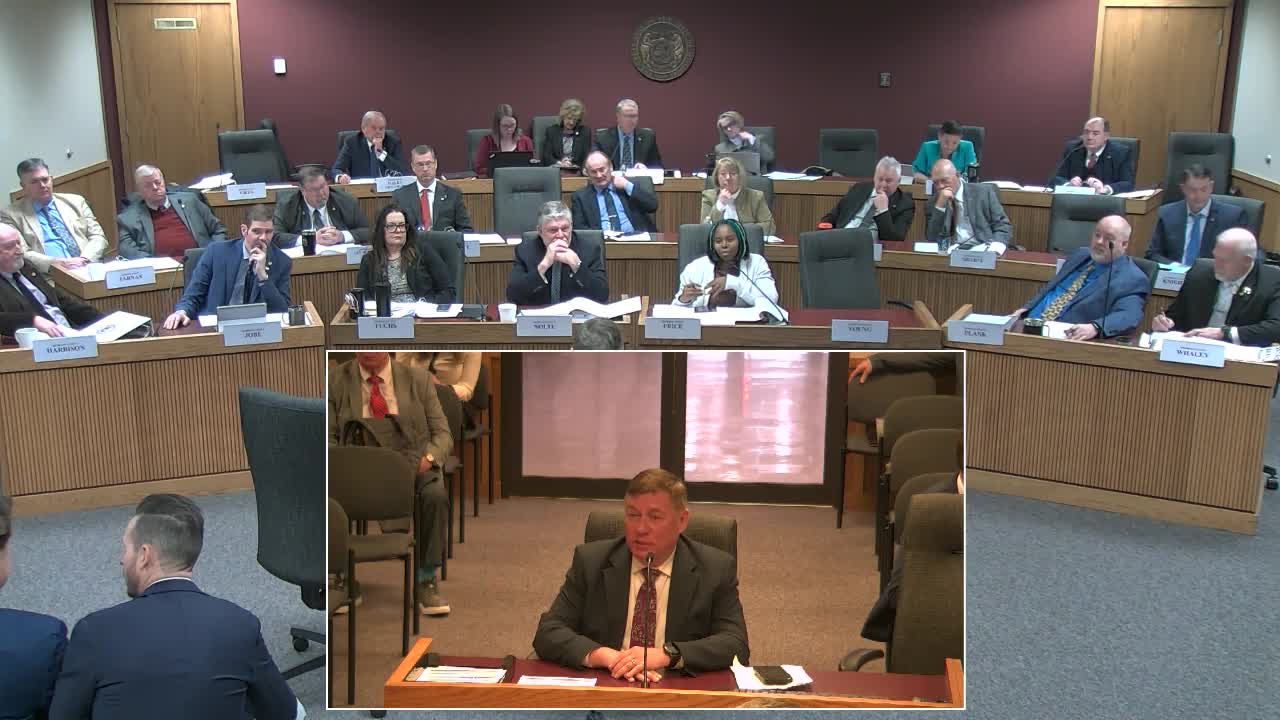
Committee hears bill to bar local sprinkler mandates for agricultural buildings
Summary
Representative Dane Deel introduced House Bill 533 on behalf of agricultural producers, saying the measure would prevent local political subdivisions from adopting National Fire Protection Association (NFPA) standards that would require sprinkler suppression systems in certain agricultural buildings.
Representative Dane Deel introduced House Bill 533 on behalf of agricultural producers, saying the measure would prevent local political subdivisions from adopting National Fire Protection Association (NFPA) standards that would require sprinkler suppression systems in certain agricultural buildings.
The bill, Deel said, “just prohibits political subdivisions from adopting the National Fire Protection Association bill” as it applies to new or existing ag structures, and is intended as a “proactive carve-out” so producers are not forced to absorb large per-head or per-acre costs when building or retrofitting livestock and poultry facilities.
Supporters told the committee the primary concern is cost and feasibility. Brent Hemphill of the Missouri Pork Association said the NFPA adopted a proposal in September 2024 that would recommend sprinklers for ag structures and that local political subdivisions could act on that recommendation. Hemphill said retrofits would be “cost prohibitive” in many parts of outstate Missouri and that some rural sites lack sufficient water supplies to operate sprinkler systems.
Mark Faganbaum of the Missouri Farm Bureau and Jacob Knable of the Missouri Corn Growers Association also testified in support, saying a patchwork of local regulations would be costly and confusing for producers. Knable said younger farmers are exploring the program but worry whether their operations would qualify under current rules.
Committee members pressed for specificity. Representative Clemens said the bill’s current language is broad and could unintentionally bar local ordinances or permits beyond sprinkler requirements; he asked whether the draft would exempt grain elevators or meat-processing facilities that house workers. Clemens said he worried about volatile grain-dust risks and about labor-safety issues in processing plants.
Deel and witnesses said the intention is to address farm production buildings and to narrow language with stakeholders. “We can work with the industry to make sure that doesn’t overlap with the more vulnerable areas,” Deel said.
Representative Plank and other members described the size and construction of confinement buildings and noted the financial and animal-welfare risks of large fires. Representative Haley and Representative Hayden said fire is less common than tornadoes, disease and equipment failures but that volunteer rural fire districts and long response times make the cost question acute for producers.
A technology noted during testimony was a firefighting robot described by attorney Richard McIntosh. McIntosh said the robot is built by a Missouri company, costs roughly $20,000, carries onboard foam that can remain effective to about −24 Celsius, and can attach to elevator shafts or move to a fire source; he offered it as an example of alternative approaches to retrofitting entire sprinkler systems. He cautioned that the bill should be tightened to exempt “unheated ag buildings” rather than broadly blocking local fire regulations.
No committee vote was recorded during the hearing. The committee closed the public testimony portion after hearing from associations and industry witnesses and moved on to the next bill.