Get Full Government Meeting Transcripts, Videos, & Alerts Forever!
Get email alerts on the Elections topic
No spam. Unsubscribe anytime.
Lawmakers debate restoring presidential primary and expanding in‑person early voting to six weeks
Summary
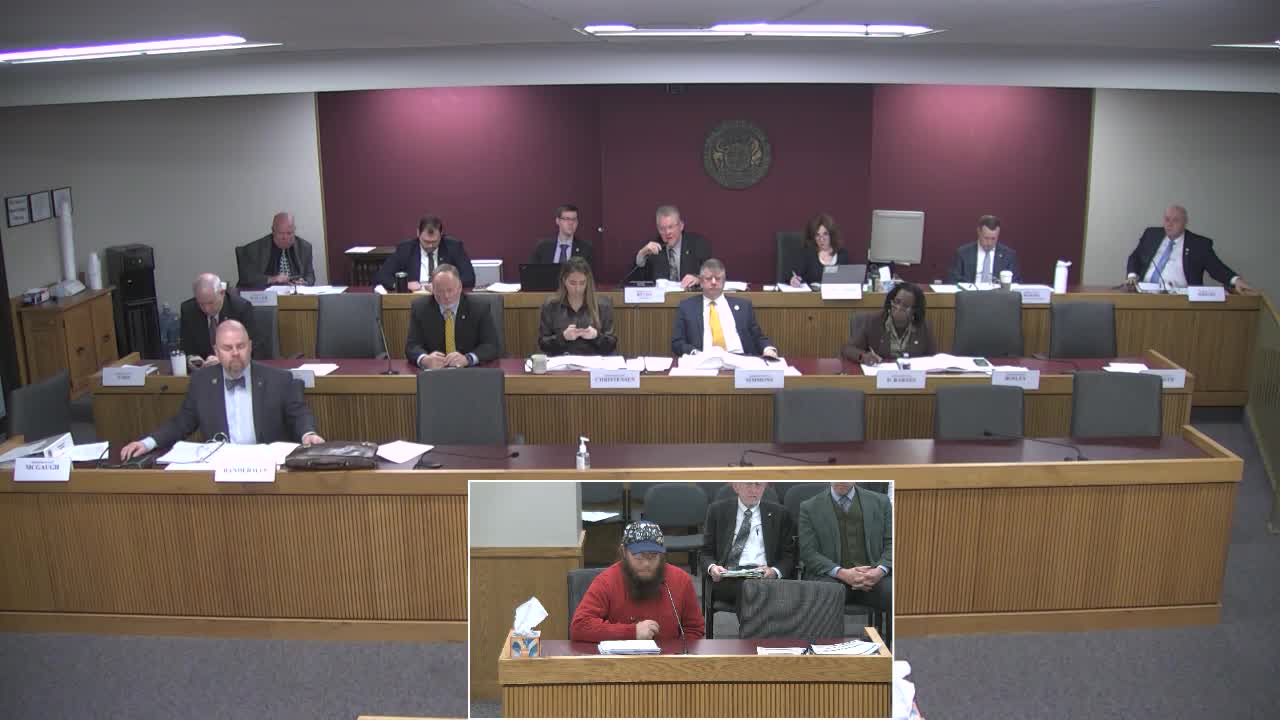
Representatives Rudy Veith and Brad Bannerman jointly presented bills to reinstate a presidential primary and to extend in‑person no‑excuse early voting from two to six weeks. Sponsors and witnesses argued reinstatement would increase participation and accessibility; clerks warned about overlapping municipal elections and staffing demands.
Representatives Rudy Veith and Brad Bannerman presented a combined proposal to restore a presidential preference primary and expand no‑excuse in‑person early voting to a six‑week window. Veith said restoring the primary would “get people involved” and noted the change is aimed at voters who cannot or do not attend caucuses. “We want people to feel involved,” he told the committee.
Bannerman described the bills’ two central changes: moving the presidential primary date earlier in March (the sponsors said as early as legally permissible without violating party rules) and extending in‑person, no‑excuse absentee voting from two weeks to six weeks. Bannerman said the earlier March date reduces overlap with April municipal elections and argued wider early voting improves access for military personnel, first responders and people with scheduling conflicts.
County clerks and the Missouri Association of County Clerks and Election Officials provided informational testimony. Kurt Barr, director of elections for St. Charles County, told the committee the association was split on reinstating a presidential preference primary but supported the operational changes that would move the date earlier and preserve a six‑week in‑person voting window. Barr said the change to six weeks would reduce the concentrated surge of early voters that produced long lines in 2024 because the same number of voters would be spread across more days. “By allowing people to come into in‑person absentee vote without an excuse for all 6 weeks … we have to staff for 6 weeks of absentee voting,” he said, adding that staffing and facility arrangements vary by county.
Speakers representing parties, voter‑protection groups and foundations testified in favor. A Democratic party witness testified the party organized its own statewide primary in lieu of a caucus and estimated that effort cost roughly $150,000; Jamie Murphy, speaking for the Missouri Republican Party leadership, said the party’s caucus alternative drew about 25,000 participants and that restoration would improve turnout. Witnesses also raised fiscal and logistical concerns: Arne C. ACDNOF (state public advocate in testimony) estimated additional administrative costs in larger jurisdictions and recommended a shorter early‑voting window (he suggested four weeks) to limit expense.
Committee members probed several details including the date selection (the sponsors said March is the earliest permissible date without violating party rules), whether municipalities could place local items on the presidential‑primary ballot and potential confusion from changing the customary “first Tuesday after the first Monday” schedule. Sponsors said they had consulted party officials and county clerks and proposed edits to reduce overlap with municipal elections.
No committee vote was taken on restoring the presidential primary or the timing amendments during the hearing. Sponsors said they would file a committee substitute combining the bills and were open to further edits on cost‑sharing and operational mechanics.
Votes at a glance: none for these bills in this session; committee closed the public hearing after testimony.