Get Full Government Meeting Transcripts, Videos, & Alerts Forever!
Get email alerts on the K‑12 School Choice Vouchers topic
No spam. Unsubscribe anytime.
House budget committee presses treasurer on $50 million general‑revenue request for Missouri Empowerment Scholarship Accounts
Summary
State Treasurer Vivek Malik told the House Budget Committee the Missouri Empowerment Scholarship Account Program is expanding and that his office will implement legislative direction for a governor‑proposed $50 million general‑revenue transfer, but lawmakers pressed for data and oversight details before any allocation.
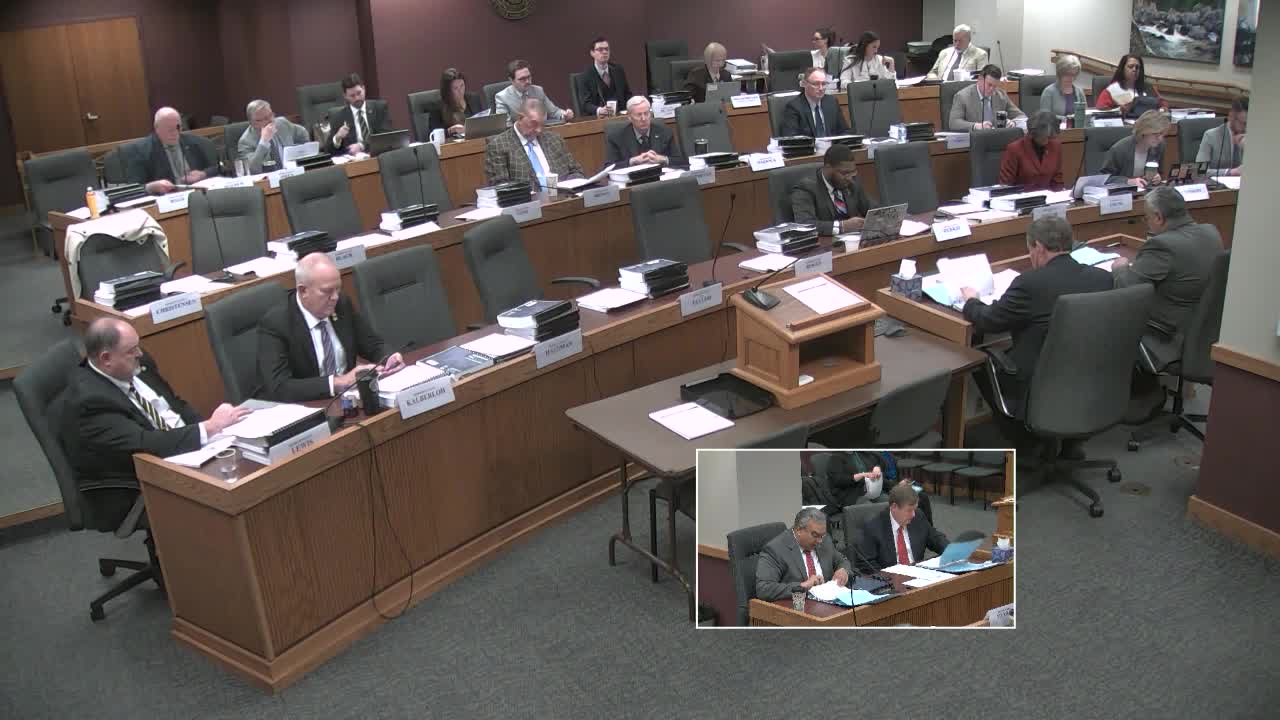
JEFFERSON CITY — State Treasurer Vivek Malik told the Missouri House Budget Committee during the office’s fiscal‑year 2026 hearing that the Missouri Empowerment Scholarship Account Program (MESAP) is expanding rapidly and reiterated that his office will implement the legislature’s direction on how to spend a governor‑proposed $50 million general‑revenue transfer.
The MESAP discussion dominated the treasurer’s appearance as representatives raised questions about program scale, reporting requirements, the role of Educational Assistance Organizations (EAOs) and an intermediary vendor, Class Wallet. Malik described program growth and parental satisfaction rates but said the treasurer’s office will wait for legislative instruction before allocating general revenue.
The committee heard that MESAP and its implementing partners have recorded rapid increases in demand. Malik told the committee that during the year the treasurer’s office has seen strong take‑up and that, "The continuous growth of the program shows that there is a lot of interest across Missouri for this program." He summarized program metrics the office tracks: parental satisfaction reported at about 95% in the first program year and 98% in the second, roughly 2,677 students awarded scholarships in the last reported school year, and program‑related 529 deposits crossing $4.5 billion with over 96,000 accounts in the state 529 plan.
Lawmakers focused most of their questions on how the governor’s proposed $50 million would be used and whether the treasurer’s office or the legislature would direct distribution. Representative Mayhew asked whether the office has estimated how many additional students the $50 million would serve; Malik said his office had not produced a firm figure but estimated roughly "close to 5,000 students" if certain assumptions held. Malik told the committee, "We will be waiting direction from the legislature, and I would not assert upon your authority on making that decision how you want us to do that." (Vivek Malik, State Treasurer)
Committee members pressed the treasurer for operational and oversight detail. Key points of discussion included: - EAOs and eligibility: Malik said the program currently allows up to 10 EAOs statewide and that statute limits no more than seven EAOs to a single congressional district. He said EAOs must apply annually and renew their participation. - Reporting requirements: Committee members asked for granular reporting on scholarship recipients by income, grade level, IEP status, free/reduced‑price lunch eligibility and previous private‑school enrollment. Malik said statutorily required reports are provided after the third program year and that his office will provide the data the committee requested. - Use of general revenue vs. donations/tax credits: Representatives asked whether general revenue would be routed through EAOs or paid directly to families. Malik repeated that the treasurer’s office would follow legislative direction about distribution mechanisms. - Intermediary contractor Class Wallet: Members asked about the contract and administrative fees. Malik said the treasurer’s office has a contract with Class Wallet to access funds and disperse payments and that historically a portion of donated funds (discussed in committee as roughly a 4% administrative fee) has been used for administration; Malik said he would provide details and the contract on request. - Religious affiliation of EAOs and constitutional concerns: Representative Mayhew and others noted most EAOs listed have religious affiliations and asked whether using general revenue to fund services tied to parochial schools raised constitutional issues. Malik said the treasurer’s office would leave constitutional questions to the legislature and legal counsel and would administer the program consistent with legislative direction.
Opposition and caution also surfaced. Representative Fogel, taking issue with direct general‑revenue funding for private or parochial schools, warned some private schools that receive taxpayer dollars may turn away or not serve students with disabilities or families that do not share specific religious views; he urged caution about moving large general‑revenue funds into a program that could direct state dollars to institutions that do not serve all students.
Malik and committee members also reviewed program history and mechanics. They discussed a statutory cap on tax credits and donations that the treasurer said can move upward under a statutory formula (the treasurer cited a cap floor and the potential to issue more credits up to a larger cap). Malik described prior program rounds and demand: when a portal opened the office received 571 applications requesting about $405 million after the legislature raised the program cap; earlier application windows had overwhelming demand that closed a portal within hours. Malik said the program was still in its infancy and that his office has been "reviewing this record breaking volume of applications," which is why the treasurer sought legislative direction for the proposed $50 million transfer.
No committee vote on the governor’s proposed transfer was recorded in the transcript. The proposal was presented to the committee as the governor’s recommended increase in spending authority for MESAP ($50,000,000); committee members requested additional documents and data from the treasurer’s office.
The treasurer agreed to provide more detailed reporting to the committee, including: recipient counts broken down by grade, income bands and IEP status; the current EAO list and their affiliations; Class Wallet contract and fee structure; and updated web content to correct any public discrepancies the committee identified.
The committee hearing continued with other budget topics after the MESAP exchange. The record does not show a final committee action on the $50 million transfer during the transcript excerpt.
Ending — Next steps: Committee members said they would review the additional materials Malik agreed to provide and consider the constitutional, fiscal and programmatic implications of using general revenue for MESAP. Malik reiterated that the treasurer’s office will implement the legislature’s direction if the transfer is approved.