Get Full Government Meeting Transcripts, Videos, & Alerts Forever!
Get email alerts on the Elections topic
No spam. Unsubscribe anytime.
Committee hears bill to update candidate filing dates, expand provisional ballots and protect election workers
Summary
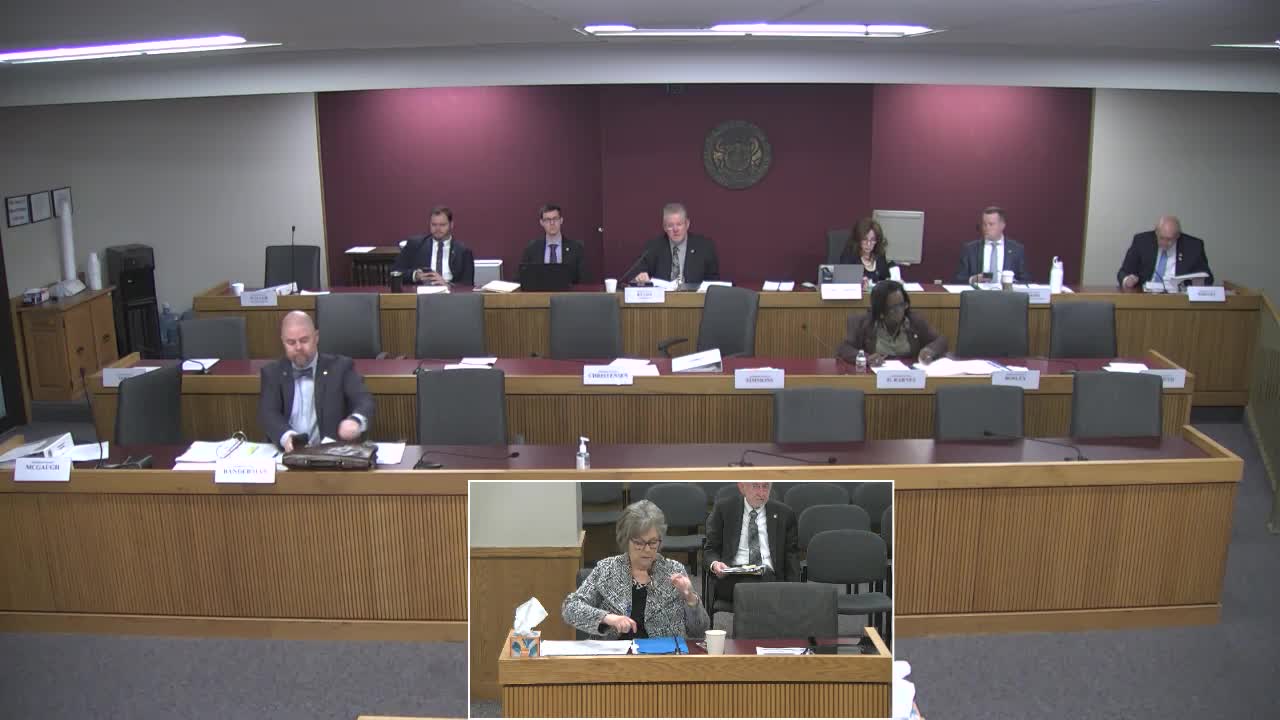
Representative Peggy Magah presented House Bill 507 to the House Elections Committee, saying the bill updates administrative notice methods, adjusts candidate‑filing deadlines and expands provisional‑ballot use for more elections.
Representative Peggy Magah presented House Bill 507 to the House Elections Committee, saying the bill updates administrative notice methods, adjusts candidate‑filing deadlines and expands provisional‑ballot use for more elections. “We just wanna get into this century,” Representative Peggy Magah said, describing a provision that would allow election authorities to accept official email as a method of receiving filing notices.
The bill would move the candidate filing deadline from the 17th Tuesday prior to the election to the 16th Tuesday to prevent deadlines from falling on state and federal holidays; allow military and interstate voters to use election‑authority offices rather than polling places for same‑day registration and absentee issuance in certain circumstances; and expand the statutory use of provisional ballots so they are available in all public elections rather than only in federal, statewide and certain statewide issue contests. “A provisional ballot shall not be eligible to be counted until the election authority has determined” the ballot’s validity, Magah said while walking committee members through draft language.
Committee members asked multiple technical questions about write‑in counting, the scope of the “permanently disabled” absentee list, and penalties proposed for tampering with or intimidating election workers. Representative Woods asked what happens “in the case of an office where no one files and no one files for a write‑in,” and Magah deferred to election officials present. Kurt Barr, director of elections for St. Charles County, testified in support and explained local practice: if no valid write‑in candidate files, jurisdictions may need to appoint to fill the office as they would for a vacancy. Barr said municipalities sometimes routinely elect by write‑in and that the bill clarifies which write‑in votes are counted.
On the confidentiality provision, Barr described the “permanently disabled” list as a set of voters who generally are homebound and receive a mailed absentee‑ballot application before each election. He told the committee the proposed change would keep the list itself confidential while not preventing campaigns from receiving the names of voters who have requested a mailed ballot in a given election. “Once they have asked for an absentee ballot, just like anybody else who may be gone from the polls on election day … that list becomes public,” Barr said, adding that the bill would remove the reason for the request from the public record.
Multiple members raised concerns about criminal penalties in the draft language. Representative Waller asked whether the bill’s new “class 1 election offense” was a misdemeanor or felony; Magah and committee members discussed that the most serious conduct — violence or death resulting from tampering — would be punished more severely. Representatives and witnesses also discussed the difficulty of defining terms such as “harass” or “alarm” in a statute and said they were willing to refine language to avoid suppressing legitimate poll watcher activity.
Public testimony included election‑authority representatives, civic groups and party and voter‑protection organizations. Witnesses who spoke in favor described the bill as a practical clean‑up measure and said the confidentiality and worker‑protection provisions respond to real security concerns election offices face today. The Missouri Voter Protection Coalition, Secure Elections Project and others filed written testimony in support.
The committee closed the hearing after public testimony; no final committee action on HB 507 was recorded during this session.
Looking ahead, sponsors and clerks told the committee they were open to technical edits before committee substitution or a vote, particularly on the worker‑protection language and any penalty adjustments.