Get Full Government Meeting Transcripts, Videos, & Alerts Forever!
Get email alerts on the Net Metering topic
No spam. Unsubscribe anytime.
General Laws committee hears bill to expand net metering, raise system-size caps and change compensation
Summary
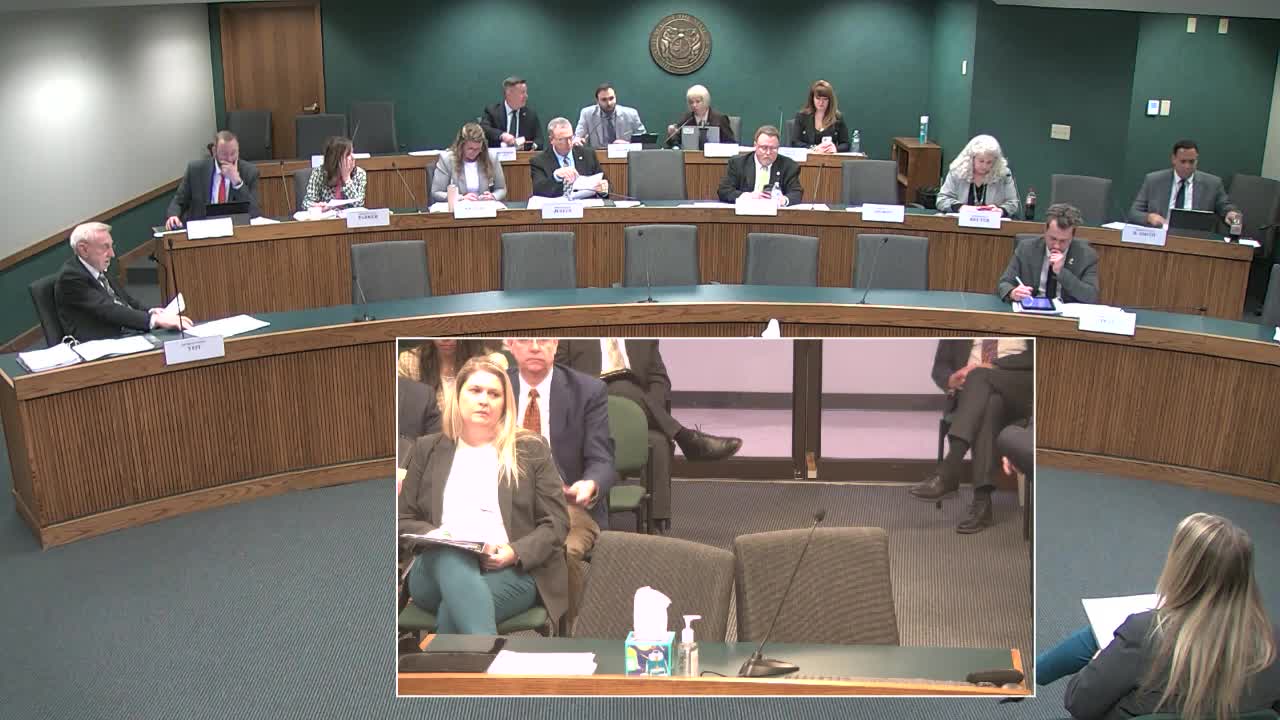
House Bill 846, filed by Representative Melanie Stinnett, drew hours of testimony at the House Committee on General Laws hearing on Oct. 12, when proponents and opponents debated expanding net metering, how rooftop and commercial solar should be compensated and whether oversight should shift from local utilities to the Public Service Commission.
House Bill 846, filed by Representative Melanie Stinnett, drew hours of testimony at the House Committee on General Laws hearing on Oct. 12, when proponents and opponents debated expanding net metering, how rooftop and commercial solar should be compensated and whether oversight should shift from local utilities to the Public Service Commission.
Stinnett, the bill sponsor, told the committee net metering lets homeowners “plug your solar array into the electrical grid with an offset on your utility bill,” and described three core changes in the bill: increasing exemptions and caps for small systems, raising the statewide interconnection threshold, and changing compensation for excess generation.
Stinnett said the bill would raise a current small‑system exemption (which she said previously exempted systems 10 kilowatts or less) to 100 kilowatts, increase the cap on what a homeowner or small business may net‑meter from 100 kilowatts to 1,000 kilowatts, raise the threshold at which utilities may prohibit further net metering from 5% of peak load to 15%, and require that utilities credit exported electricity at the same retail rate the customer pays when they draw power from the grid.
Opponents focused on reliability, cost allocation and the effect on non‑solar customers. “It costs us more to provide electricity to someone with solar than it does someone without,” said Clay, manager of member services for Callaway Electric Cooperative, describing how his co‑op’s peak winter demand (he told the committee is generally 6–8 a.m.) does not align with solar production that typically peaks mid‑day. Clay testified his cooperative has about 150 interconnected rooftop systems totaling roughly 1.6 megawatts on a system serving just under 14,000 members.
Witnesses from investor‑owned utilities and larger cooperatives echoed concerns that crediting exported energy at full retail rate would shift costs to customers without on‑site generation. “If you credit that member at full retail… that additional cost that the utility will incur… will have to be spread across all the other members,” a Callaway witness said.
Utility, cooperative and municipal utility witnesses also warned of operational and safety questions. Several testifiers urged preserving specific safety references now in statute — such as the National Electrical Code or Underwriters Laboratories listings — rather than moving them wholesale into a PSC‑promulgated permit and inspection form without detail. Stinnett and supporters said the change is intended to move technical standards into an updated rulemaking process so codes can be kept current.
Representatives of homeowner‑association interests asked the committee to preserve local HOA authority to adopt reasonable rules. Adam Raper of the Community Associations Institute said a 2022 law already prevents blanket bans by HOAs but allows reasonable placement rules; he told lawmakers HB846’s language as drafted could create a mismatch between rooftop‑only language elsewhere in the bill and a broader definition of reasonable rules.
John Dolan, executive director of the Missouri Solar Energy Industries Association (MOCEA), urged compromise and emphasized consumer protections and updated permitting as goals, while industry representatives said most of the residential market does not rely on subsidies and that commercial and small business rooftop projects are a primary target of the bill.
No committee vote on House Bill 846 was recorded during the hearing; the committee took testimony, debated technical details and asked the sponsor to work with stakeholders on safety, HOA and interconnection language.
Questions and follow‑up items raised at the hearing included: the extent to which battery storage affects reliability and whether storage costs make distributed storage a practical grid resource today; the PSC’s role if a statewide permit and inspection form is adopted (some witnesses said the change would bring municipal and cooperative interconnections under PSC rule for those permitting elements); the potential rate effects on low‑income customers if exported energy were credited at retail rather than avoided cost; and whether a tenfold increase in certain caps (100 kW to 1,000 kW) was necessary or could be scaled.
The committee will continue work with stakeholders; Representative Stinnett said she would “look into” clarifications requested by members and witnesses.