Get Full Government Meeting Transcripts, Videos, & Alerts Forever!
Get email alerts on the Pharmacy Benefits Policy topic
No spam. Unsubscribe anytime.
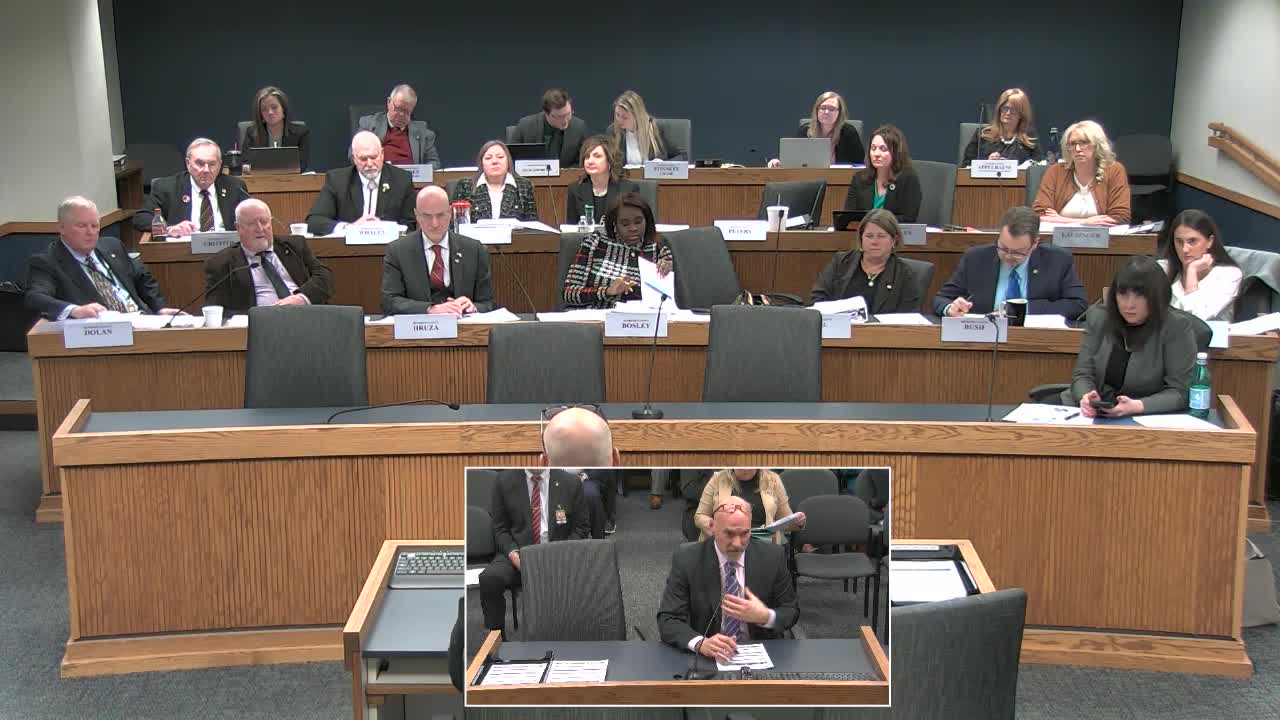
Lawmakers hear competing views on PBM reform bills; co‑pay accumulator, spread pricing and transparency at center of debate
Summary
Lawmakers heard competing testimony on PBM reform bills that would ban retroactive reimbursement reductions, restrict co‑pay accumulators and require greater pricing transparency to protect independent pharmacies and patients.
Representatives Benny Cook and John Hukin jointly presented bills (including House Bill 982 and House Bill 840) intended to regulate pharmacy benefit manager (PBM) practices, increase transparency and restrict co‑pay accumulator policies.
Presenters and witnesses described multiple problems they attribute to PBM business models: spread pricing (PBMs charging purchasers more than they reimburse pharmacies), narrow specialty networks that steer patients to PBM‑owned specialty pharmacies, retroactive down‑coding of reimbursements after claims adjudication, and co‑pay accumulator programs that prevent charitable assistance and manufacturer copay support from counting toward a patient's deductible or out‑of‑pocket maximum.
Pharmacists and pharmacy groups testified that independent and rural pharmacies face severely eroded reimbursements and that closures have created pharmacy deserts in parts of Missouri. A witness with 40 years of pharmacy experience described contracting practices where pharmacies receive fixed reimbursement schedules and lose money on some high‑cost fills; he said pharmacies closed at a rate of roughly one per day nationally in 2023. Supporters argued the bills would require PBMs to disclose pricing and rebate information, stop retroactive reimbursement reductions after a claim is completed, prohibit certain contract terms that block plan sponsors from communicating with local pharmacies, and prohibit counting third‑party copay assistance as non‑qualifying for deductible credit (the co‑pay accumulator reform).
Opponents included the Pharmaceutical Care Management Association (PCMA), PBM trade representatives and business and insurance groups such as the Missouri Chamber, America's Health Insurance Plans and the Missouri Insurance Coalition. PBM representatives said they and their clients (employers, unions and government plans) negotiate benefits to control drug costs and that many state contract alternatives carry tradeoffs; PCMA testified that PBMs do not set manufacturers' list prices and said PBMs help plan sponsors control costs. Trade groups warned that some proposed changes could raise costs for employers and consumers, disrupt existing ERISA‑governed employer plans, or lead to litigation because federal (ERISA) law can preempt conflicting state rules. Several presenters said labor‑managed plans and large public plans are often carved out of state proposals for reasons tied to ERISA and negotiated contracts.
Committee members asked multiple technical questions: whether plan sponsors may be harmed by removing contract tools, how carve‑outs for union plans would operate given ERISA preemption, whether state law could apply to multistate employer plans, and what evidence exists showing net savings would pass through to consumers. Labor and union representatives (Mid‑America Carpenters Regional Council) opposed several provisions as written, saying their trustees already manage rebates and that imposed state rules could create cross‑border complexity for members who live and work in different states. Proponents said they had worked with some labor groups but not all; sponsors said they would continue negotiations.
The committee heard extensive testimony but took no votes. Supporters argued the bills would preserve independent pharmacies and protect patients from surprise costs and co‑pay programs; opponents raised concerns about plan costs, litigation risk and unintended disruption to employer and union plans. Several stakeholders asked for targeted transparency and reporting measures rather than broad mandates.