Get Full Government Meeting Transcripts, Videos, & Alerts Forever!
Get email alerts on the School Safety Health topic
No spam. Unsubscribe anytime.
Representative Gallick urges AED and CPR protocols in all public schools; health groups back funding and training
Summary
Representative Sherry Gallick presented House Bill 232 to require emergency cardiac response protocols, including AED access and CPR training in public schools. Medical organizations and emergency services supported the proposal and asked for clarified funding and data about AED availability.
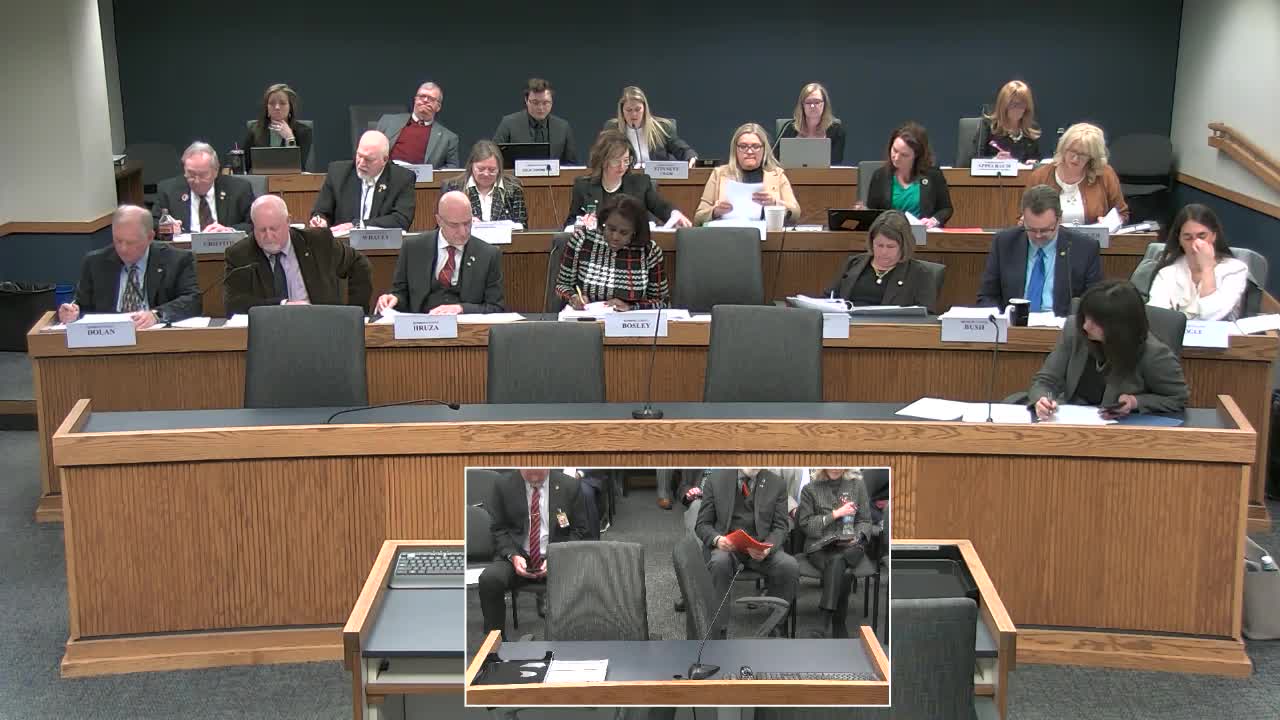
Representative Sherry Gallick told the House Committee on Health and Mental Health that House Bill 232 would require public schools to adopt cardiac emergency protocols covering automated external defibrillators (AEDs) and CPR training. "If you can follow pictorial directions, you can save someone's life," Gallick said as she described AED units and the machines' verbal prompts.
Members and witnesses identified three priorities: (1) clear protocols so bystanders know who is responsible during events at school or on campus, (2) training for school personnel and volunteers in CPR and AED use, and (3) a feasible funding and maintenance plan for AED devices and training. Representative Griffith recalled past bills requiring high school CPR training and applauded the visibility the measure brings. Representative Dahl asked whether staff training should explicitly include awareness of signs and symptoms that can precede sudden cardiac arrest; Gallick said training requirements are in the bill and she would review language with the committee.
Witnesses including Trent Watson (American Heart Association), Garrett Webb (Missouri chapter of the American Academy of Pediatrics), Kaina Eiman (Missouri Nurses Association), Megan Howerton (Missouri Ambulance Association) and others supported the bill. Watson summarized an EMS-focused grant approach that some stakeholders proposed: schools would draft response plans and apply to an EMS-run grant to buy AEDs and receive coordinated training, leveraging EMS purchasing power to reduce device cost. He told the committee that a prior budget request sought $2,000,000 for a grant program. Committee members said the Department of Elementary and Secondary Education (DESE) does not currently track which schools have AEDs and asked staff to consider whether reporting or an inventory requirement would be useful.
Supporters described examples where availability and access to an AED were decisive: representatives and witnesses recounted instances in which bystanders or athletic staff used AEDs and chest compressions to revive people and athletes. Opponents were not on record in the hearing; committee members asked about cost and whether smaller districts could access funding or community support (lions clubs, local fundraising) to acquire machines and deliver training. Gallick said the bill would require a protocol rather than an immediate purchase mandate for districts that lack resources; the protocol could rely on coordinated emergency response with 9-1-1 and local EMS while funding options are developed.
The committee did not take a vote at the public hearing. Members asked the sponsor to consider clarifications on training frequency and how to identify who is "appropriate school personnel" for required certifications. Several lawmakers indicated they would consult the sponsor and stakeholders after the hearing about narrow technical edits and funding sources.
Key clarifying details: Gallick and witnesses referenced a prior legislative step that required high school hands-only CPR between freshman and senior years in some districts; proponents noted that bordering states have adopted similar AED-awareness measures. The American Heart Association and medical groups urged a combined approach of equipment, maintenance and recurring training.