Get Full Government Meeting Transcripts, Videos, & Alerts Forever!
Get email alerts on the Reinsurance Funding topic
No spam. Unsubscribe anytime.
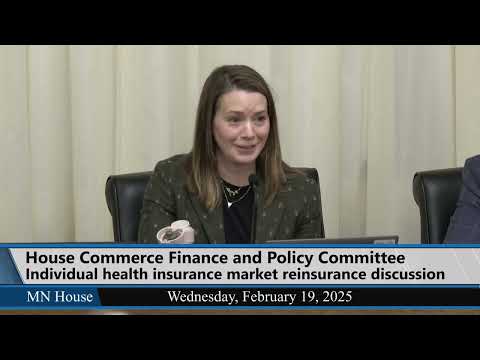
Committee hears funding options for Minnesota reinsurance as officials warn of 25% premium spike if program lapses
Summary
The Minnesota House Commerce Committee heard bipartisan testimony on a proposed funding plan to extend the state's reinsurance program, which officials say could prevent a projected 25% or larger increase in individual-market premiums if it is not renewed.
The Minnesota House Commerce Committee held a hearing on the state's reinsurance program and proposals to fund it, with Deputy Commissioner of Insurance Julia Dreyer warning that “Without action this year the premium security plan will be depleted and the Minnesotans on the individual market are at significant risk of a 25% or more premium increase.”
The session focused on how to pay to continue the Minnesota Premium Security Plan (the state's reinsurance program), which reimburses a portion of very high medical claims and has been credited with lowering premiums and stabilizing the individual insurance market since 2018. The Commerce Department and a range of business groups, insurers and advocacy organizations testified on competing funding approaches and the program's risks if left unfunded.
Why it matters: Reinsurance reduces the headline premiums people see on the individual market by reimbursing plans for a band of very large claims, which in turn lets insurers set lower rates. Commerce staff said the program covers roughly 187,000 Minnesotans on the individual market and that federal pass-through funding tied to the program has totaled more than $650 million to date.
Deputy Commissioner Julia Dreyer (Deputy Commissioner of Insurance) told the committee that Minnesota's reinsurance reimburses a share of claims between $50,000 and $250,000 and noted the coinsurance rate was reduced from 80% to 60% in 2022 for budgetary reasons. “We are proposing instituting an assessment to help ensure that there is a stable funding source for Minnesota's program,” Dreyer said, describing a governor's proposal under which the Minnesota Comprehensive Health Association (MCHA) would administer roughly a 2 percent fee on insurers.
Supporters said the program has meaningfully lowered premiums and preserved insurer participation statewide. Dan Andreessen (Senior Director of Policy and Government Affairs, Minnesota Council of Health Plans) said the program is not a bailout of insurers but a pass-through that “is for patients and keeps money in the pockets of your constituents that they would otherwise be paying in premiums.” Industry and employer groups, including the Minnesota Chamber of Commerce and the Minnesota Business Partnership, urged lawmakers to reauthorize funding and warned of market disruption if the program ended.
Some advocates urged that assessments be structured so insurers bear more of the cost. Ben Baglio (Minnesota Nurses Association) said the association opposes using general taxpayer dollars to fund the program and urged fees on insurers instead, adding that any extension should include requirements that hold insurers accountable for the public funds they receive. Faith-based and consumer groups raised concerns about transparency and the growing state cost of the program.
Committee members pressed for clarifications on budget impacts if federal rules change. Elyse Bailey (budget director, Department of Human Services) told the committee that if the federal "hold harmless" adjustment to the Basic Health Plan (MinnesotaCare) funding formula were removed the state would face about $140 million in additional annual costs. Several members said ultimate funding decisions are likely to move to the House and Senate finance committees and to Ways and Means as part of end-of-session budget negotiations.
What did not happen: The committee took testimony and asked questions but did not vote on legislation or adopt formal funding language. Members asked that agencies provide additional technical and budgetary detail as the session proceeds.
Context and next steps: Witnesses described alternate funding methods used in other states (fee or assessment-based approaches, premium assessments or targeted taxes) and noted Minnesota has relied more on general funds than many states. Testimony referenced the interaction between the reinsurance program and federal premium tax credits (enhanced ARPA credits), which are scheduled to expire at the end of 2025 and could further increase premiums if not continued. Committee leaders said they expect reinsurance language to surface in budget negotiations and that funding choices will be resolved later in the legislative process.