Get Full Government Meeting Transcripts, Videos, & Alerts Forever!
Get email alerts on the Charitable Gambling topic
No spam. Unsubscribe anytime.
House committee advances bill to restore e-pull-tab features after months of debate over tribal agreements and charity revenue
Summary
House File 733, which would reinstate certain electronic pull-tab features removed by the Legislature in 2023, drew sharply divided testimony Wednesday in the House Veterans and Military Affairs Division and was re-referred to the Commerce Finance and Policy Committee by a 6–5 roll call vote.
House File 733, which would reinstate certain electronic pull-tab (e-pull-tab or e-tab) features removed by the Legislature in 2023, drew sharply divided testimony Wednesday in the House Veterans and Military Affairs Division and was re-referred to the Commerce Finance and Policy Committee by a 6–5 roll call vote.
The bill’s author said the measure is intended to “rewrite a wrong” created in 2023 and to restore game features that charities use to raise revenue for local veterans programs, youth sports and other community services. The author added that the 2023 changes have “hurt our charities” and isolated veterans who rely on services funded by charitable gambling.
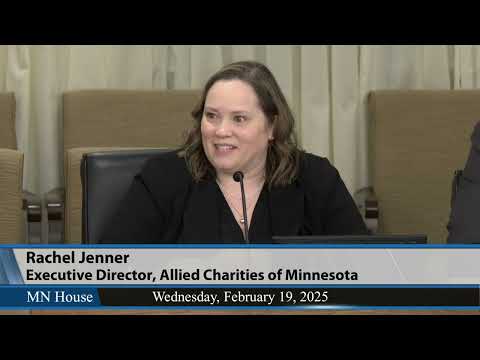
Supporters, including Allied Charities of Minnesota and local American Legion posts, told the committee that many nonprofits have seen rapid declines in gambling revenue since the January implementation of the 2023 restrictions. Rachel Jenner, executive director of Allied Charities, said the changes removed features such as “open all, free play and bonus games,” and that “in the first month under these new rules … many organizations [are] down 20 percent or more in their revenue from December to January.” Jenner urged lawmakers to restore e-pull-tab features to “ensure that Minnesota charities can continue their great work.”
Tim Engstrom, communications director for the American Legion Department of Minnesota and gambling manager for Bloomington Post 550, gave specific examples of local impacts, saying his locations saw net receipts fall “29 percent from January compared to January of last year,” and that electronic pull-tab revenue at one location was “down 44 percent.” Engstrom said the decline has forced posts to cut donations to programs such as English-learning summer classes, school pantries and other community needs.
Opponents warned the bill would reopen what they described as a past compromise with Minnesota tribes and expand slot-like features into thousands of local establishments. Jack Meeks, chair of Citizens Against Gambling Expansion, said the bill “would allow the expansion of slot machine-like gambling in almost 2,000 locations throughout the state” and argued that features imitating slot machines increase problem gambling and social harms. Andy Plato, executive director of the Minnesota Indian Gaming Association, asked the committee to uphold the 2023 clarification and said tribes view the clarification as necessary to honor the 2012 law and the state’s commitments: “When the state put in the law, very specific restrictions, regulators ignored them, the court agreed, and the legislature took action,” Plato told the committee.
The legal background was central to the debate. Laura Wade, executive director of the Minnesota Gambling Control Board, said litigation focused on the “open all” feature; an administrative law judge initially ruled for the board, but an appeal later found against the board as to that feature. Plato and other tribal representatives said the 2023 action followed court rulings and that the changes were intended to ensure electronic pull tabs do not mimic video slot machines.
Members of the committee also highlighted alternatives to restoring game features, including further tax relief for charities and targeted appropriations. Plato and other tribal witnesses pointed to recent system changes — including a cap on manufacturer fees at 25 percent implemented in July 2024 and tax relief in recent legislation — as measures that directly increased net dollars to charity missions. Plato noted that charitable-gambling sales rose from about $4.25 billion in fiscal 2022 to $4.57 billion in fiscal 2023, while mission dollars did not rise proportionally.
On procedure, Representative Hemmingsen Yeager successfully asked for a roll-call on a motion to delay the bill; that motion to table/delay failed on an earlier roll call (5 yes, 6 no). Later, the main motion to re-refer House File 733 to the Commerce Finance and Policy Committee passed on a roll call, 6 yes to 5 no. The yes votes recorded were: Chair Bliss (yes), Vice Chair Olsen (yes), Representative Bennett (yes), Representative Davis (yes), Representative Duran (yes) and Representative Repinski (yes). The no votes were Representatives Clardy, Feist, Hemmingsen Yeager, Hill and Ray Rauer.
Committee members repeatedly said they wanted to protect veteran services and tribal sovereignty. Representative Ray Rauer, who testified he supported veterans’ groups but opposed partisan tactics, urged bipartisan work on tax relief and other veteran supports rather than reopening disputed game features.
What’s next: House File 733 will be considered by the Commerce Finance and Policy Committee, where stakeholders on both sides said they hope for further negotiation over tax relief, manufacturer fees and the precise technical rules that separate electronic pull-tab games from slot machines.