Get Full Government Meeting Transcripts, Videos, & Alerts Forever!
Get email alerts on the Signs topic
No spam. Unsubscribe anytime.
Villa Rica planning commission approves sign-code changes, raises review fee
Summary
The commission approved text amendments updating sign permit fees, removing a sticker requirement, adding framed borders for wall signs, clarifying temporary sign setbacks, and requiring inflatable signs to be ground‑anchored. The changes passed unanimously after a public hearing.
The Villa Rica Planning Commission on Jan. 8 approved a package of sign-code amendments that raise the review fee, remove a fading sticker requirement, add minimum framed-border standards for wall signs, clarify temporary-sign setbacks from rights of way and require inflatable advertising objects to be erected on the ground.
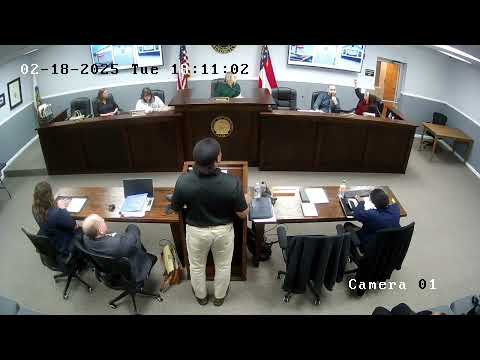
The measures, presented by Zoning Administrator Sean Daniels, passed unanimously after a public hearing and a motion to approve the text amendments with the changes discussed at the meeting. Sean Daniels said the edits “will just make everything a little bit more clear and up to date, especially with the practices that we already are doing today.”
The ordinance changes include a proposed increase in the sign-review fee from $25 to $50; Daniels said that neighboring jurisdictions have already raised fees and the city’s fee should align with those practices. The commission also approved removing the ordinance language that required a physical permit sticker to be affixed to sign structures, a provision Daniels said the city had not been enforcing because stickers fade after two to three years.
On wall signs, the commission approved minimum framed-border requirements intended to improve durability and uniform appearance. Under the approved language discussed at the meeting, permitted border colors are limited to black, white, gray or tan; minimum border widths discussed were: at least 1 inch for wall signs up to 10 square feet, at least 2 inches for signs 10–50 square feet, at least 3 inches for signs 50–100 square feet, and at least 4 inches for signs 100 square feet or larger. Commissioners asked staff to add clarifying language about acceptable materials (for example, wood, aluminum or comparable durable material) and to return the final wording to the commission or to include the materials clarification before the ordinance goes to council, depending on how the commission frames its motion.
Daniels said the border requirement will apply to replacement or new signs; existing signs need not be retrofitted unless they are replaced or refaced. Commissioners raised questions about whether a printed margin could be interpreted as a border and asked staff to clarify material and construction standards so the rule cannot be met merely by a printed edge.
The amendments also tighten standards for temporary signs. The commission approved language to limit placement of temporary posting and lawn signs in public rights of way and to set setback standards to preserve motorists’ sight lines. In addition, the commission approved a requirement that inflatable advertising objects be erected only on the ground to facilitate safe inspections and reduce hazards from wind or failed roof‑mounted tethers.
Commissioners discussed implementation details and asked staff to provide precise material specifications and examples before final publication. The motion to approve the text amendments (with the border and inflatable‑object clarifications discussed at the hearing) was made and seconded; the vote was unanimous.
The approved amendments amend the city’s sign-code sections identified in the public hearing and will move forward to the city council as the next step in the ordinance process.