Get Full Government Meeting Transcripts, Videos, & Alerts Forever!
Get email alerts on the Public Health Infectious Disease topic
No spam. Unsubscribe anytime.
County health staff brief committee on H5N1 detections, say human risk remains low
Summary
A county health briefing summarized recent detections of H5N1 avian influenza in U.S. livestock and poultry and described new testing and quarantine steps in New York; officials told the Health Services Committee the human risk is low.
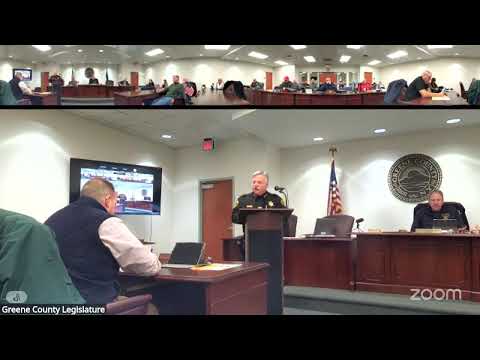
Greene County health staff told the Health Services Committee on Feb. 5 that recent detections of H5N1 avian influenza in U.S. livestock and poultry have prompted expanded testing and quarantine measures in New York, but that the overall risk to people remains low.
The update, introduced as a briefing credited to Dan King and delivered by Roger (staff member), said the first detections in U.S. dairy cattle occurred in March 2024 and that the virus has since been found in multiple species, including poultry, alpacas, swine and goats. “So the take home messages, the risk to humans is low, severe disease is rare,” Roger said.
Officials said New York now tests milk at processing plants; when a positive result is identified, tracing is used to find the originating farm and quarantine measures are implemented at no cost to farmers. The briefing noted that farms that supply raw milk also will be tested.
The committee heard that the state has offered monitoring, testing and antiviral prophylaxis to people exposed to infected birds at recent poultry outbreaks in Suffolk, Putnam and Ulster counties. Speakers cited national case counts, saying there have been 67 human cases and one death in the United States, and described new laboratory steps to subtype severe influenza A hospitalizations to check for H5N1 sequences.
Committee members were directed to state resources for reporting sick or dead animals; officials emphasized basic precautions for backyard flocks and carcass handling and urged people with questions to use posted DEC reporting forms or call county health staff.
The briefing closed with staff noting this is primarily an agriculture-led response and that public-health measures and messaging are continuing as authorities monitor the situation.