Get Full Government Meeting Transcripts, Videos, & Alerts Forever!
Get email alerts on the Highway Contract Bonds topic
No spam. Unsubscribe anytime.
Senate committee moves to replace archaic penal-bond language for highway contracts
Summary
A Senate committee approved language to remove outdated "penal bond" provisions and align state law with current Arkansas Department of Transportation practice requiring performance and payment bonds that protect the state and subcontractors.
Senator Jimmy Hickey, a Republican member of the Arkansas Senate, told the Public Health, Welfare and Labor Committee he was presenting Senate Bill 202 to remove archaic language in state law that refers to penal bonds and to clarify that highway projects be covered by the performance and payment bonds the Arkansas Department of Transportation (ARDOT) currently requires.
Hickey said the change “is taking that out” of the statute and aligning the law with “what the current process is with the highway department” so “the state does not have any exposure.”
The proposal replaces language that referenced a bond amount “equal to 25%” of a contract with the department’s practice of requiring bonds that fully cover performance and payment obligations. Michelle Davenport, chief legal counsel for the Arkansas Department of Transportation, told the committee ARDOT had a full performance bond and full payment bond on the Saline County job and that “the state was fully protected in the event we did have to make that decision.”
Committee members raised questions about the effect the change could have on smaller contractors. Senator Johnson asked whether the bill effectively moves the requirement from 25% to “a 100% requirement,” and Senator Love said he was concerned that the shift could limit bidding to very large firms because bonding capacity is tied to a contractor’s assets.
Davenport and other supporters replied that the shift brings the statute in line with industry standards. She explained that a performance bond covers the outstanding cost to finish a job and declines as work is completed, so it reflects remaining exposure rather than a static penalty. Hickey and several committee members noted these bonding practices are common in other states and are intended to protect taxpayers and subcontractors.
Senator Brown urged reliance on bonding firms’ underwriting to assess whether a bidder has the financial capacity to complete a project and said the department’s approach helps ensure contractors are both technically and financially qualified.
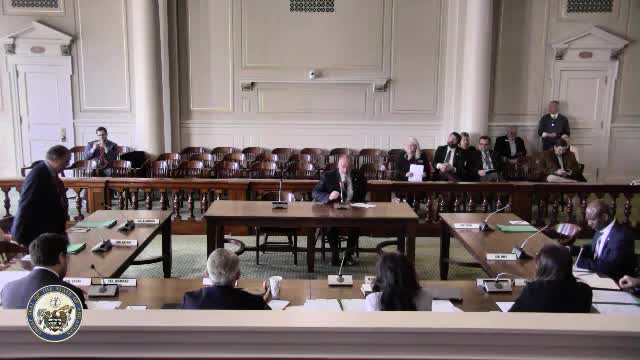
The committee recorded a motion by Senator Tyler Deese with a second from Senator Johnson to advance the bill. The chair announced “the ayes have it” and the bill passed in committee; the transcript does not include a roll-call tally.
The measure will move forward consistent with committee procedure; no effective-date language was discussed in the recorded remarks.
Votes at a glance: Motion to advance SB 202 — mover: Senator Tyler Deese; second: Senator Johnson; outcome: approved in committee (“ayes have it”); exact roll-call tally not specified in the transcript.