Get Full Government Meeting Transcripts, Videos, & Alerts Forever!
Get email alerts on the Benefit Cliffs Study topic
No spam. Unsubscribe anytime.
House committee approves two-year study of "benefit cliffs" that can discourage work
Summary
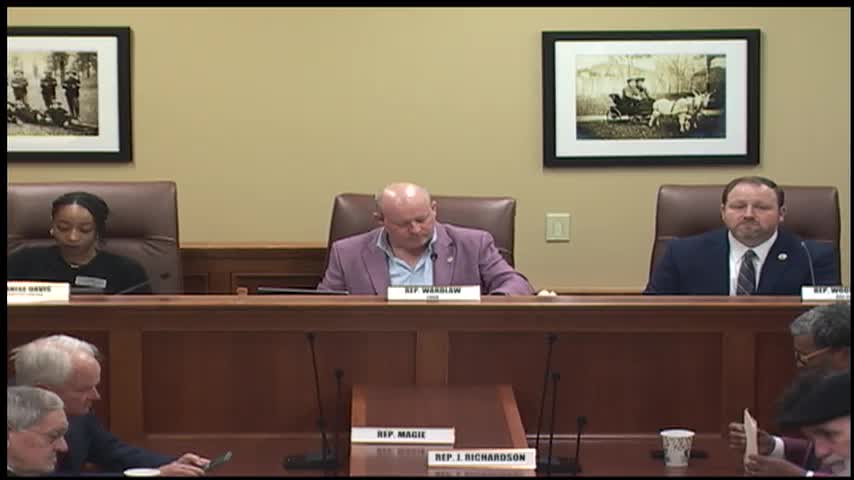
The House Public Health, Welfare and Labor Committee voted to pass Senate Bill 50, establishing an Arkansas Legislative Council (ALC) subcommittee to study how public benefit phaseouts affect Arkansans’ ability to advance from public assistance to self-sufficiency.
The House Public Health, Welfare and Labor Committee on an undisclosed date voted to pass Senate Bill 50, creating an ALC subcommittee to study so-called "benefit cliffs"—situations in which earning more income can cause a larger loss of public benefits and leave families worse off.
Representative Wing, who presented the bill, said the study would use an ALC subcommittee "to address this issue comprehensively and to take an approach that's research based" and deliver recommendations ahead of the 2027 legislative session.
The nut of the bill, as supporters described it, is to identify and reduce inadvertent disincentives in the state’s mix of public assistance programs. "You might be able to get a $2,000 raise at your job... but then you find that that takes you above a certain income threshold and you lose $4,000 worth of benefit," Representative Wing said, summarizing the problem the study will examine.
Witnesses who testified for the bill urged broad participation in the study and said coordination could improve outcomes for families. Ryan Norris of Americans for Prosperity said the subcommittee should look at both "internal barriers" and "external barriers" that keep people from leaving long-term assistance. Paul Chapman of Restore Hope described a coordinated-services model used across 19 counties and said coordinated casework had helped thousands of families move toward full-time work. Pete Guss of Arkansas Advocates for Children and Families highlighted analyses showing some Arkansas families face multiple large benefit cliffs as income rises.
Local elected officials also testified. Ethan Dunbar, mayor of Lewisville, described rural families who "go to work every day but still find it hard to make ends meet," and urged the subcommittee to include rural perspectives.
Committee members asked whether the subcommittee would include non‑governmental service providers; supporters said the study is intended to be broad. Representative Lademan asked whether outside nonprofits and community action agencies could participate; Representative Wing answered, "Everything is on the table. We want all knowledge to come in. We've got a two-year process to be able to gather it all."
The committee voted on a motion to pass the bill; the motion carried. The bill directs the ALC subcommittee to report recommendations to the governor, speaker of the House and the Senate pro tempore, with the intent of proposing legislative changes that would reduce harmful fiscal cliffs and better align workforce and social service programs.
Supporters said the study is intended to be research driven and to produce recommendations that maximize both use of public funds and individuals’ opportunities to reach self-sufficiency. The bill does not itself change benefit rules; it creates a formal study process and reporting pathway.