Get Full Government Meeting Transcripts, Videos, & Alerts Forever!
Get email alerts on the Environmental Health topic
No spam. Unsubscribe anytime.
Committee backs SB 172 substitute clarifying DEQ-local health department cooperative agreements
Summary
Senators and county health directors told the committee SB 172 clarifies the governance, funding flow and cooperative agreements between the Department of Environmental Quality and local health departments and authorizes limited reimbursement for enforcement work in certain districts.
The Utah House Health and Human Services Committee voted unanimously to pass the first substitute of SB 172, a bill intended to clarify the relationship and funding arrangements between the Department of Environmental Quality (DEQ) and local health departments across the state.
Senator Sandle introduced the measure to the committee; the sponsor's presentation acknowledged that when environmental-quality responsibilities moved away from health departments to DEQ, some code sections were left misaligned. Jordan Mathis, director of the Bear River Health Department and representative of the Utah Association of Local Health Departments, told the committee the bill "provides some additional legislative clarity" about how legislative funding flows to DEQ and to local health departments and requires the department to enter into a cooperative agreement with each local health department for environmental health service delivery.
Mathis said the bill formalizes a governance process that already exists among DEQ, local health departments and the Department of Health and Human Services and would allow up to four local health departments to be reimbursed by DEQ for "qualified enforcement and mitigation efforts" in their jurisdictions. He explained some funding applications may be designated "exempt" when the work is technical (for example, requiring engineers) or when no role is expected from local health departments. Mathis said those exempt applications would not require review by the governance committee.
Representative Fitousabana asked whether a "cooperative agreement" was contractual or could be a memorandum of understanding; Mathis said the drafting attorney had located a prior section that defined the term and that the bill envisions a cooperative agreement as a contract-like partnership where both parties mutually agree on work and funding.
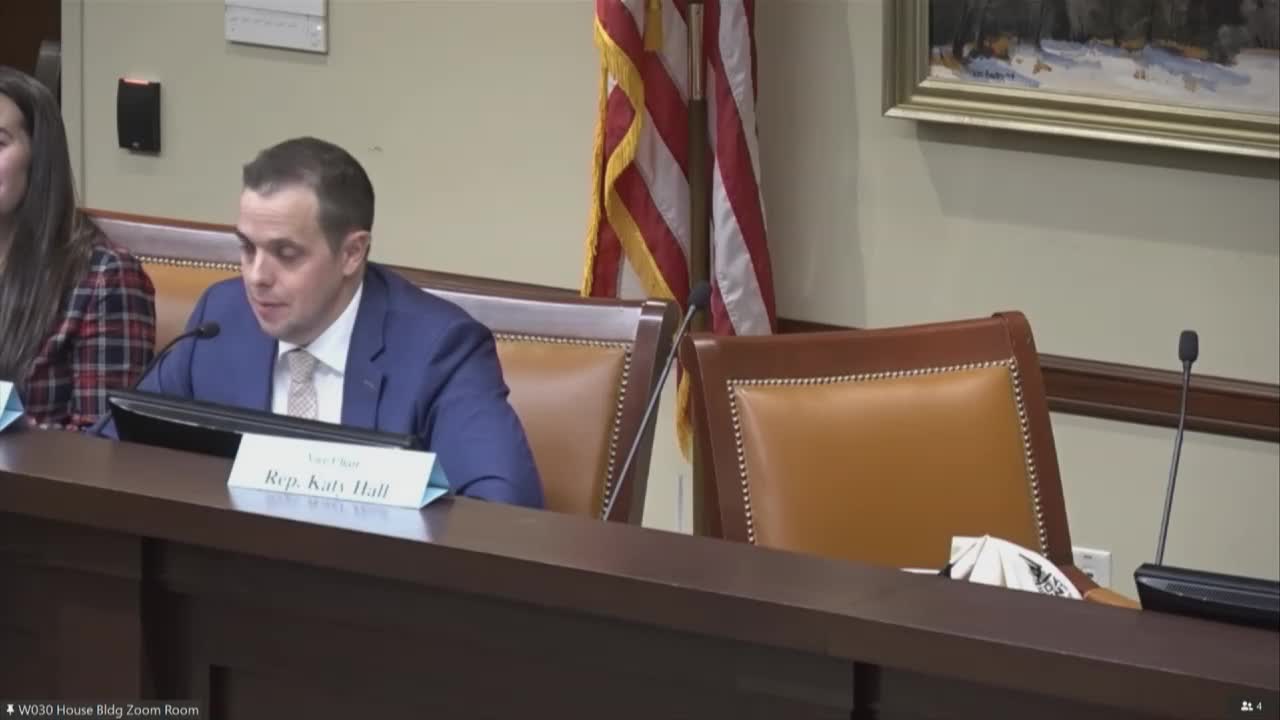
There was no public testimony. Representative Hall moved to pass the substitute with a favorable recommendation; the motion passed unanimously on the committee record.
Votes at a glance: The committee approved SB 172 (first substitute) with a favorable recommendation by voice vote; the transcript records the motion as passing unanimously, individual roll-call tallies were not specified.
Next steps: SB 172 proceeds from committee with a favorable recommendation as the first substitute.