Get Full Government Meeting Transcripts, Videos, & Alerts Forever!
Get email alerts on the Solid Waste topic
No spam. Unsubscribe anytime.
Committee hears mixed views on HB 6917 solid‑waste proposal; municipal leaders press for targeted reinvestment
Summary
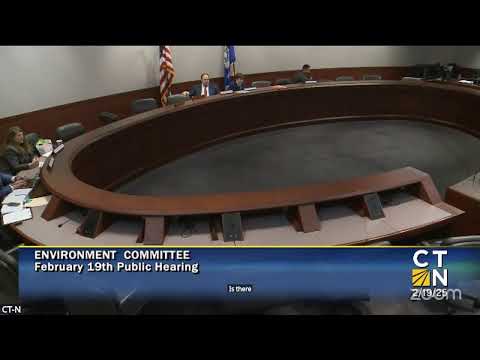
The Environment Committee considered HB 6917, a broad package aimed at managing solid waste: food donation plans for large generators, a possible expansion of the state’s per‑ton solid‑waste assessment, and a study of extended producer responsibility (EPR) for packaging.
The Environment Committee considered HB 6917, a broad package aimed at managing solid waste: food donation plans for large generators, a possible expansion of the state’s per‑ton solid‑waste assessment, and a study of extended producer responsibility (EPR) for packaging.
Municipal leaders, regional councils and the Bristol resource recovery facility operators told the committee the bill contains useful elements — especially requirements to expand food donation and organics diversion — but strongly objected to section 3, which would broaden the solid‑waste assessment to more tonnage and remit the revenues to the general fund. Mayors and facility operators asked that any surcharge be recycled back to the plants or placed into a dedicated enterprise fund for municipal recycling, organics infrastructure, and plant modernization rather than being deposited into the general fund.
Representatives of Connecticut Conference of Municipalities and the Connecticut Council of Small Towns said towns face rising disposal costs and need access to funds and technical assistance to build local organics programs. They supported the food donation plan for commercial generators but recommended the bill include phased municipal requirements for residential organics and more clarity on how study deadlines line up with an upcoming DEEP waste‑characterization study.
Industry and plant operators argued that the state needs a clear plan for capacity and markets before imposing a new assessment. The Bristol plant policy board and other facility representatives advocated allowing plants to retain assessment revenues if reinvested in capital upgrades and emissions controls; they cited past program changes that had previously provided subsidy-like funds for plant modernization and urged a similar, transparent mechanism now.
EPR for batteries and packaging drew separate testimony (see separate article on battery EPR). Several witnesses urged any H 6917 study of packaging EPR be delayed until DEEP finishes a new statewide waste‑characterization study to ensure the analysis is based on up‑to‑date tonnage and material flows.
Ending: The hearing made clear broad support for expanding food rescue and organics diversion but sharp disagreement over a new, general‑purpose assessment. Municipal and plant representatives pressed the committee to dedicate any new fee to solid‑waste infrastructure and to coordinate sequencing of studies and pilot programs so towns and haulers are not asked to pay new charges without transparent, dedicated uses and measurable benefits.