Get Full Government Meeting Transcripts, Videos, & Alerts Forever!
Get email alerts on the Vision Insurance topic
No spam. Unsubscribe anytime.
Senate committee advances bill aimed at limiting vision‑benefit managers' influence on providers
Summary
The Senate Insurance and Commerce Committee voted to advance House Bill 1353 after testimony from optometrists who said vertical integration by vision benefit managers limits patient choice and suppresses provider reimbursement, and from insurers and regulators who warned the bill could raise costs and face legal challenges.
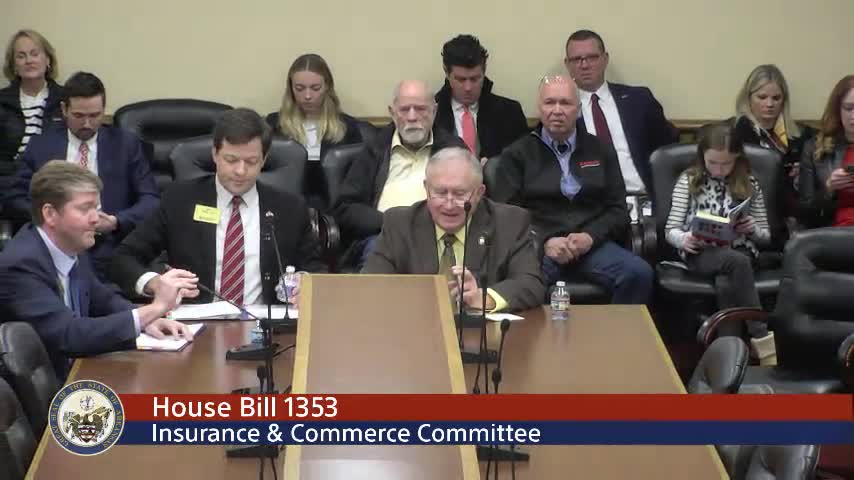
The Senate Insurance and Commerce Committee on Tuesday voted to advance House Bill 1353, a measure backers said would curb "steering" and anti‑competitive practices by vertically integrated vision benefit managers and protect patient choice and provider reimbursement.
Proponents said the bill would require more equitable treatment of eye‑care providers in networks and bar plans from forcing providers to accept ‘‘nominal or de minimis’’ reimbursement below current calendar‑year Medicare rates for covered services and materials. "Remember, 27 states have passed laws concerning this issue," said Senator Wallace in opening remarks about the bill.
The bill's supporters included two practicing optometrists who described local impacts. Joe Sugg, an optometrist representing the Arkansas Optometric Association, told the committee HB 1353 would "ensure the patient's choice and access to eye care while leveling the playing field between the large vertically integrated vision benefit managers and our small business owners." Matt Jones, an optometrist who practices in Blytheville and surrounding communities, said the market has consolidated and that reimbursements have not risen in decades: "For 30 years now, their profit has grown substantially," Jones said, arguing that the resulting contracts leave small providers with no negotiating power.
Supporters told the committee they want to prohibit plans from differentiating participating providers based on how much product—frames or lenses—a provider buys from an affiliated supplier, and to allow patients to coordinate vision benefits with other coverage when appropriate.
Opponents, including trade groups and insurers, told the committee the bill contains provisions that could reduce transparency or raise costs. Lisa Anne Hurt Forsyth, representing the National Association of Vision Care Plans, said vision benefits have kept premiums relatively stable and that some language in HB 1353 could force plans to withhold price or discount information from consumers; she warned initial estimates showed the measure could increase costs to Arkansas employers by "up to approximately 30 percent." "This is the one small area of health insurance that's actually working," Hurt Forsyth said.
Derek Smith, an attorney for the American Council of Life Insurers, highlighted concerns about a transparency provision on page 5 that he said goes further than the bill's sponsors described: "The ACLI is principally concerned with, again, the transparency provisions or anti‑transparency provisions of the bill, and that's where I'll focus my testimony," he told the committee. Smith also noted that similar provisions in other jurisdictions had been temporarily enjoined; committee members and witnesses cited ongoing litigation and a preliminary injunction in another state.
Booth Rand, general counsel for the Arkansas Insurance Department, told the committee the department lacks explicit regulatory authority to set reimbursement rates and that the agency has not completed an actuarial or premium‑impact analysis for the bill. "I have seen a tremendous amount of vertical integration just like you have in PBMs," Rand said, and he cautioned that setting a reimbursement floor tied to Medicare rates could become the industry floor and have unintended effects on premiums and plan design.
Committee members questioned representatives from both sides about how vertically integrated plans operate, whether plans own provider practices, how frames and lenses reach patients, and whether volume purchasing by plans drives lower prices. Witnesses and senators repeatedly returned to two themes: (1) proponents argued steering and affiliated‑vendor preferences reduce patient choice and squeeze independent providers; (2) opponents said some transparency restrictions in the bill would prevent consumers from seeing meaningful price or discount information and could increase employer costs.
After approximately 90 minutes of testimony and questioning, Senator Flowers moved the committee to vote. The committee adopted a motion by voice vote to advance HB 1353; Senator Penzo seconded the do‑pass motion. The clerk recorded the voice vote as "aye" and the committee chair declared the bill advanced; a roll call tally was not recorded in the hearing minutes.
What HB 1353 would do and open issues HB 1353 would: require neutral presentation of participating providers in directories; prohibit plans from treating participating providers differently based on purchases from an affiliated supplier; permit coordination of vision benefits with other coverage in some cases; and prohibit reimbursing providers for covered services or materials at nominal or de minimis amounts below the current calendar‑year Medicare rate for the covered item, among other provisions.
Open questions the committee identified or that witnesses raised include the bill's premium impact on employers and self‑funded plans, the legal risk to specific transparency language (given preliminary injunctions in other states), and the Arkansas Insurance Department's authority to enforce reimbursement floors without legislative changes or a regulatory rule‑making and actuarial review.
Next steps With the committee's do‑pass action, HB 1353 moves from the Senate Insurance and Commerce Committee. The bill would still require consideration by the full Senate and could face additional amendment, actuarial review, or legal challenge if enacted.