Get Full Government Meeting Transcripts, Videos, & Alerts Forever!
Get email alerts on the App Store Accountability topic
No spam. Unsubscribe anytime.
Committee advances App Store Accountability Act to require parental consent for minors' app contracts
Summary
A committee voted unanimously to favorably recommend Sixth Substitute SB 142, the App Store Accountability Act, which would require app stores to verify age and obtain parental consent before minors can enter binding app contracts and would tie deceptive age ratings to consumer protection law.
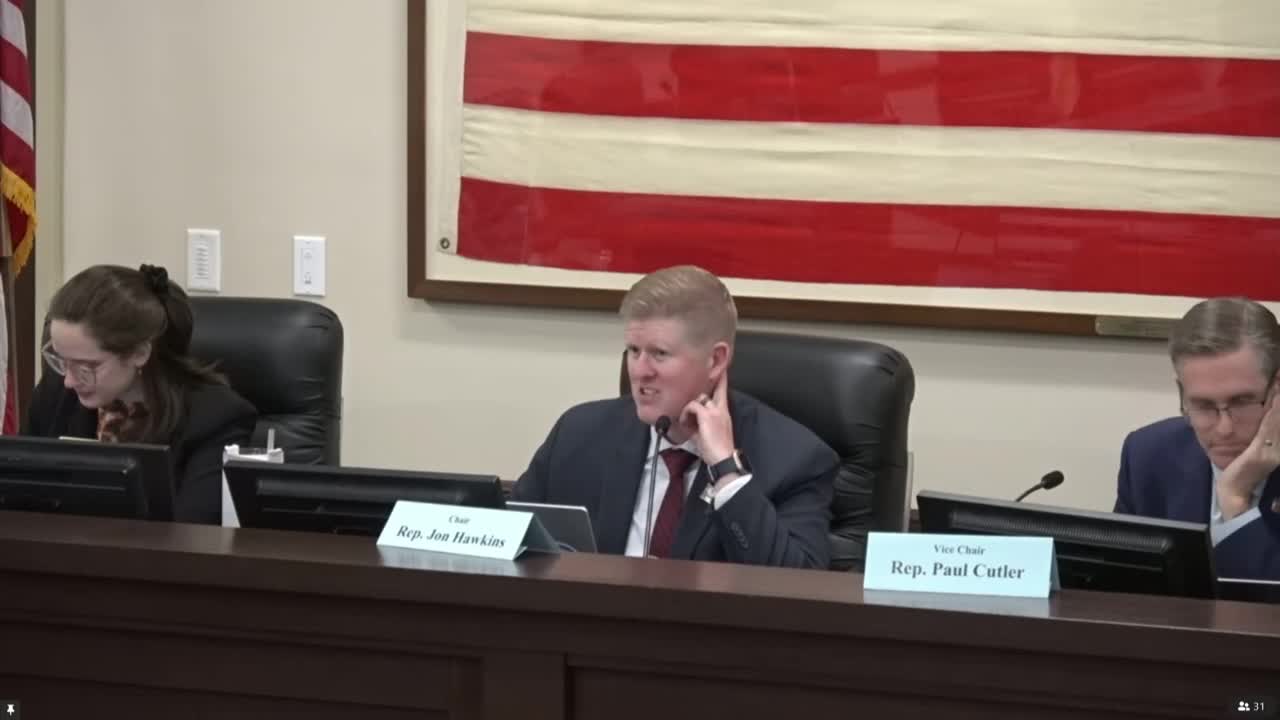
A Utah legislative committee voted Feb. 19 to favorably recommend Sixth Substitute SB 142, the App Store Accountability Act, a bill that would require mobile app stores to perform age verification and secure parental consent before minors may enter binding contracts with app developers.
Sponsor testimony framed the bill as a contract‑law remedy to protect minors from entering legally binding agreements online. Melissa McKay, a Utah parent and online-safety advocate, told the committee the bill addresses three areas: parental consent tied to app‑store accounts, stronger and enforceable app age ratings, and app‑store responsibility for age verification. "We're asking the app stores to require children's accounts in the app store's accounts so that these stores know how old our kids and grandkids are," McKay said. "This bill restores parental oversight for all minors so that anyone ... who’s a minor would have to be tethered to a parent account."
McKay and the sponsor described technical mechanisms—existing account birthdates, digital wallets, and anonymous verification APIs—that app stores could use to confirm age without requiring government IDs. The sponsor stressed the bill places most of the implementation burden on the two major app stores and said the bill includes delayed enforcement timelines to allow industry adaptation.
Committee members raised questions about constitutional risk, scope, and impact on small developers. Representative Miller asked whether the bill implicates the Commerce Clause or the First Amendment; the sponsor replied it does not regulate content and argued the state would be defending a straightforward principle that minors lack capacity to enter binding contracts. Representative Jack and others asked whether ordinary, non‑social apps (utility or business apps) would be affected; sponsors and witnesses answered that the app‑store tethering would prompt a short parental confirmation step when a minor attempts a download and that developers could opt out by restricting their app to adults.
Public testimony included both supporters and opponents. Supporters included Utah PTA, Utah Parents United, Utah Eagle Forum and parents who said the bill would help parents supervise children’s device use. Opponents included the Entertainment Software Association and the App Association, which raised privacy, implementation cost, and compliance concerns for smaller developers.
Representative Jack moved to adopt the sixth substitute; the committee later took a roll-call and returned a unanimous 9–0 vote in favor of the substitute and to recommend it to the full House. The bill, as discussed in committee, focuses on app‑store responsibilities for age verification and parental consent, ties deceptive app ratings to truth‑in‑advertising standards, and delays enforcement to give industry time to comply. Several speakers noted potential litigation risks and differing constitutional views; the committee record contains no court rulings or fiscal-note details.