Get Full Government Meeting Transcripts, Videos, & Alerts Forever!
Get email alerts on the Cultural Heritage Protection topic
No spam. Unsubscribe anytime.
Committee backs bill to fund public education on protecting Utah antiquities
Summary
A House committee gave a favorable recommendation to HB 388, which would fund public education and volunteer stewardship to reduce vandalism and looting at archaeological and cultural sites statewide.
A Utah House committee on Feb. 19 gave a favorable recommendation to House Bill 388, the Antiquities Protection Amendments, which would fund public education and volunteer stewardship to help protect archaeological and cultural sites from vandalism and looting.
The bill's sponsor introduced the measure and turned the presentation over to Ian Wright, manager of Utah’s Cultural Site Stewardship Program at the State Historic Preservation Office, who said the program’s aim is to prevent destructive behavior through public education and volunteer engagement. "Providing the public with a means to take action has proven to be a significant value to safeguarding archaeological and heritage sites in the state," Wright said during the presentation.
Wright and the sponsor told the committee the program emphasizes prevention over enforcement, pointing to reported incidents of vandalism and looting. The sponsor and Wright cited recent monitoring by cultural-site stewards, noting dozens of incidents in a single month: "There’s 14 incidents reported by cultural site stewards of vandalism and looting in 02/2024 alone," Wright said, and added that 30 of those incidents were considered severe.
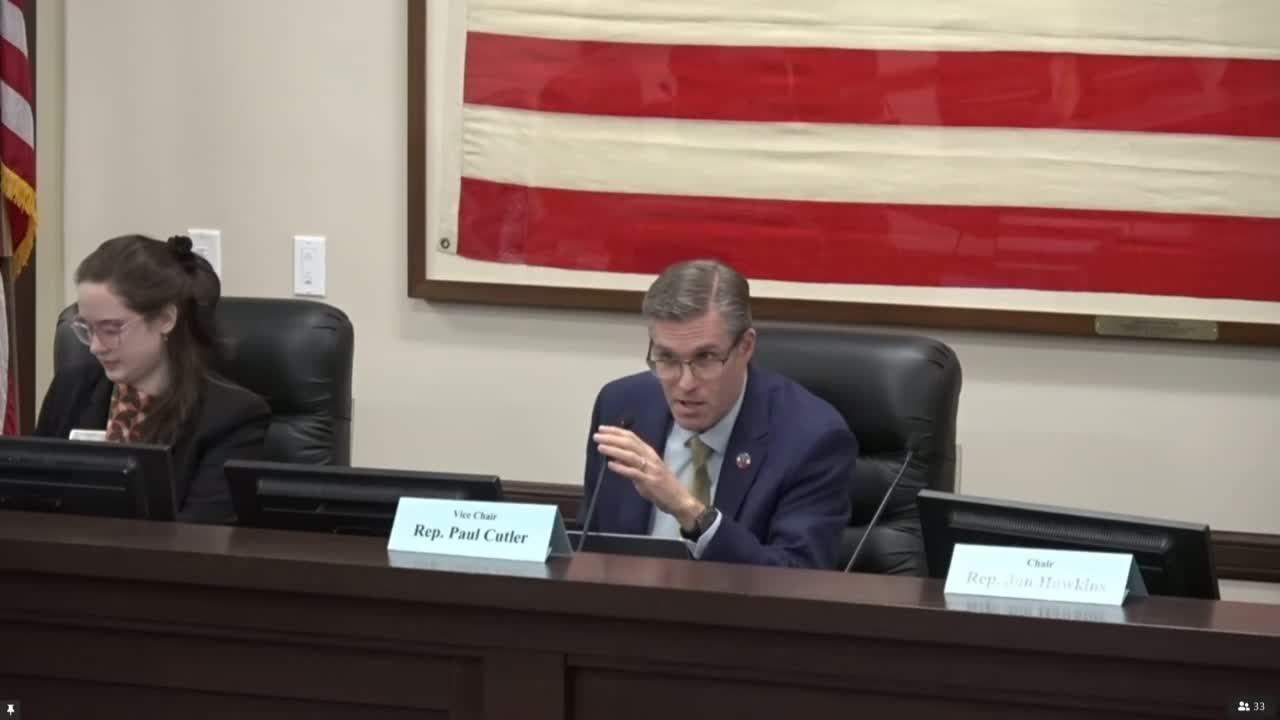
Committee members asked about cost and scalability. Vice Chair Paul Cutler asked whether the program is scalable; staff answered it is scalable and that no request-for-proposals (RFP) or request-for-award (RFA) is required to implement the education activities. Representative Shelley raised concerns about potential unintended consequences when preservation designation affects infrastructure projects, citing a past pipeline routing that increased project costs because an abandoned state road became a historical site.
During public comment, speakers including Cale Weston of Salt Lake County and Representative Owens supported the bill. Owens moved that the committee recommend HB 388 favorably to the House floor; the committee voted in favor and the motion passed unanimously.
The bill would codify and fund a public-education and stewardship approach led by the State Historic Preservation Office; it does not create new criminal penalties or specify enforcement procedures in the committee record. Committee members emphasized close attention to potential unintended consequences where preservation status can affect construction or utility projects.