Get Full Government Meeting Transcripts, Videos, & Alerts Forever!
Get email alerts on the Endowment Investment Policy Esg topic
No spam. Unsubscribe anytime.
Committee approves bill restricting ESG-driven investments by college endowments
Summary
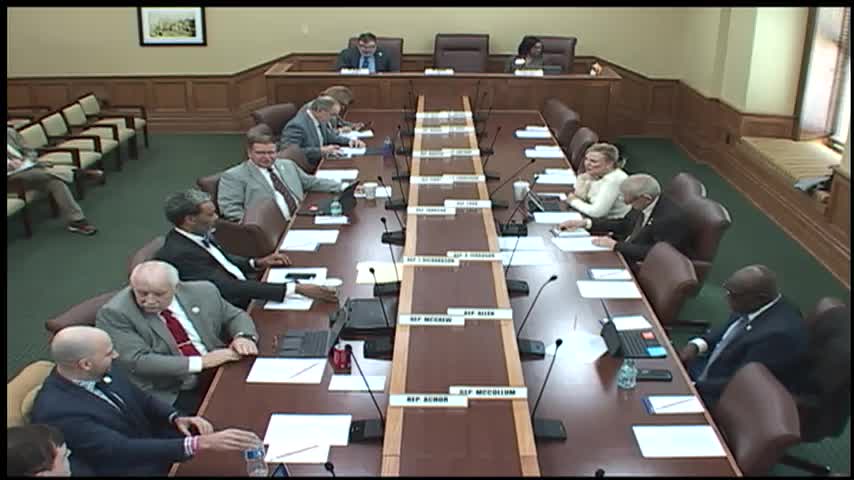
The House Insurance & Commerce Committee voted to approve House Bill 1307, which amends the Uniform Prudent Management of Institutional Funds Act to prioritize financial returns and limit investment decisions made solely for environmental, social, or governance goals.
Representative Mindy Mackalinden, House District 10, told the House Insurance & Commerce Committee that House Bill 1307 ‘‘is designed to ensure transparency and responsible management of endowments for Arkansas colleges and universities.’’ She said the bill amends the Uniform Prudent Management of Institutional Funds Act (UPMIFA) to ‘‘prioritize financial responsibility by prohibiting investment decisions based on environmental, social, and governance, ESG, goals, that do not yield the best financial returns.’’
Mackalinden said the bill requires documentation and justification for investment decisions that deviate from financial-return objectives and calls for annual reviews of accounts. She said she had discussed the measure with stakeholders and that ‘‘they helped make some tweaks to the bill and have, no objections.’’
Representative Richardson asked whether the bill would preclude engaging with companies that use diversity, equity and inclusion metrics. Mackalinden replied that the bill ‘‘says you cannot invest solely with the purpose of investing in a climate fund or in DEI . . . If you find the best fund and it happens to be a climate fund or a gun fund and it gives you the best return, you can invest in that. But you cannot invest with that sole purpose.’’
Committee members took no audience testimony on the measure. The committee approved the bill on a voice vote; the chairman declared ‘‘Ayes have it’’ and the transcript records the committee moving the bill forward.