Get Full Government Meeting Transcripts, Videos, & Alerts Forever!
Get email alerts on the Elections Petitions topic
No spam. Unsubscribe anytime.
Committee approves SB 207 requiring canvassers to notify petition signers that fraud is a criminal offense; opponents warn of chilling effect
Summary
The House committee approved SB 207, requiring canvassers for statewide ballot petitions to inform signers that petition fraud is a criminal offense; opponents warned the notice could chill volunteer participation and broaden prosecutorial discretion.
Senate Bill 207, presented by Representative Underwood with Senator Hammer in attendance, would require canvassers to warn potential signers that fraudulently signing a petition is a criminal offense (the adopted amendment replaces a specific class designation with the broader phrase “criminal offense”).
Representative Underwood said the change is intended to deter intentional forgery and reduce duplicate signatures that burden the Secretary of State’s office. Senator Hammer supported the amendment, saying it will leave enforcement to local authorities.
Opponents and witnesses described a potential chilling effect. Brady Shears, a witness who said he could not read the handwriting on his prepared statement in committee, argued the measure would criminalize canvassers for clerical mistakes or for accidental omissions of the warning and would deter volunteers. “A mere failure to say those words results in a crime regardless if it was an accident or not,” Shears said, warning that videos could be used to refer volunteers for prosecution and that grassroots campaigns would have to hire paid canvassers.
Kristen Harper, policy director at Arkansas Advocates for Children and Families, told the committee the bill would “intimidate voters, and in doing so, decrease participation in the ballot measure process,” and recommended enforcing existing laws and training canvassers rather than imposing the new warning requirement.
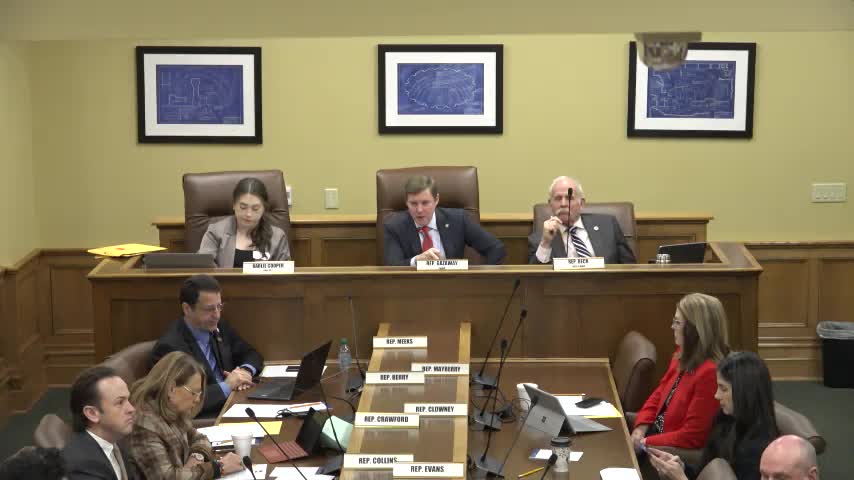
The committee additionally considered a motion to lay the bill on the table to allow more public input after weather delayed some witnesses; the motion failed on a roll call. Representative Underwood then moved to pass the bill as amended; the chair called for the voice vote and announced the ayes had it. The transcript records the committee adopting the amendment and subsequently passing the bill as amended.