Get Full Government Meeting Transcripts, Videos, & Alerts Forever!
Get email alerts on the Privacy topic
No spam. Unsubscribe anytime.
Technical advisory committee vets privacy approaches, operational concepts for road‑charge pilot
Summary
Committee members reviewed four operational concepts for a potential California road‑charge pilot and directed staff to develop privacy principles and accountability evaluation measures; the panel voted to advance governance and accountability approaches and to draft detailed privacy principles for TAC review.
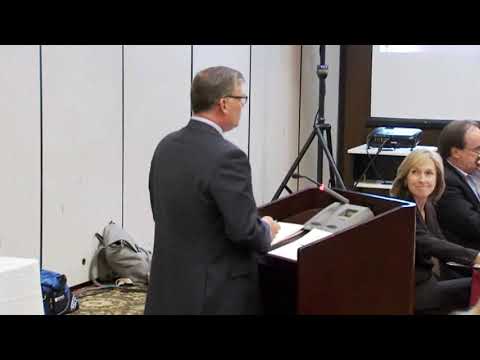
The Transportation Commission Technical Advisory Committee on May 23 reviewed a set of operational concepts for a possible road‑charge pilot and discussed four policy approaches to privacy protections before voting to move forward with principle‑based privacy guidance and accountability measures.
The committee’s briefing led with presenter Jeff Doyle laying out four operational concepts for collecting road‑use charges and four privacy‑policy approaches the TAC could adopt. Doyle said the committee should consider “what type of PII is required,” “how will it be collected,” “how and which information is being transmitted,” and “how is the information used.” He described the operational concepts as: a time permit (unlimited miles for a time period); a mileage permit (fixed miles purchased, self‑reported odometer); odometer charge (annual self‑reported odometer readings); and electronic mileage metering with and without general location capability. On the most location‑capable option Doyle said that it “does require GPS, or some sort of location based technology to make that happen.”
Why it matters: The balance between useful enforcement and protecting personal privacy shaped the committee’s discussion and its narrow policy votes. Doyle and staff framed the decisions as inputs to procurement of an independent evaluator and to the design of the pilot’s data handling and enforcement simulation.
Committee discussion and staff recommendations centered on four privacy policy approaches: a governance/principles approach, a detailed specifications (design) approach, an accountability approach that would evaluate protections against adopted principles, and a model legal protections approach that would assemble statutory protections for testing. Staff recommended adoption of the governance approach (privacy principles) and the accountability approach (evaluation against adopted privacy criteria), and asked Caltrans to draft a privacy‑principles document for TAC review before the July meeting.
At the meeting the TAC voted to adopt staff’s recommended approach. The motion to adopt the governance and accountability directions and to direct Caltrans to produce a draft privacy principles document was moved and seconded; the motion passed with no recorded oppositions and no abstentions reported in roll call.
Quotes and context: Jeff Doyle summarized the framing for the panel: “the four questions are, what type of PII is required in order to administer the road charge system? How will it be collected, the method of collection? How and which information is being transmitted? And then finally, how is the information used?” Patricia Chen of Los Angeles Metro, speaking during public comment, emphasized equity and a staged approach to implementation but did not oppose the TAC’s privacy direction.
What happens next: Caltrans and the project team will prepare a draft privacy‑principles document and return it to the TAC for review and written comment before the July meeting. The independent evaluator that the California State Transportation Agency will retain to assess the pilot will be asked to evaluate pilot performance on privacy protections using TAC‑commented evaluation criteria.