Get Full Government Meeting Transcripts, Videos, & Alerts Forever!
Get email alerts on the Municipal Assets topic
No spam. Unsubscribe anytime.
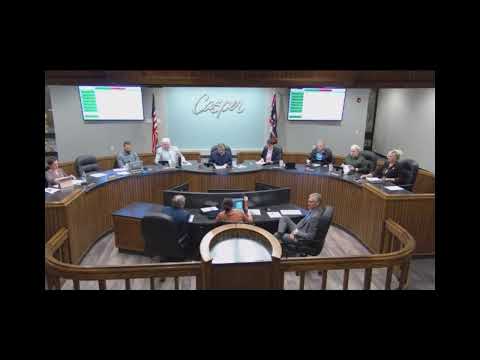
Resident proposes selling some city-owned assets to boost revenue; councilors note constraints
Summary
A Casper resident urged the council to consider selling underused city-owned properties — including a parking building and the Hougatonna ski area — as a revenue source; councilors said staff are already reviewing options and raised community and feasibility concerns.
Ross Shriffman, a Casper resident, told the City Council on Feb. 18 that an inventory of city-owned parcels suggests potential revenue if some properties were sold or transferred to private ownership.
"I contacted the city manager and got a list of properties that the city owns," Shriffman said. "I did an inventory, and I also looked at the assessments from the county for the current market value of some of these properties." He asked the council to place a work-session item to explore opportunities for sale or repurposing.
Shriffman cited several examples in his remarks: a parking building on Walcott he estimated could be worth about $2,000,000 and the Hougatonna ski area, which he described as "a gem in the community." He suggested that selling underused assets could shift them from tax-exempt status to taxable private ownership and reduce city operating costs.
Councilor Gamroth responded that city staff have already explored property-sale options and cautioned that community input and local context matter. "The community in that area has made it very clear that they have thoughts about how that should be developed, if it should be developed at all," she said, citing the rezoning discussions on Robertson Road in Trivette as an example where neighborhood opposition limited development choices.
Councilor Haskins and Vice Mayor McIntosh noted similar constraints when it comes to Hougatonna. Haskins said privately owned ski areas in the region are typically located in state or national parks and that nonprofit or private ownership models can be difficult to sustain. The vice mayor offered to share past memos and video excerpts from Parks and Recreation presentations that examine in-state comparables and rate structures.
The council did not take formal action on Shriffman's suggestion; staff and councilors said they would continue conversations and, in some cases, offer follow-up materials and a possible work-session item.
Why it matters: Selling city-owned land can generate one-time revenue and lower maintenance costs, but it can also change neighborhood character, remove public amenities or require additional approvals. Councilors pointed to existing public input and legal/design constraints that would need further study.