Get Full Government Meeting Transcripts, Videos, & Alerts Forever!
Get email alerts on the Contaminated Soils Development topic
No spam. Unsubscribe anytime.
Commission discusses limits of authority on projects near former Saint-Gobain sites
Summary
Commissioners and residents discussed development and mitigation in areas affected by former Saint-Gobain operations, noted state DES best-management practices restrict infiltration in some areas, and agreed the planning board must provide project details for conservation review.
A resident raised concerns about development on parcels affected by historical Saint-Gobain operations, prompting a discussion about the conservation commission's limited authority and coordination with other town bodies.
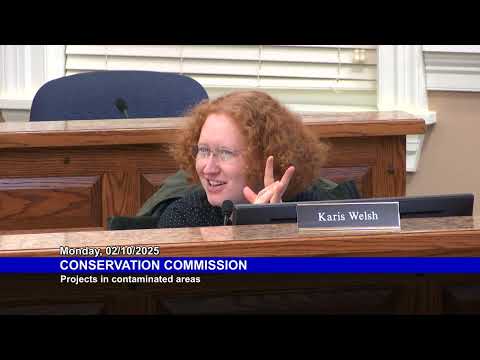
Commission members said the conservation commission reviews projects only with the information provided by the planning board and does not have an independent "go/no-go" approval power. "We have only the information that the planning board provides when we're reviewing a project," the vice chair said.
Commissioner Steve described state Department of Environmental Services (DES) guidance and local mitigation practices for the Merrimack-side parcels near the river and Dumpling Brook. He said DES best-management practices for that area restrict infiltration in some locations, meaning designs often favor tanks rather than infiltration ponds to avoid mobilizing contaminated soils into waterways. "DES actually had ... different best management practices for projects proposed in that area... that's kind of a no infiltration area," he said. "There were tanks rather than ponds."
Commissioners advised residents they can ask the planning board whether a proposed project involves former Saint-Gobain-owned land and encouraged the commission to submit questions to the planning board when those projects appear on the commission's review list. The commission indicated any specific property discussions would need to occur in a non-public session when appropriate.
No formal action was taken; the exchange clarified procedural limits and recommended lines of inquiry for future development reviews in potentially contaminated areas.