Get Full Government Meeting Transcripts, Videos, & Alerts Forever!
Get email alerts on the High Dosage Tutoring topic
No spam. Unsubscribe anytime.
Panel approves statewide high‑dosage tutoring program with pay incentives, amid questions on measurement
Summary
The committee passed a bill creating a statewide high‑dosage tutoring program that pays tutors per cohort and offers performance incentives; members pressed for clearer rules on assessment measures, probation and district selection of students.
The Senate Education Committee approved legislation to create a statewide high‑dosage tutoring program that compensates tutors for intensive, small‑group instruction and provides performance bonuses when cohorts show measurable student growth.
Senator Devers, the bill’s sponsor, told the committee the measure is designed to continue and expand programs run with federal ESSER dollars that SDE said produced measurable gains. The bill sets cohort structure, base payments and a performance bonus, and would create a revolving fund to accept public and private donations.
Why it matters: Committee supporters argued the program continues successful pilots and provides pay equity for teachers who already provide out‑of‑class instruction. Critics urged care about measurement, potential extra testing burden and the consequences to tutors who fail to meet growth thresholds.
Details and committee concerns
- Program mechanics: The bill as presented sets cohorts of up to four students, meeting at least three times per week. The stated base payment is $1,600 per cohort per semester and an additional $1,000 per cohort for demonstrating measurable growth; SDE would promulgate implementation rules.
- Performance and probation: The committee record shows the bill contains a probation mechanism: if a tutor’s cohort fails to achieve a half‑grade level of growth in the first year, the tutor is placed on probation; failure to reach the benchmark while on probation can result in loss of program eligibility. Members raised concerns about whether the probation system would unfairly penalize tutors for issues outside their control (absenteeism, students’ baseline needs) and asked whether documentation or waivers would be permitted.
- Assessment and screeners: Senators asked whether the same assessment would be used statewide. SDE witnesses said the department would work with districts to identify appropriate screeners or formative measures; some districts use state tests, others use local screeners. SDE representatives emphasized rulemaking would be necessary to define acceptable metrics and possible waivers.
- Pilot experience and results: SDE told the committee it had run tutoring pilots funded with ESSER money. Cited numbers included roughly 1,440 students and 357 teachers participating in the current year across 52 school sites in 19 districts; SDE reported literacy screeners showed 94% of participating students improved or maintained accuracy, and parents reported high confidence gains in math pilots.
- Fiscal and implementation notes: Committee members discussed a $25 million tax credit program available for districts to attract private donations for programs like tutoring and whether one‑time or recurring funds should be used for the proposed revolving fund. Sponsors said the program is optional for districts and teachers and that rules would define quality and eligibility.
Representative testimony
Senator Devers: “This bill is designed to do just that by ensuring teachers who participate show growth in student outcomes and are justly compensated for it.”
Todd Lofton, SDE chief academic officer, said the department will seek guardrails because the program must use high‑quality instructors and consistent assessments.
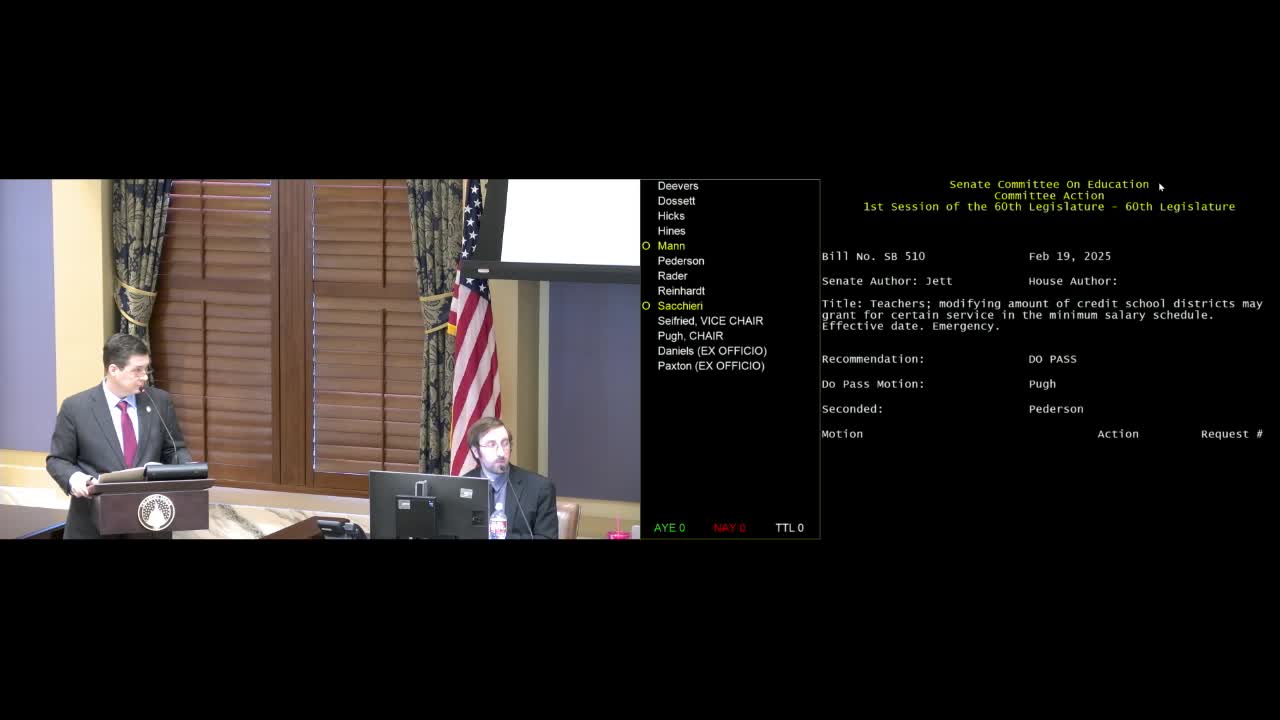
Outcome: The committee passed the bill 9 ayes to 2 nays. Sponsors indicated they expect to work with SDE and committee members to refine assessment definitions, waiver provisions for absent or nonparticipating students and the rulemaking timeline before the bill reaches the Senate floor.
Provenance: topicintro excerpt from Senator Devers presenting the bill (transcript at 5363.92–5406.495). Top finish: roll call declaring the bill passed (transcript at 7310.75–7312.145).