Get Full Government Meeting Transcripts, Videos, & Alerts Forever!
Get email alerts on the Nondiscrimination Ordinance topic
No spam. Unsubscribe anytime.
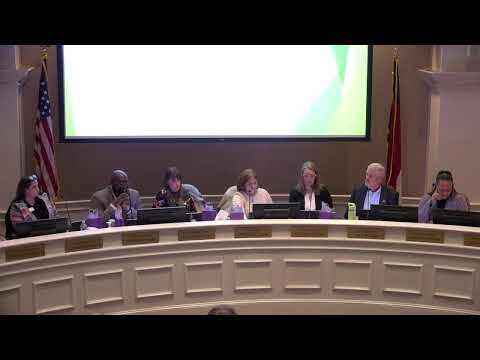
Huntersville commissioners debate nondiscrimination ordinance after hours of public comment
Summary
Commissioner-led draft nondiscrimination ordinance prompted several hours of public testimony both for and against; board directed staff to provide model ordinances and survey options ahead of further discussion.
Commissioner Pat Dumas introduced a draft nondiscrimination ordinance at the Feb. 18 Town Board meeting, prompting lengthy presentation and more than an hour of public comment both supporting and opposing formal protections for residents.
Dumas said the draft is intended to fill gaps in state and federal law for public accommodations, employment and town services. “If you Google ‘unprofessional hairstyles,’ the only images that appear are of Black women,” she said, explaining why the draft explicitly names natural hairstyles among protected characteristics.
The proposal drew broad public support during the meeting’s public comment period. Jennifer Roberts, identified as a former county commissioner and mayor of Charlotte, urged the board to “treat people with dignity and respect” and noted Charlotte and other municipalities had adopted similar protections. Braxton Beacoats, president of the African American Caucus of the Mecklenburg County Democratic Party, told the board the ordinance “makes a statement” that Huntersville is an “affirming and accepting community.” Dozens of other residents — students, business owners and nonprofit leaders — also spoke in favor, saying the ordinance would protect vulnerable residents and strengthen the town’s economic brand.
Other speakers warned of legal and administrative challenges. Town attorney Emily Sloop told commissioners she has concerns about clear statutory authority under North Carolina law for a local nondiscrimination ordinance and asked for more time to review legal options. Several residents and business representatives urged caution on enforcement mechanics, costs and unintended consequences. Town Manager Anthony Roberts said staff would first seek to refer complaints to any more appropriate state or federal agency and would rely on the town attorney’s office for follow-up if needed.
Commissioners discussed enforcement options at length. Dumas’s draft included in-house intake and a $250 civil penalty after unsuccessful mediation; she acknowledged stronger enforcement or use of an interlocal agreement with Charlotte were possible alternatives. Town staff said an interlocal agreement previously discussed with Charlotte would likely require the town to pay an investigation fee (staff estimated roughly $3,500 per investigation) and that Charlotte would not be forced to take actions if parties refused to participate.
Commissioners asked staff for additional materials before any formal vote: model ordinances from other municipalities (Charlotte, Davidson and Apex were requested), and a draft survey for residents to review. Several commissioners said they wanted more outreach to groups both for and against the ordinance before placing it on a future agenda. Dumas said she aims to have the matter return for board action in March, but multiple commissioners requested more time for legal review and community outreach.
The board did not vote on the ordinance on Feb. 18. Instead the board directed staff to provide: (1) copies of existing nondiscrimination ordinances used by Charlotte, Davidson and others; (2) details about the interlocal enforcement option with Charlotte including fees and past case volume; and (3) a proposed public survey and outreach plan for board review.
The discussion came after more than an hour of public comment that included personal stories, legal and economic arguments and repeated requests that the board act to codify protections. Commissioners emphasized they would continue reviewing legal authority and enforcement options before considering a formal vote.
Ending: The board set follow-up steps rather than advancing the ordinance immediately. Staff will return the requested ordinance examples and a proposed community survey for the board to review; commissioners signaled they want further legal vetting and public outreach before voting.