Get Full Government Meeting Transcripts, Videos, & Alerts Forever!
Get email alerts on the Education Committee Roundup topic
No spam. Unsubscribe anytime.
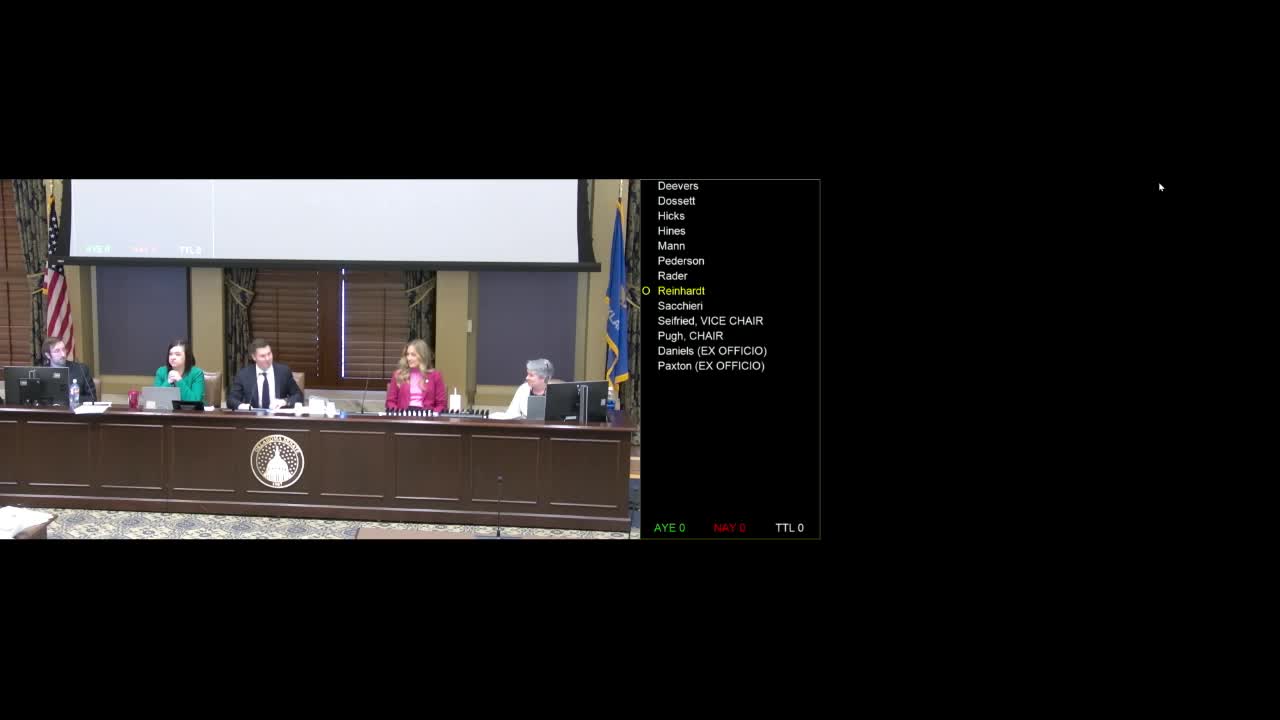
Senate Education Committee advances multiple education measures, including scholarship, tutoring and anti-discrimination bills
Summary
The Senate Education Committee voted on a package of education bills, passing measures on school board stipends, special‑needs scholarships, tutoring incentives, teacher recruitment and other school policies; key items include changes to the Lindsay Nicole Henry scholarship and a new high‑dosage tutoring program.
The Oklahoma Senate Education Committee on an order of business that moved quickly advanced a slate of education bills on a single agenda, approving measures on school board stipends, special‑needs scholarships, tutoring incentives and teacher pipeline programs while tabling or rejecting others.
The package included both policy changes and funding constructs. Committee members voted on more than a dozen bills during the hearing; the committee moved several measures with largely bipartisan support and debated others at length before approving them for the next step of consideration.
Why it matters: Many measures change how state education money, services and program eligibility will be administered. The committee’s actions affect students with disabilities, teacher pay and recruitment, district budgeting and the state’s approach to discrimination complaints in schools.
What passed and what committee members said: Below are short summaries and the committee roll‑call outcome for each bill discussed in the hearing. Vote tallies and short descriptions reflect the transcript record of the committee session.
Votes at a glance
- Senate Bill 63 — Passed, 12 ayes, 0 nays. Increased the permissive meeting stipend for qualifying school board members from $25 (1972 dollars) to $190 (2025 equivalent) for districts above specified size; the bill is permissive, not mandatory. (Motion recorded from Senator Hicks; second Senator Dawson.)
- Senate Bill 105 (Lindsay Nicole Henry scholarship changes) — Passed, 9 ayes, 3 nays. Removes a requirement that students be enrolled in public school for one year before accessing the Lindsey Nicole Henry scholarship and deletes language that had stated acceptance of the scholarship revoked consent to public school services; drew extended committee questions about IDEA, IEPs, who prepares evaluations and fiscal estimates. (Mover: Leader Daniels; second: Vice Chair; see related article for detail.)
- Senate Bill 382 (enrollment and potty training) — Passed, committee vote recorded as 11 ayes and 1 nay. Restores a district option to deny enrollment or transfer to students who are not potty trained, except where the student has an IEP or 504 plan. (Moved and seconded; vote recorded in transcript.)
- Senate Bill 942 (Title VI coordinator / anti‑discrimination in schools) — Passed, 7 ayes, 3 nays. Directs the State Department of Education and the Regents to designate a Title VI coordinator and clarifies that guidance, counseling and financial assistance must be provided equally regardless of race, ethnicity, national origin, religion, disability or marital status; proponents described the bill as a proactive framework to address antisemitism and other discrimination. Guests from the Combat Antisemitism Movement addressed the committee. (Mover: Senator Thompson; further detail in separate article.)
- Senate Bill 510 (veteran teacher pay match extension) — Passed, 8 ayes, 1 nay. Extends a current 5‑year military service credit match up to 10 years to better recognize qualified military service when placing returning veterans on teacher pay scales.
- Senate Bill 245 (Oklahoma high‑dosage tutoring program) — Passed, 9 ayes, 2 nays. Establishes a statewide high‑dosage tutoring initiative (cohorts up to four students, at least three sessions per week) with base payments to tutors and performance incentives; allows the State Board to promulgate rules. The committee record contained extended questioning about measurement, screeners and probation rules for tutors. (Mover: Senator Devers.)
- Senate Bill 363 (higher education accreditation/consumer protections) — Passed, recorded as 8 ayes, 2 nays. Clarifies definitions and consumer protections for certain private and out‑of‑state institutions; adds a definition for “religious degree‑granting institutions.”
- Senate Bill 339 (tuition freeze at public colleges/universities) — Failed, 3 ayes, 7 nays. The bill would have frozen tuition and fees at public colleges and universities at prior‑year levels; it did not advance from committee.
- Senate Bill 840 (micro‑credential for dyslexia screening) — Passed, 9 ayes, 0 nays. Directs the Commission for Educational Quality and Accountability to establish a micro‑credential allowing qualified academic language therapists or certified practitioners to screen for dyslexia; proponents said the change could lower family costs for evaluations.
- Senate Bill 212 (teacher education innovation pilot) — Passed, 10 ayes, 0 nays. Establishes an optional pilot for teacher education programs to receive technical assistance and pilot innovative training or “grow your own” approaches; the program is designed to be seeded with one‑time and nonstate funds where possible.
- Senate Bill 215 (math proficiency initiative) — Passed, 10 ayes, 0 nays. Creates screening, interventions and teacher supports for targeted math proficiency (committee discussion indicated possible changes to grade ranges under consideration).
- Senate Bill 235 (grow your own grant match) — Passed, 10 ayes, 0 nays. Provides an OEQA‑administered state match of up to 50% for local grow‑your‑own educator programs run by districts or foundations; committee members noted local programs commonly require a return‑service obligation.
- Senate Bill 240 (ad valorem/protest treatment in state aid calculation) — Passed, recorded in transcript as 9 ayes, 1 nay. The bill changes the timing of how locally assessed (ad valorem) values that are under protest are treated for state aid calculations; sponsors said the change would use actuals in arrears rather than projected values to reduce volatility and unexpected clawbacks to districts. Committee testimony noted similar prior statutory steps that address very large protests but indicated remaining gaps for smaller protests.
What happens next: Each bill that passed the committee will move to the Senate floor for scheduling and debate before the full Senate. Several measures — notably the Lindsey Nicole Henry scholarship changes, the tutoring program and the ad valorem/state aid change — drew extended questions and are likely to attract additional amendments as they proceed.
Provenance (committee transcript evidence): topicintro excerpted from Chair Pugh recognizing Senator Goodwin to present Senate Bill 63 (transcript at 1884.74–1920.935). Top finish: committee adjournment and end of recorded session (transcript at 11415.37–11431.694).