Get Full Government Meeting Transcripts, Videos, & Alerts Forever!
Get email alerts on the School Finance Instructional Spending topic
No spam. Unsubscribe anytime.
Committee advances measure to require higher share of school dollars go to classroom instruction
Summary
A bill that would require districts to spend a larger share of funding on classroom instruction drew extended debate over definitions, local flexibility and effects on counselors, nurses and special‑education services. The panel voted to report the bill do pass.
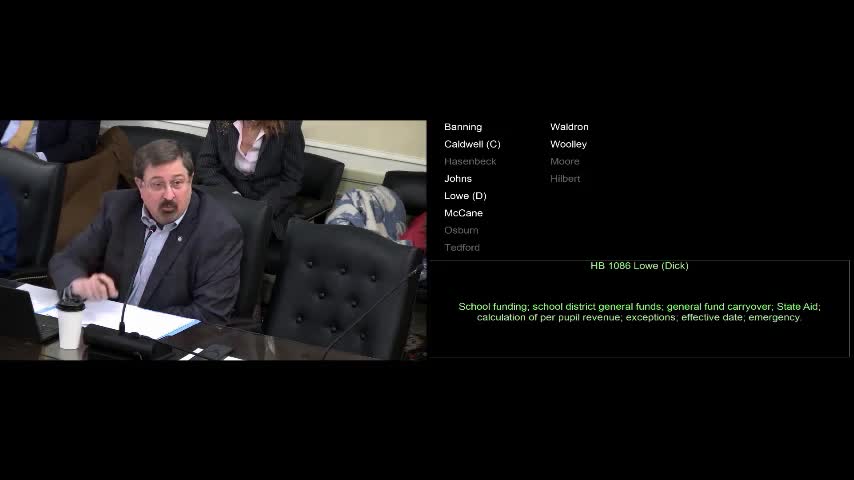
Representative Caldwell presented House Bill 12 80 to the House Education Committee on Oct. 12, proposing a statutory requirement that a set percentage of school funding be spent on classroom instruction. Caldwell said the proposal uses the U.S. Department of Education’s definitions for "instructional expenditures" to produce an apples‑to‑apples comparison across states.
Caldwell framed the bill as a tool to shift priorities toward classroom instruction and teacher pay. “We rank towards the bottom in the country as far as the percentage we spend in the classroom,” Caldwell said, citing a state average around 58 percent. He said the measure is intended to move Oklahoma closer to the national average and to encourage districts to prioritize classroom staffing and instruction.
Committee members raised a range of concerns. Representatives warned the requirement could reduce funds available for counselors, nurses, bus drivers, school construction and special‑education supports. Representative McCain asked how districts with “significant out‑of‑classroom concerns” could continue to serve students’ needs if funds were reallocated; Caldwell replied that states with higher classroom percentages have still addressed similar supports and that the bill uses the federal definition to avoid disputes over what counts as instructional spending.
The sponsor said he had run versions of the bill in prior years and was open to changing the percentage. He also acknowledged opposition from some district leaders and said he was willing to discuss alternatives.
After debate the committee opened the machine for a vote; the chair announced the motion had received a majority and declared the bill reported do pass out of committee.
Committee discussion emphasized the tradeoff between a standardized metric for instructional spending and district flexibility to meet local needs. The sponsor asked staff and colleagues to continue conversations about the appropriate percentage and collection of comparative data from other states.