Get Full Government Meeting Transcripts, Videos, & Alerts Forever!
Get email alerts on the Roadway Safety topic
No spam. Unsubscribe anytime.
Connecticut DOT cites surge in pedestrian, motorcyclist fatalities and expands road safety tools
Summary
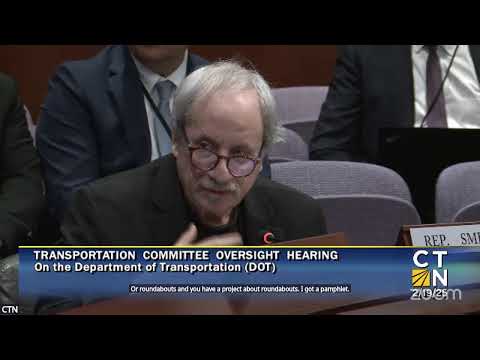
Commissioner Ukalito, commissioner of the Connecticut Department of Transportation, told the legislature on Feb. 3 that the state is seeing an alarming rise in roadway fatalities and is deploying a suite of safety measures to reduce deaths and serious injuries.
Commissioner Ukalito, commissioner of the Connecticut Department of Transportation, told the legislature on Feb. 3 that the state is seeing an alarming rise in roadway fatalities and is deploying a suite of safety measures to reduce deaths and serious injuries.
“We are trying to bend the curve to go to 0,” Commissioner Ukalito said during the committee’s oversight hearing, describing 2024 as “higher than average” after the department logged 328 fatalities last year and 27 by Feb. 3 of 2025.
The department singled out pedestrian and motorcyclist fatalities as especially concerning. Ukalito said motorcycle deaths in 2024 were “astronomical” compared with historic norms, and pedestrian fatalities rose as well. He told committee members that many pedestrian strikes occur in poorly lit conditions or at twilight, and that larger modern vehicles can produce more lethal outcomes when pedestrians are struck.
To address those trends, DOT described multiple concurrent initiatives:
- Wrong‑way detection: 37 locations are active; the system has recorded more than 230 activations and the agency says most drivers self‑correct when alerted. The department plans “200 plus” additional installations with funding secured from the legislature and bond commission.
- Work‑zone speed cameras: A pilot program produced about 25,000 warnings and roughly 750 fines and showed up to an 18% reduction in speeds at pilot sites. The legislature approved a permanent program; DOT plans a summer startup with a lower enforcement threshold (10 mph over the limit) and advance notice to towns.
- Traffic incident management and equipment: DOT has trained more than 5,900 first responders in incident management, is rolling out electronic “Pylites” (long‑lasting electronic flares), high‑visibility and illuminated gear, and truck‑mounted attenuators with radar displays that tell drivers their speed (DOT emphasized the displays are informational, not for ticketing).
- Law enforcement support: DOT is funding DRE (drug recognition expert) training and an ARIDE (Advanced Roadside Impaired Driving Enforcement) program, plus breath testing and related equipment. The agency said about 70 DREs are available statewide with a centralized DRE call‑out protocol.
- Phlebotomy training for officers: As directed by the legislature, DOT and partners are supporting training so appropriately trained law‑enforcement officers can perform blood draws when timely evidence collection is required and hospital access is not available; the commissioner said federal funds are being used for DRE and phlebotomy training.
Committee members pressed DOT on whether drug impairment is driving the recent fatality increases. Ukalito said pedestrian fatalities are not primarily DUI related and pointed instead to evening hours, poor lighting, distraction and the growing size of passenger vehicles; he added that late‑night crashes can include impairment.
Several legislators asked about crash‑truck strikes; Ukalito said DOT vehicles used to protect work crews are struck “every few days,” underscoring danger to roadside workers and the rationale for more robust countermeasures.
The committee also discussed automated municipal enforcement. DOT said one municipality (Washington) has an approved automated traffic enforcement plan; three applications have been submitted to DOT and many towns have either discussed the option locally or are preparing applications. Ukalito emphasized the state law’s safeguards — including limits on use and procedures for program review — and said towns must demonstrate safety needs rather than use cameras as revenue generators.
Why it matters: Connecticut’s highway fatalities spiked in 2024 and the DOT presented both short‑term countermeasures (cameras, detection, equipment and training) and longer‑term engineering and outreach steps to reduce exposures for pedestrians, workers and motorists.
Outlook: DOT told lawmakers it plans to activate the permanent work‑zone camera program this summer, continue installation of wrong‑way detection, and expand training and equipment distribution to law enforcement and first responders. Several legislators said they will pursue bills and hearings during the public‑hearing cycle to complement DOT’s work.