Get Full Government Meeting Transcripts, Videos, & Alerts Forever!
Get email alerts on the Disability Waivers topic
No spam. Unsubscribe anytime.
Counties warn governor's proposed waiver cost shifts would raise property taxes and squeeze services
Summary
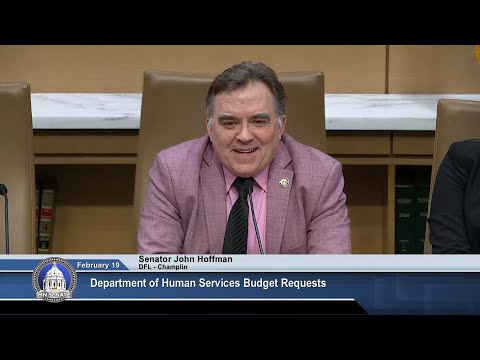
County officials and disability service providers told the Minnesota Senate Human Services Committee that the governor's budget would shift millions in waiver costs to counties, increasing local levies and risking access to services for people with disabilities.
Senators heard repeated warnings that the governor's proposed budget would shift significant costs for disability waiver programs to counties, forcing local property-tax increases and risking reduced access to services for people with disabilities.
The concerns came during testimony before the Minnesota Senate Human Services Committee. Stacy Hennen, Western Prairie Human Services executive director and legislative champion for the Minnesota Association of County Social Services Administrators, told the panel that the governor’s proposal would “result in increases in local property taxes.” She cited an example: “For Traverse County in 2025, the proposed shifts would have been $395,000 and it would have been a 39.65% increase to our social services levy for Traverse County.”
Why it matters: Counties administer many waiver services under state policy, and testimony warned that moving costs onto county levies would create unequal access across Minnesota. Ramsey County’s deputy director Katie Molinere told the committee the county estimates a $13 million annual impact from a new 5% county share for waiver services — “equivalent to a 4% tax levy increase.” Hennepin County’s Louella Cofer said the same 5% shift would be about $20 million annually for her jurisdiction.
Testifiers said the proposals in the governor’s budget include multiple elements that interact: reducing inflationary adjustments for waivers, capping certain billed days, expanding county cost shares, and additional limits tied to rate exceptions and input monitoring. Johnny Tavetz, policy manager for ARM (a trade association representing waiver providers), said in testimony that capping inflationary adjustments at 2% “will exacerbate an already dire workforce crisis” and that other proposed limits could “cut $1,300,000,000 over 4 years from disability waiver services.”
County leaders argued that shifting costs where counties have limited control over eligibility or service decisions is unfair. Hennen said some areas of the governor’s proposal — for example, increased county shares for the Behavioral Health Fund, MSOP (Minnesota Sex Offender Program) commitments, and competency restoration — would add administrative complexity and unpredictable bills for counties with small tax bases.
Julie Jepsen, an Anoka County commissioner, framed the change bluntly: “The governor's cost shifting is packaged and presented as an alleviation of the state's budgetary pressures, when in fact, the expenses are still there. They're just hidden by shifting the financial responsibility of millions upon millions of dollars onto counties.” Jepsen said Anoka County spends more than $140 million annually on human services and warned the baseline shift would add about 5 percentage points to her county’s levy obligations.
Several witnesses urged lawmakers to include counties in policy design rather than shift costs. Multiple speakers asked the Legislature and DHS to pursue administrative simplification — for example, by adjusting assessment timelines and aligning Medical Assistance eligibility with MNChoices assessments — as a way to reduce administrative burdens without cutting services.
Ending: Senators on the committee responded that they intend to continue the conversation, seek policy fixes, and pursue revenue and design alternatives. Senator Rasmussen and others suggested looking beyond program cuts to identify revenue options and systemic reforms. The committee said it would convene follow-up work with counties and providers as the budget process continues.