Get Full Government Meeting Transcripts, Videos, & Alerts Forever!
Get email alerts on the Eviction Policy topic
No spam. Unsubscribe anytime.
Dozens testify as Oregon committee hears competing views on 'three-strikes' eviction bill HB 2305
Summary
Supporters including landlord associations argue HB 2305 curbs chronic lease violators; tenant advocates, legal aid and defenders warn it could enable wrongful evictions for minor infractions and disproportionately harm vulnerable households.
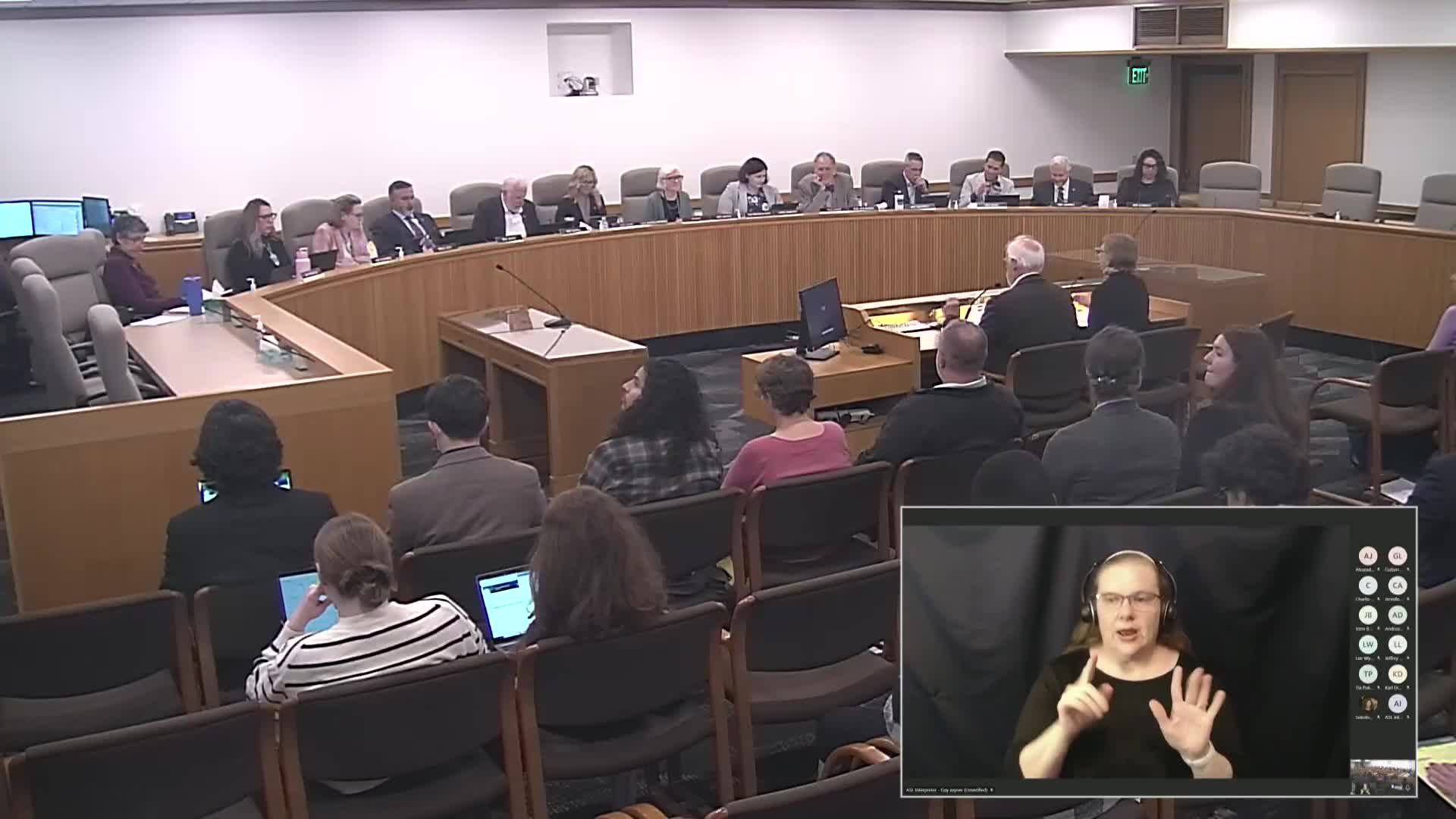
The House Committee on Housing and Homelessness held an extended public hearing Wednesday on House Bill 23 0 5 (HB 2305), a proposal to authorize termination of tenancies after a third material lease violation or repeated late rent payments. The measure drew dozens of witnesses and sharply divided testimony.
Supporters including the Oregon Realtors, Multifamily Northwest and the Rental Housing Alliance told the committee HB 2305 provides a clear, enforceable tool to address chronic lease violations and repeated nonpayment that can degrade safety and property conditions. "This bill ensures that housing providers have the necessary tools to manage their properties effectively by allowing termination of tenancy after a third material violation," said Zach Lindahl of Multifamily Northwest.
Opponents — legal aid organizations, tenant advocates, public defenders and tenant attorneys — said the bill risks accelerating evictions, could be abused to displace tenants for minor or contested infractions, and would disproportionately affect low-income tenants, seniors, tenants with disabilities and people of color. "This bill goes too far by allowing a landlord to selectively pick 3 any 3 minor violations to evict without a right to cure," said tenant attorney Jeffrey Van Kent.
Legal witnesses repeatedly cited existing statutes that already allow landlords to terminate tenancies in serious situations without a right to cure. John Van Landingham, who represented the Oregon Law Center and Lane County Legal Aid, pointed to ORS 90.445 (domestic violence-related termination), ORS 90.396 (intentional trashing of premises) and ORS 90.394 (noise/disturbance provisions) as existing tools that allow immediate or expedited termination in egregious cases.
Tenant advocates and public defenders said HB 2305 would shrink tenant protections, reduce opportunities for counsel to contest claims in court, and have a disparate impact on renters who lack legal representation. Lee Wyatt, a staff attorney with the Metropolitan Public Defender Community Law Division, told lawmakers the bill "wipes away even more of the short time frame in which indigent folk have to seek, find, and benefit from legal support." Sybil Hebb of the Oregon Law Center warned the bill could produce confusing and duplicative notice regimes and increase litigation.
Landlords and property managers said they need clearer authority because current eviction cases can take months to resolve, during which landlords continue to incur costs and property managers may face safety risks. Jack Kimberly and Charlie Cobas, both representing rental housing interests, described repeated nonpayment cases and said delays in the court system and repeated filings are harming small-property owners.
Several witnesses described real-world cases. A landlord attorney said a tenant threatened a family with a rifle in one instance, and that judges sometimes do not find emergency termination sufficient. Tenant witnesses shared stories of long-term consequences from nonpayment evictions, including difficulty finding housing and multi-year setbacks in economic and family stability.
Lawmakers asked detailed questions about how the proposal would work in practice, whether it would simply codify existing three-strike rules that apply to manufactured housing or fixed-term leases, and whether a more narrowly tailored list of egregious offenses might address landlords’ core concerns without broadening eviction power.
The committee closed the public hearing without taking a vote. Several witnesses urged lawmakers to pursue alternative solutions: clarifying application of current statutes for egregious conduct, improving court timelines, or targeting only specific, serious offenses rather than a broad set of minor lease violations.
No committee action was taken on HB 2305 during the hearing.